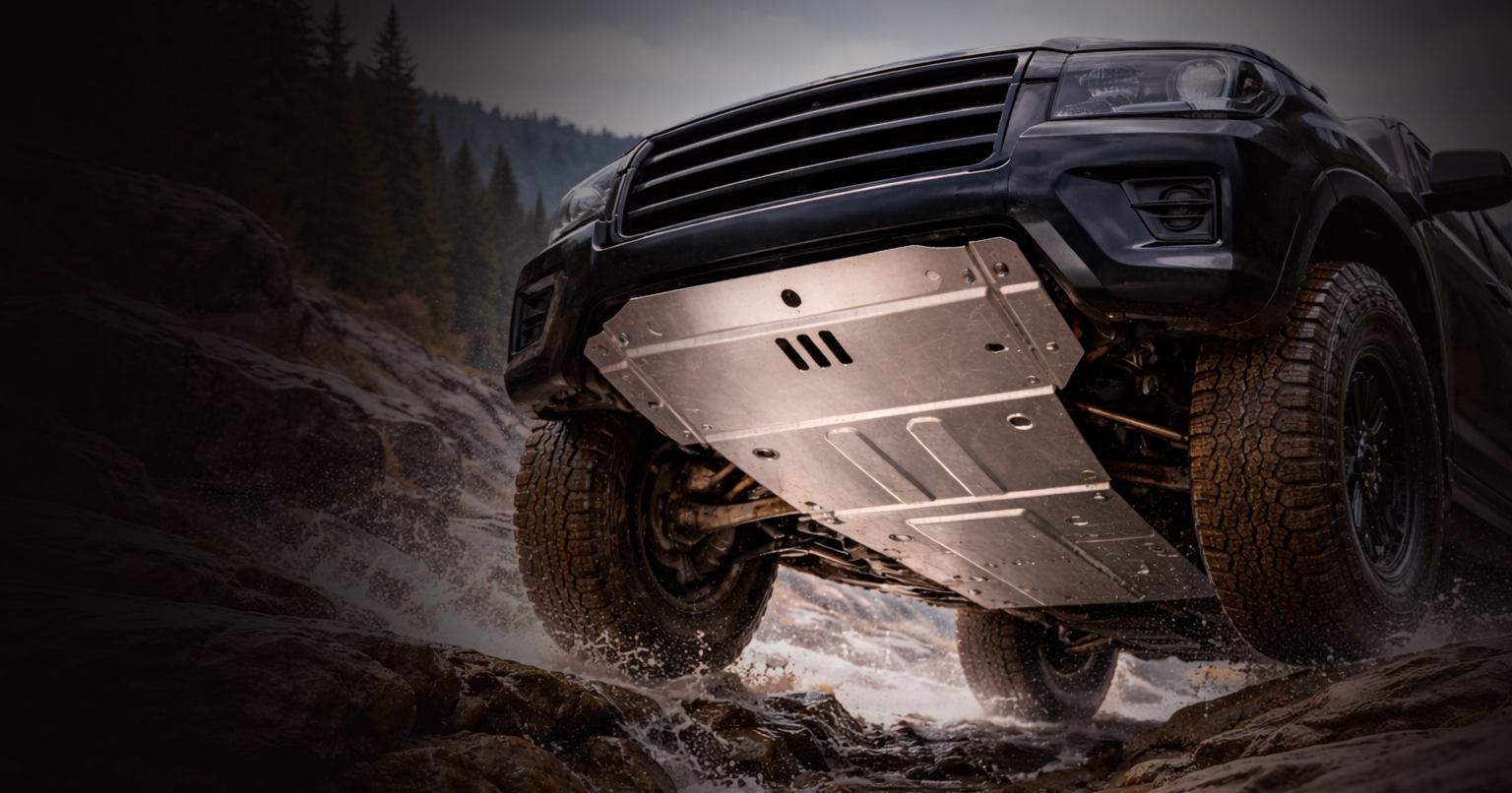
Maxus T60 MAX Underbody Protection: What the 3 mm Steel Skid Plates Protect
The Maxus T60 MAX is designed as both a working pickup and a recreational 4×4. Its combination of four-wheel drive, strong towing capacity and useful ground clearance makes it suitable for worksites, gravel roads, farms and light off-road use.
However, ground clearance alone does not prevent stones, broken road surfaces, deep ruts or other obstacles from striking components underneath the vehicle. Vehicle-specific skid plates provide an additional physical barrier below the engine, radiator, gearbox and transfer case.
This guide explains the available underbody protection for the Maxus T60 MAX 2025–2026 and helps owners choose the appropriate configuration.
Maxus T60 MAX: Vehicle and Drivetrain Specifications
According to official European vehicle specifications, the Maxus T60 MAX is equipped with:
- 2.0-litre twin-turbo diesel engine
- Maximum power of approximately 215 hp
- Maximum torque of 500 Nm
- Eight-speed automatic transmission
- Four-wheel drive
- Rear differential lock
- Maximum braked towing capacity of 3,500 kg
- Maximum payload of 1,050 kg
- Front ground clearance of 217 mm
- Ground clearance between the axles and at the rear of 230 mm
- Approach and departure angles of 29° and 26°
Specifications may vary by market, equipment level and vehicle configuration. Check the official documentation for the exact vehicle.
These specifications make the T60 MAX a capable working vehicle. They also mean that its drivetrain can regularly be exposed to conditions that are more demanding than ordinary urban driving.
A long wheelbase, uneven terrain and loose obstacles can still create contact underneath a pickup, even when its overall ground clearance is relatively generous.
Does the Maxus T60 MAX Need Additional Underbody Protection?
The answer depends primarily on where and how the vehicle is driven.
A pickup used exclusively on good paved roads has a lower risk of underbody impact. Additional protection becomes more relevant when the vehicle is regularly used on:
- Gravel and forestry roads
- Construction sites
- Agricultural land
- Roads with deep potholes
- Uneven tracks and ruts
- Snow-covered roads with hidden obstacles
- Routes containing loose stones or road debris
- Light or moderate off-road terrain
The purpose of a skid plate is not to make the vehicle indestructible. It creates a durable barrier between an obstacle and the mechanical component positioned above it.
For the Maxus T60 MAX 2025–2026, three separate 3 mm steel protection sections are available.
Engine and Radiator Skid Plate
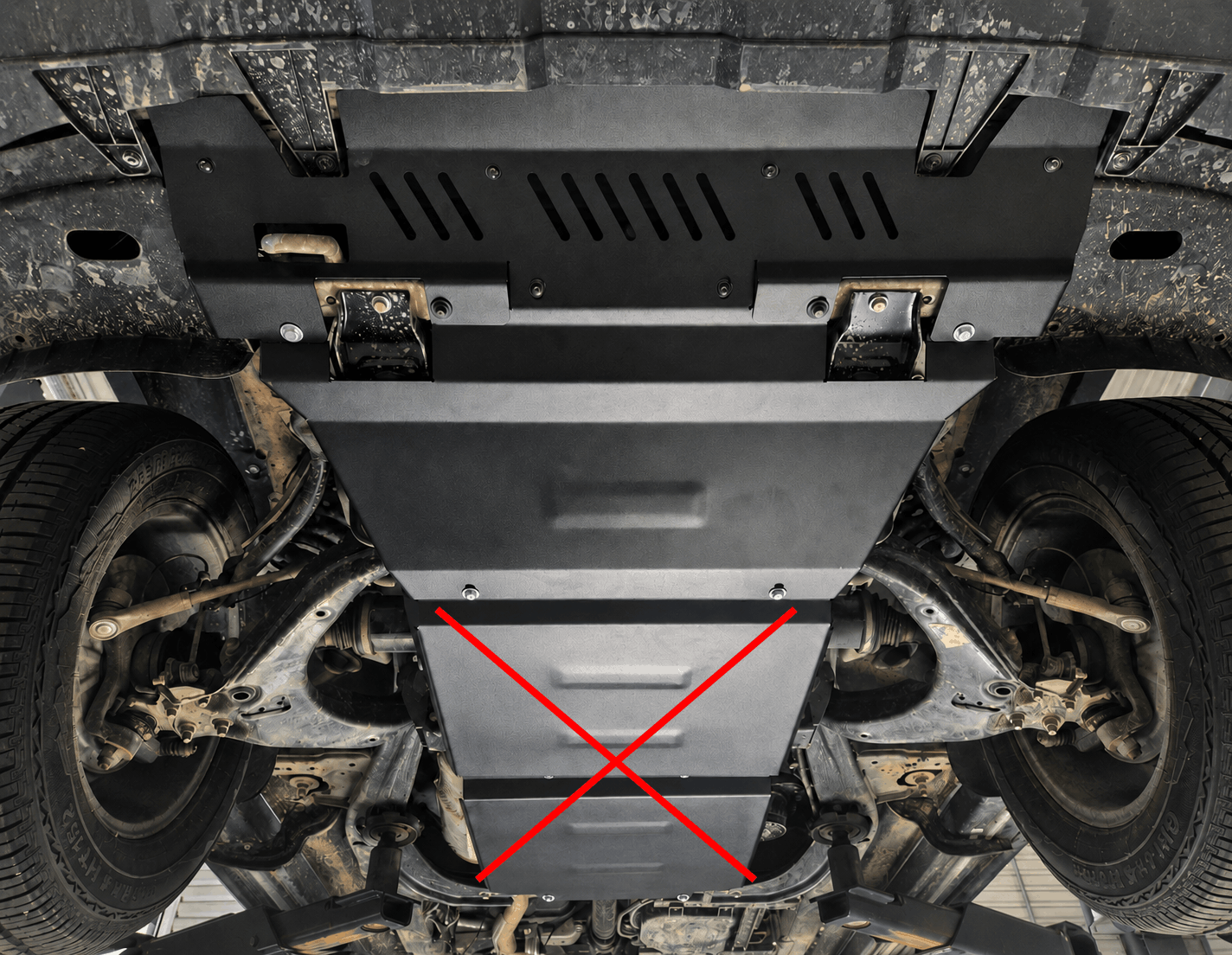
3 mm steel engine and radiator skid plate installed on the Maxus T60 MAX 2025–2026.
The front section protects the engine and radiator area. These components are positioned where stones, ice, road debris and raised obstacles are most likely to make initial contact with the underside of the vehicle.
The Maxus T60 MAX engine and radiator skid plate is made from 3 mm steel and is listed for the Maxus T60 MAX 2025–2026 application.
This is the foundation of the protection system. It can be selected as a standalone front guard, while the gearbox and transfer case plates are designed to be installed together with the engine and radiator skid plate.
Engine and radiator protection is the logical first choice for vehicles used on damaged roads, gravel, worksites or other surfaces where frontal underbody impacts are possible.
Gearbox Skid Plate
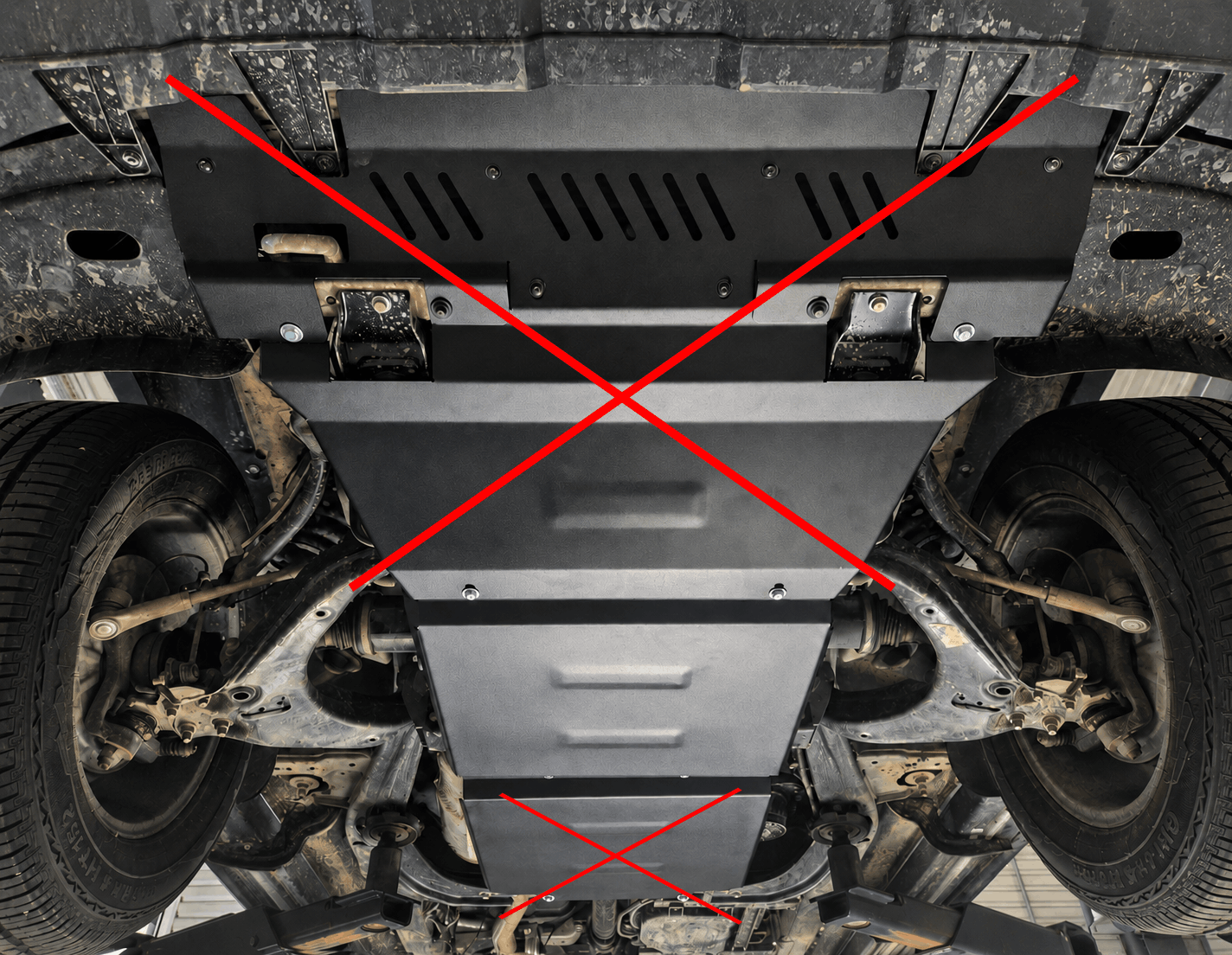
3 mm steel gearbox skid plate installed on the Maxus T60 MAX 2025–2026.
The automatic gearbox is located farther behind the front protection area. A front skid plate cannot provide complete coverage beneath the transmission, so a separate plate is used for this section.
The Maxus T60 MAX gearbox skid plate is manufactured from 3 mm steel and protects the gearbox area against direct contact from below.
It is particularly relevant when the vehicle regularly passes over:
- Raised centres between wheel tracks
- Large stones
- Uneven worksite surfaces
- Frozen snow and ice
- Deep ruts
- Broken or unfinished roads
Important: The gearbox skid plate is designed to be installed together with the engine and radiator skid plate as part of the mounting configuration.
For regular worksite, forestry or rough-road use, combining the engine and radiator and gearbox plates provides more continuous protection along the front and central drivetrain areas.
Transfer Case Skid Plate
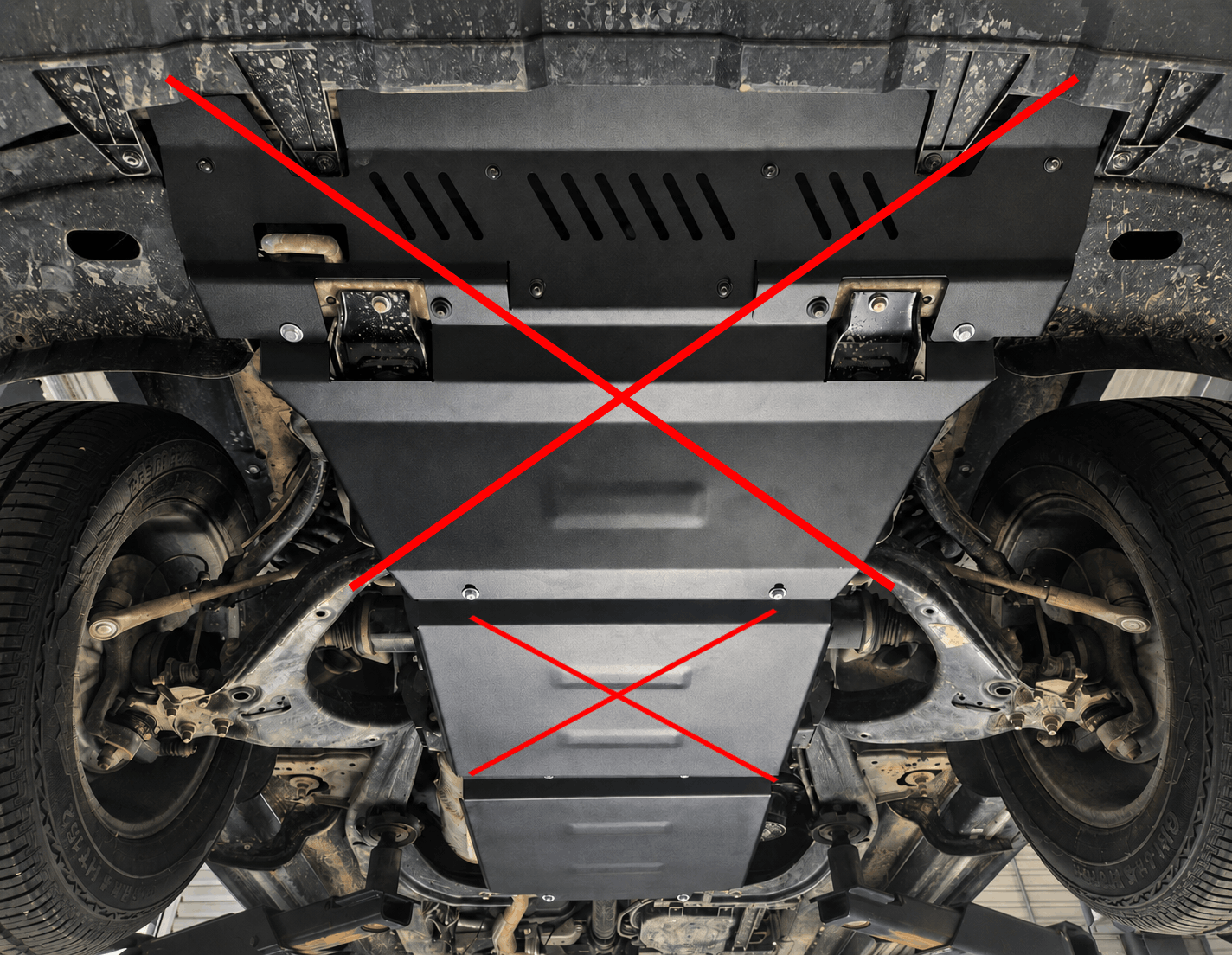
3 mm steel transfer case skid plate installed on the Maxus T60 MAX 2025–2026.
The transfer case distributes drive to the front and rear axles and is an important part of the T60 MAX four-wheel-drive system. Its position beneath the vehicle makes additional protection worth considering when the pickup is used away from paved roads.
The Maxus T60 MAX transfer case skid plate is made from 3 mm steel and is designed for the Maxus T60 MAX 2025–2026 application.
Like the gearbox plate, the transfer case plate is designed to be installed together with the engine and radiator skid plate as part of the mounting configuration.
This section is most relevant for owners who use the vehicle’s 4×4 capability on forestry tracks, farms, construction sites or uneven terrain where the central underside of the vehicle could make contact with an obstacle.
Which Protection Configuration Should You Choose?
Engine and Radiator Protection
Suitable for:
- Everyday driving
- Occasional gravel-road use
- Roads with potholes and loose debris
- Owners who primarily want to protect the front underside
This is the starting point of the protection system and can be installed without purchasing all three sections.
Engine, Radiator and Gearbox Protection
Suitable for:
- Regular driving on damaged roads
- Construction and maintenance work
- Forestry and agricultural use
- Vehicles frequently driven over ruts or uneven surfaces
This combination extends protection from the front of the vehicle beneath the gearbox area.
Complete Engine, Gearbox and Transfer Case Protection
Suitable for:
- Regular 4×4 use
- Forestry roads and off-road tracks
- Farms and demanding worksites
- Vehicles frequently exposed to stones, ruts and uneven ground
The complete configuration provides the broadest available coverage for the principal drivetrain components.
All three products can be viewed in the Maxus T60 MAX underbody protection category.
Why Use 3 mm Steel?
Steel is commonly selected for working pickups because it combines impact resistance with durability. A 3 mm steel plate can absorb and distribute impacts that would otherwise be directed toward a smaller area of the protected component.
The main advantages include:
- Strong resistance to impact and deformation
- Suitable for demanding road and work conditions
- Durable construction
- Vehicle-specific shape and mounting
- Protection against stones, road debris and contact with uneven terrain
Steel protection is heavier than an equivalent aluminium plate. For a working pickup, however, durability and resistance to repeated impacts are often the higher priority.
A skid plate remains a protective component rather than a guarantee against every possible form of damage. Driving speed, obstacle size, impact angle and terrain conditions must always be considered.
Installation and Vehicle Compatibility
The Maxus T60 MAX skid plates are designed to use the vehicle’s existing mounting points. Drilling or permanent modification of the vehicle structure is not required.
Mounting hardware and installation instructions are included with the products. Installation can be performed by an experienced vehicle owner with suitable tools or by a professional workshop.
The products are listed for the Maxus T60 MAX 2025–2026 application. The exact vehicle configuration should always be checked before ordering, as model year, drivetrain, body version and underbody layout can affect compatibility.
If there is any uncertainty, use the free VIN compatibility check before placing the order.
Frequently Asked Questions
Are these skid plates compatible with every Maxus T60?
No. These products are specifically listed for the Maxus T60 MAX model years 2025–2026. Earlier Maxus or LDV T60 versions may have different mounting points and underbody layouts.
Can the gearbox skid plate be installed without the engine and radiator skid plate?
No. The gearbox skid plate is designed to be installed together with the engine and radiator skid plate as part of the mounting configuration.
Can the transfer case skid plate be installed separately?
No. The transfer case skid plate is designed to be installed together with the engine and radiator skid plate as part of the mounting configuration.
Is drilling required?
No. The skid plates are designed to use the existing mounting points of the listed vehicle application.
Does a skid plate prevent every type of underbody damage?
No skid plate can guarantee protection against every possible impact. It provides an additional steel barrier that helps reduce direct exposure of the protected component.
Conclusion
The Maxus T60 MAX offers useful ground clearance, four-wheel drive, 500 Nm of torque and the ability to tow up to 3,500 kg. These characteristics make it a practical pickup for work, towing and recreational use.
They do not, however, prevent individual components underneath the vehicle from being struck by stones, road debris or raised obstacles.
The engine and radiator skid plate provides the essential front section. The gearbox plate extends protection beneath the transmission, while the transfer case plate covers an important part of the four-wheel-drive system.
Owners can therefore select either basic front protection or a more complete system according to the vehicle’s actual working and driving conditions.
