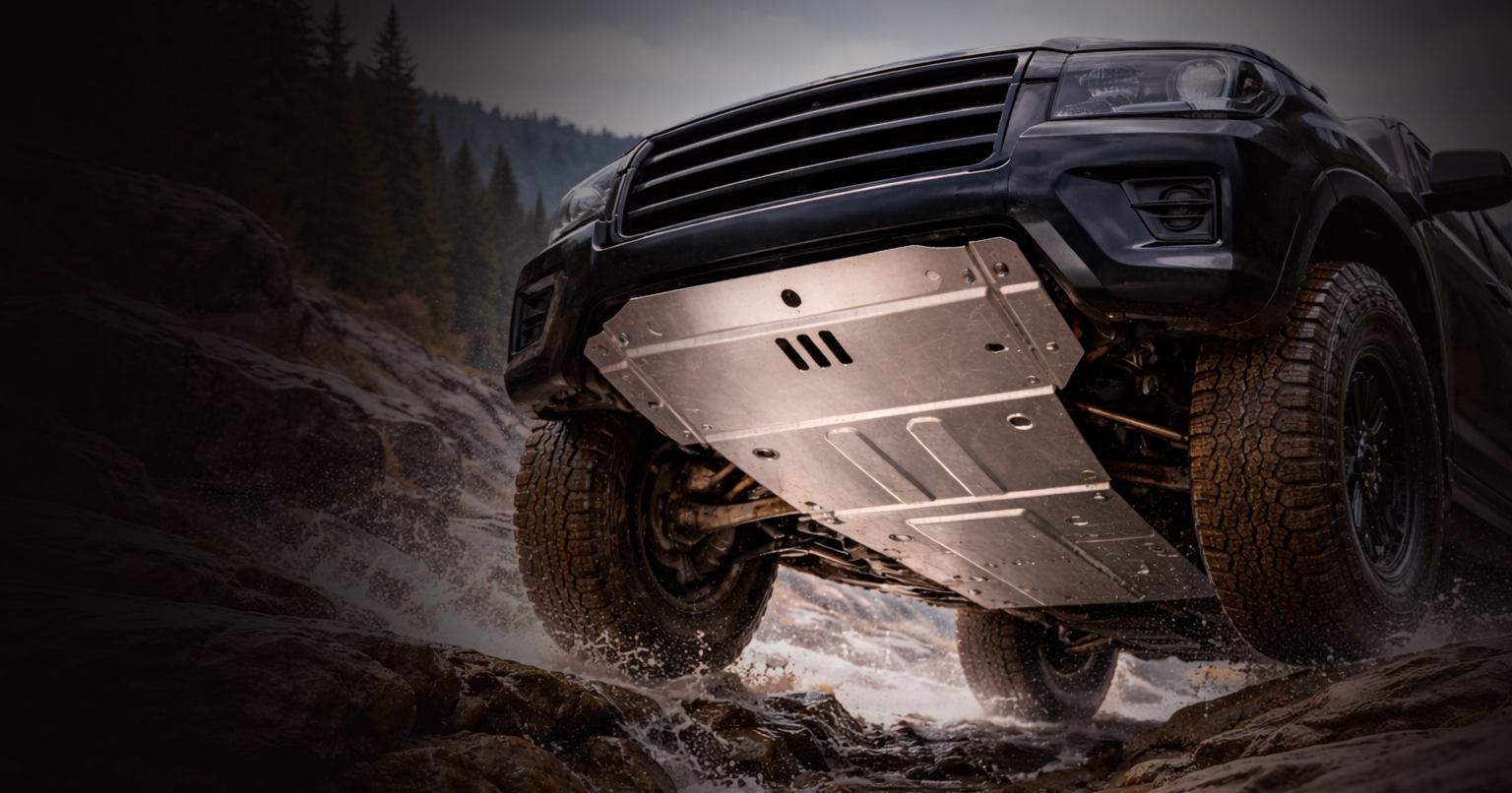
When you start looking at underbody protection, one of the first questions is which material to choose. Most aftermarket skid plates are made from either steel or aluminium, and both have clear strengths and trade-offs. The right choice depends on the vehicle, the protected area, typical road conditions and how much rough-road or off-road driving you actually do.
Vehicle-specific examples show why material cannot be judged by thickness alone. Our Toyota Land Cruiser 150 gearbox skid plate guide compares 2.5 mm steel with 4 mm aluminium for the same gearbox area, while the Volkswagen ID.4 steel vs aluminium skid plate guide compares 2 mm steel and 3 mm aluminium on an electric crossover. For a road-focused saloon, the Toyota Camry underbody protection guide compares listed 2 mm steel and 4 mm aluminium options for the front underbody.
The same principle applies to larger SUVs, pickups and commercial vehicles. Our Toyota 4Runner 2002–2009 skid plate guide compares 2.5 mm steel and 4 mm aluminium protection for the engine, radiator, front bumper and gearbox areas, including the weight and use-case differences between the two materials.
The Suzuki Vitara underbody protection guide covers steel and aluminium options across several protection zones, while our Toyota Hilux underbody protection guide by generation compares available materials and coverage across multiple model-year applications.
Commercial vehicles follow the same rule: material choice should be evaluated together with fitment and coverage. Our Volkswagen Transporter T5, T6 and T6.1 underbody protection guide compares available 2 mm steel and 4 mm aluminium applications, while the Ford Transit Custom underbody protection guide covers 2 mm steel and 3 mm aluminium protection for the engine, gearbox, radiator and AdBlue tank across different model-year applications.
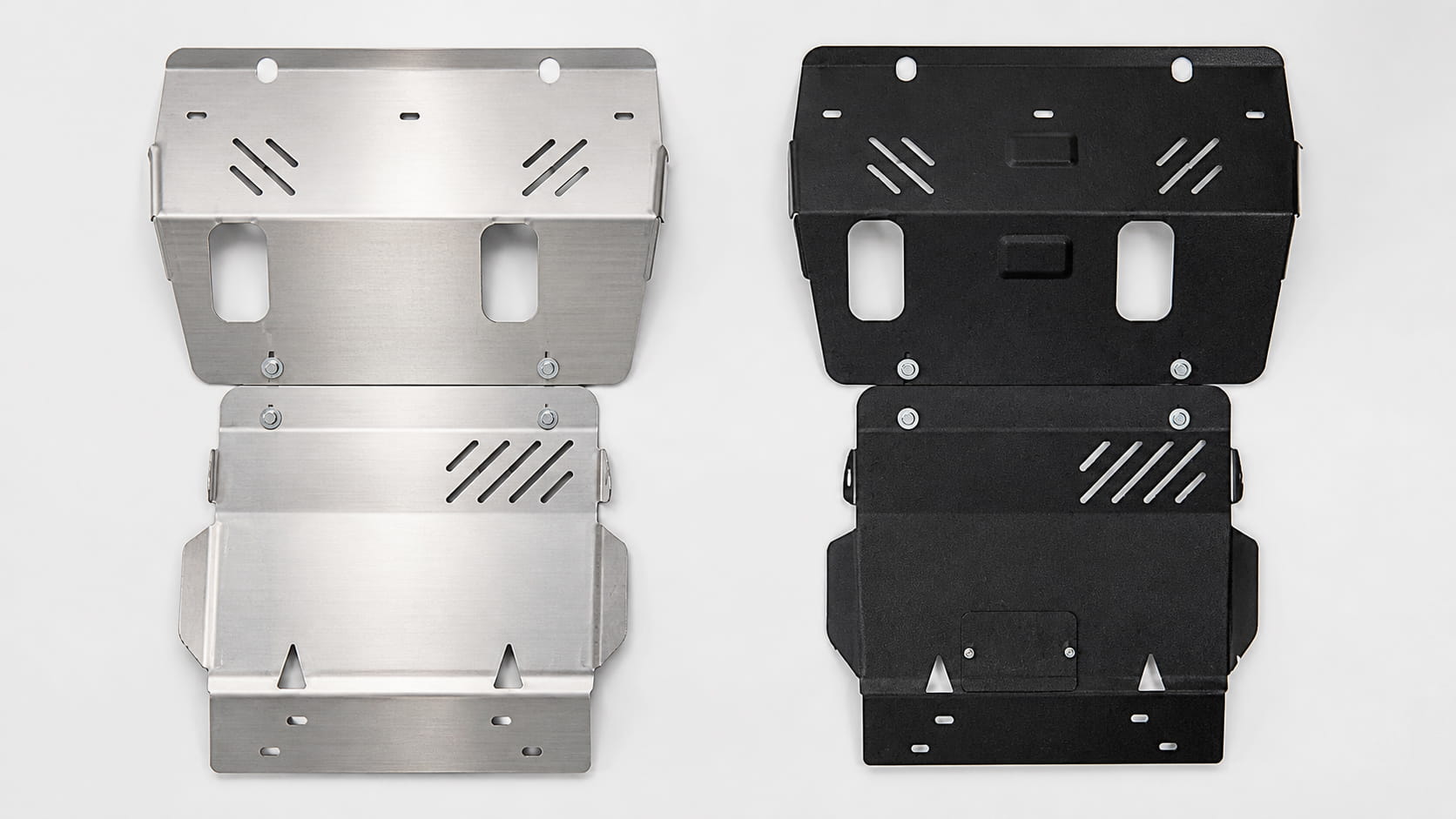
Steel Skid Plates: Impact Resistance and Durability
Steel skid plates are commonly selected when resistance to repeated impacts and long-term durability are important. They can be suitable for rocks, deep ruts, sharp edges and demanding road conditions. Real-world performance depends on the steel grade, plate thickness, formed shape, reinforcement, mounting system and direction of impact.
For a vehicle-specific steel example, see our Mitsubishi ASX underbody protection guide, which compares the 2.5 mm steel engine and gearbox plate for 2010–2022 models with the 2 mm steel engine, gearbox and radiator plate for 2023–2026 models.
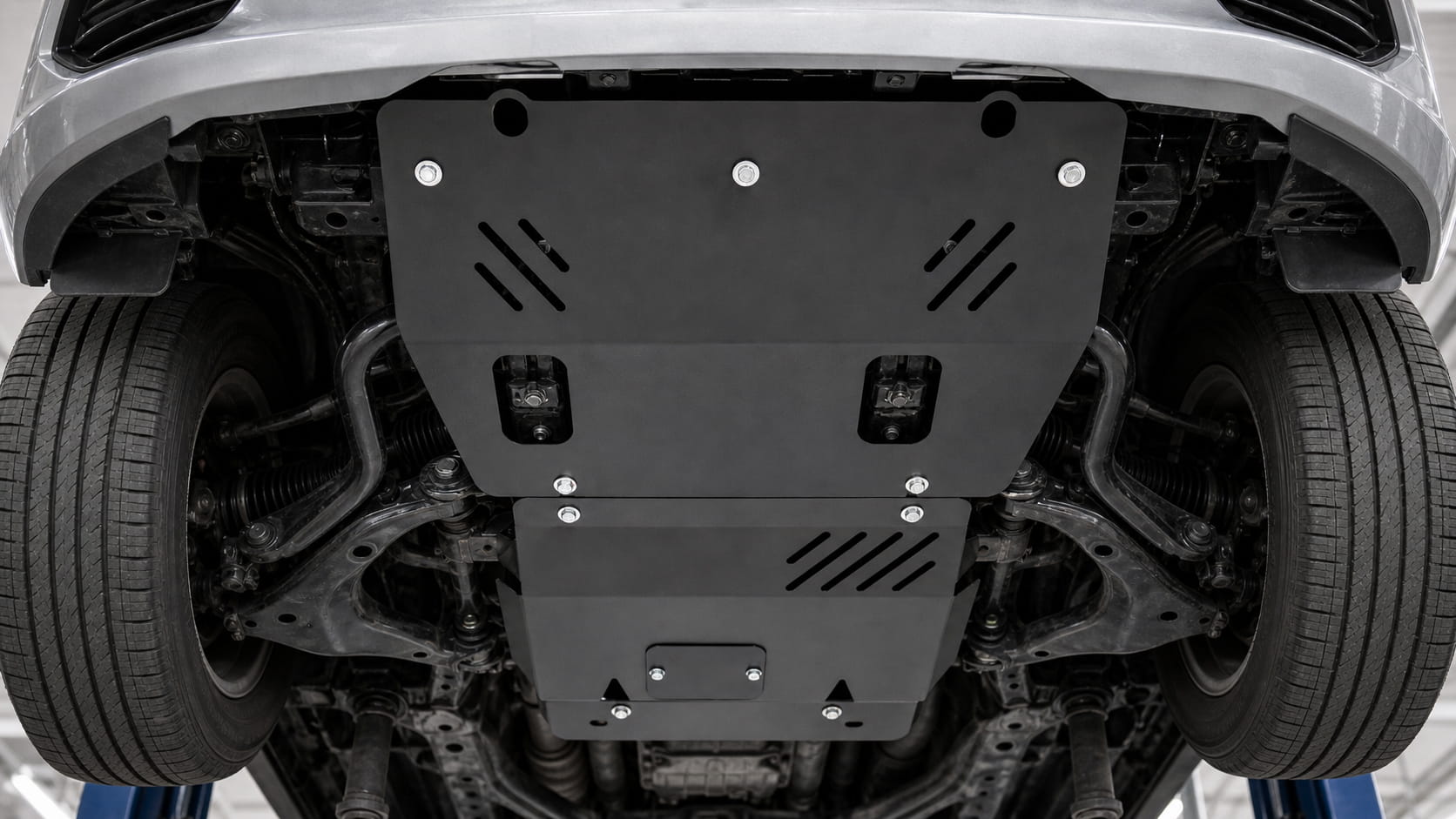
The main compromises are higher weight and the need for a durable protective coating. Steel skid plates should be inspected and cleaned periodically to keep corrosion under control, particularly on vehicles driven on salted winter roads. Any damaged coating should be repaired according to the manufacturer’s recommendations.
Aluminium Skid Plates: Lower Weight and Resistance to Red Rust
Aluminium skid plates are commonly selected when lower weight is important while maintaining a durable metal barrier beneath the specified protection zone. Aluminium is usually lighter than a comparable steel design and does not develop conventional red iron rust, which makes it attractive for crossovers, estates and daily drivers.
Aluminium can still oxidise or experience surface or galvanic corrosion depending on road conditions, salt exposure, fasteners and contact with other metals. Its performance under impact also depends on the alloy, thickness, plate design, reinforcement, mounting system and direction of impact.
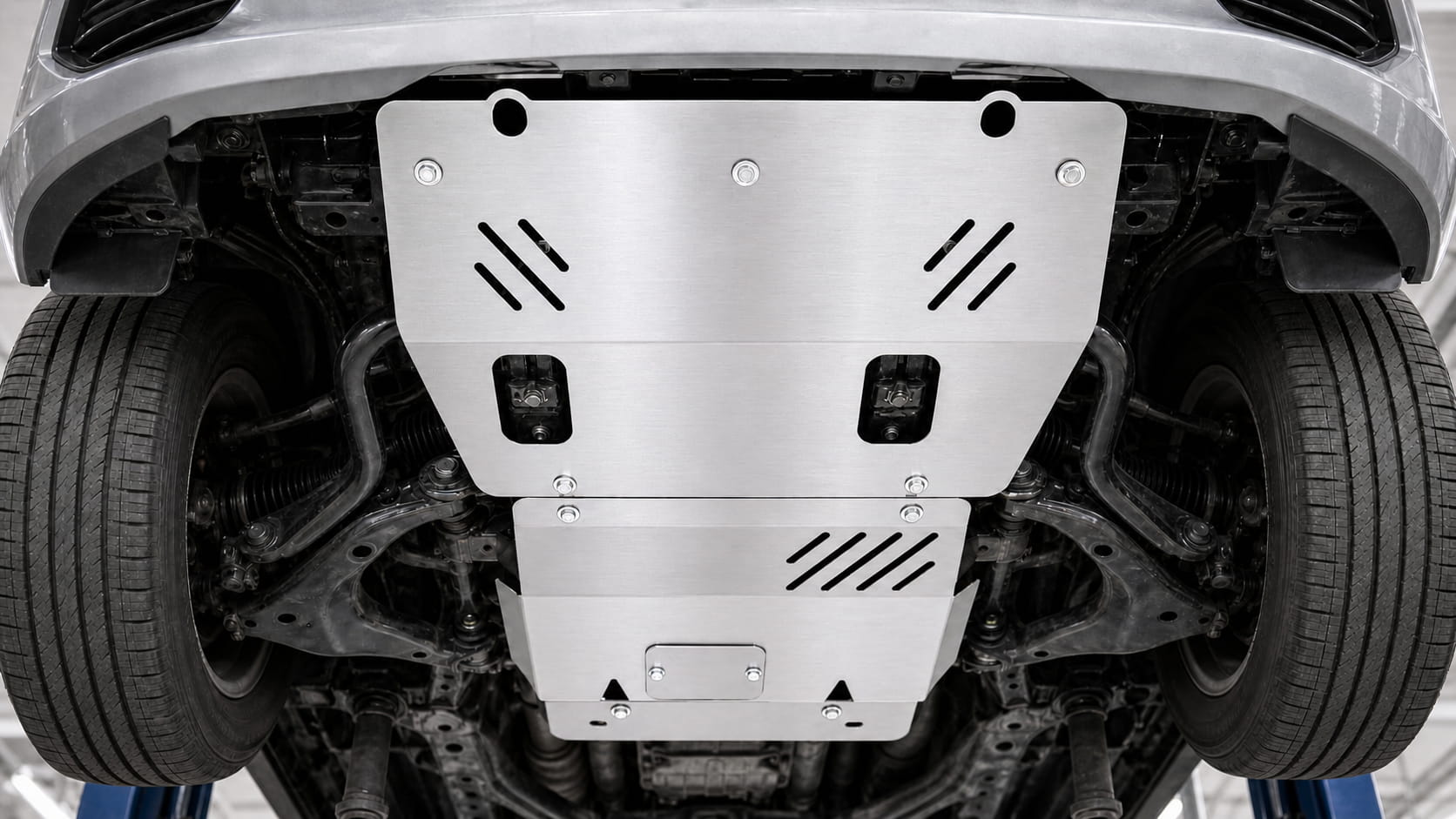
For many drivers, a correctly fitted aluminium skid plate can provide useful protection against potholes, gravel, compacted snow, ice and occasional light off-road use. The exact protection level cannot be determined from material and thickness alone and should be assessed together with the complete plate design and mounting system.
Steel or Aluminium: Which Is Better for Your Driving?
If you regularly drive on rocky tracks, forest roads or construction sites, a steel skid plate may be appropriate when repeated impacts and demanding use are the main concerns. The correct choice should still be based on the complete plate design, mounting system, protected area and vehicle application rather than the material alone.
Many owners of larger SUVs and pickups, including Toyota 4×4 vehicles used for off-road trips or job sites, select steel skid plates when they accept additional weight in exchange for a robust metal construction.
For mixed everyday use, aluminium may offer a practical balance. Drivers who mainly encounter city traffic, motorways, winter conditions and occasional gravel roads may value its lower weight and resistance to conventional red rust.
If gravel roads are a regular part of your driving, see our guide to underbody protection for gravel roads to understand which underbody components are most exposed and which areas should be protected first.
On modern crossovers and family vehicles, a compatible aluminium engine and gearbox skid plate can provide useful protection for mixed-road and light-gravel use when its protected zone matches the vehicle and the driver’s requirements.
Material choice also depends on what is available for the exact vehicle. Some applications are currently offered only in steel. Our Hyundai i20 underbody protection guide compares separate 2 mm steel products across the 2009–2014, 2015–2020 and 2021–2026 fitment ranges, including a dedicated 48V mild-hybrid application.
The Hyundai Elantra is another example where the currently listed application is a steel protection plate rather than a direct steel-versus-aluminium choice. Our Hyundai Elantra underbody protection guide examines the available 2 mm steel skid plate for the engine, front bumper, gearbox and radiator areas on 2021–2026 models.
The Audi Allroad range is another example where the listed protection options use 2 mm steel across several generations and protected areas. Our Audi Allroad underbody protection guide compares engine, radiator and gearbox skid plates for Audi A4 Allroad and A6 Allroad models from 2000 to 2026.
Skid Plate Design Matters as Much as Material
Material is only one part of the equation. Plate thickness, formed shape, reinforcement, mounting points, fastening hardware and the direction of impact all influence real-world performance. A thicker plate is not automatically better if the design or mounting system is unsuitable for the intended application.
When comparing products in our underbody protection shop, consider plate thickness, protected area, mounting method, reinforcement, ground-clearance reduction and surface finish instead of choosing by material alone.
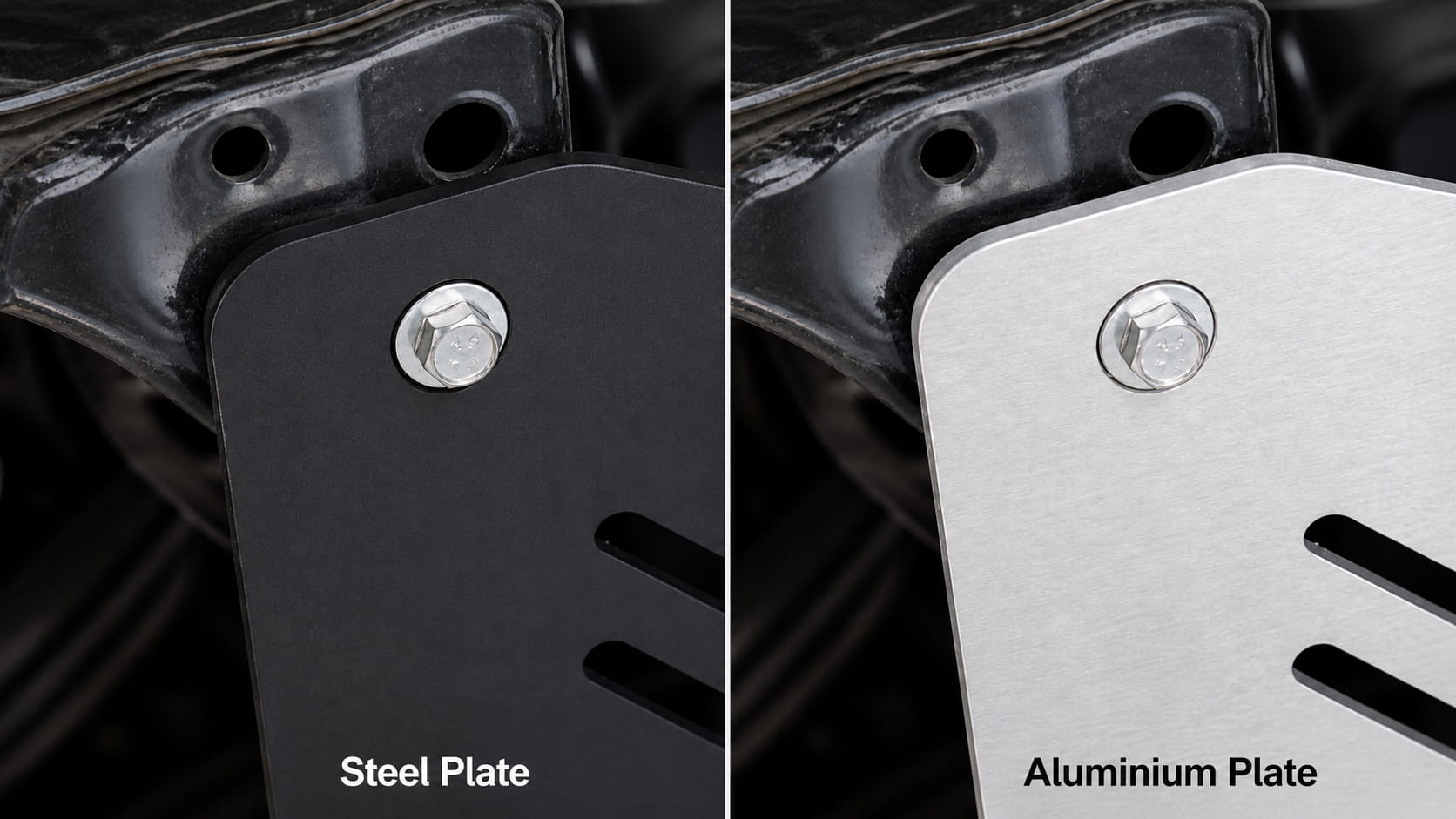
If you are unsure which material to choose, consider how often you drive on unpaved roads, how long you plan to keep the vehicle and how important additional weight is to you. For many daily drivers, aluminium can be a practical long-term choice where a compatible product is available. For frequent rough-road or work use, steel may be preferred when its design and protected area match the intended conditions.
Real-World Example: Lexus GX460 (2010–2026)
For the Lexus GX460, we offer both a 2 mm steel engine, front bumper and gearbox skid plate set and a 4 mm aluminium engine and front bumper skid plate.
These products do not provide identical coverage, so they should not be compared by material alone. The correct option depends on the required protection zones, vehicle configuration and intended use. Always compare the stated coverage of each product and confirm compatibility before ordering.
Steel vs Aluminium Skid Plates: Quick Comparison
Short answer: steel may suit demanding off-road or work use, while aluminium may suit drivers who prioritise lower weight. Neither material is automatically better: compare the specific plate design, thickness, coverage and mounting system for your vehicle and driving conditions.
| Feature | Steel skid plate | Aluminium skid plate |
|---|---|---|
| Thickness | Check the thickness specified for the individual steel product. Thickness alone does not determine protection. | Check the thickness specified for the individual aluminium product. Do not compare different materials by thickness alone. |
| Weight | Usually heavier than an aluminium option with comparable coverage. Check the product weight. | Usually lighter than a steel option with comparable coverage. Check the product weight. |
| Impact resistance | Depends on steel grade, thickness, shape, reinforcement and mounting strength. | Depends on alloy, thickness, shape, reinforcement and mounting strength. |
| Corrosion resistance | Depends on protective coating, cleaning and maintenance. Inspect damaged areas and fasteners. | Does not develop red iron rust, but corrosion can still occur. Keep salt and dirt from accumulating and inspect fasteners and contact points. |
| Suitable use | Demanding off-road or work use when the plate design and mounting system suit the conditions. | Daily driving, winter roads, gravel and light off-road use when the plate design and mounting system suit the conditions. |
| Price | Varies by product. Compare options with equivalent coverage and included mounting hardware. | Varies by product. Compare options with equivalent coverage and included mounting hardware. |
| Key consideration | Assess the complete design for the intended impacts, alongside added weight and coating maintenance. | Assess the weight saving alongside plate design, mounting strength and corrosion maintenance. |
Steel vs Aluminium Skid Plate Thickness
Skid plate thickness should be assessed together with the material and complete product design. Check the thickness listed for the exact vehicle application. Steel and aluminium plates may use different thicknesses, so the millimetre figure alone does not establish which option provides better protection.
A 4 mm aluminium skid plate is not automatically stronger or weaker than a 2 mm steel skid plate. Their relative performance depends on the steel grade or aluminium alloy, plate shape, reinforcement, protected area, mounting strength and direction of impact.
When choosing underbody protection, compare the complete design rather than thickness alone. Check the material, coverage, mounting system, ground-clearance reduction and the type of roads on which the vehicle will normally be used.
Skid Plate Material FAQ
Is steel always better than aluminium for skid plates?
No. Steel and aluminium have different characteristics, and neither material is automatically better in every application. Real-world performance depends on the material grade or alloy, thickness, formed shape, reinforcement, mounting system, protected area and direction of impact.
Will an aluminium skid plate bend too easily?
A properly designed aluminium skid plate with suitable thickness, reinforcement and mounting points can provide useful protection against potholes, gravel roads and winter conditions. Its performance depends on the complete product design and cannot be determined from the material name or thickness alone.
Does a steel skid plate make the car too heavy?
A steel skid plate adds weight, but the practical effect depends on the individual product, vehicle and number of protection plates installed. The additional mass may be more relevant on smaller vehicles or when several plates are fitted, which is why some drivers choose aluminium where a compatible version is available.
What thickness should a skid plate be?
In our product range, steel skid plates are commonly 2–3 mm thick, while aluminium skid plates are generally 3–5 mm thick. The correct thickness depends on the material, plate shape, reinforcement, mounting system and intended driving conditions. Thickness figures from different materials should not be compared in isolation.
How do I choose the right skid plate material for my vehicle?
Consider where and how you normally drive, which components require protection and which products are available for the exact vehicle configuration. For work vehicles or SUVs regularly used on rocky tracks, deep ruts or construction sites, steel may be suitable when the design and coverage match the intended conditions.
If you mainly drive a road-focused car or crossover on tarmac, with some gravel and winter use, aluminium can provide a practical balance of protection, weight and resistance to conventional red rust where a compatible version is available.
Product Compatibility Help
Still not sure whether a steel or aluminium skid plate is the right choice for your vehicle? We can help you select the appropriate material and check compatibility before you order.
- Send us your vehicle make, model, production year and engine.
- Alternatively, provide your VIN or chassis number and a link to the skid plate you are considering.
Our team will check which material and specific skid plate is listed for your vehicle and suggest suitable alternatives when necessary. This helps reduce the risk of ordering protection that does not match the vehicle configuration or intended driving conditions.
You can also browse our complete range of vehicle-specific underbody protection, use the GuardPass™ VIN compatibility checker or contact us directly if you have any questions.
