Toyota Corolla Cross Underbody Protection: Engine, Gearbox, Radiator and Catalytic Converter Guide
Quick answer: Toyota Corolla Cross underbody protection should be selected by protection zone rather than by model name alone. The main front skid plate protects the engine, gearbox and lower radiator area, while a separate plate protects the catalytic converter. These products cover different components and may be installed together only when both are confirmed as compatible with the exact vehicle.
The Toyota Corolla Cross is primarily designed for road use, but its exposed lower components can still be affected by potholes, loose debris, damaged road surfaces, winter ice, compacted snow and unpaved access roads. A vehicle-specific skid plate creates a physical barrier between these hazards and vulnerable components underneath the vehicle.
This guide examines the protection options currently listed for selected Toyota Corolla Cross models within the 2022–2026 fitment range. That date range comes from the relevant product listings and does not guarantee compatibility with every Corolla Cross produced during those years. Always confirm the VIN, model year, engine, drivetrain, body version, market specification and mounting points before ordering.
Which Toyota Corolla Cross Components Need Protection?
The most relevant protection zones depend on the vehicle configuration and how it is used. For the Toyota Corolla Cross, the available products covered in this guide address two principal areas:
- Engine, gearbox and lower radiator area
- Catalytic-converter area
These are separate protection zones. A front skid plate does not automatically extend far enough underneath the vehicle to protect the catalytic converter, and a catalytic-converter plate does not replace the main engine guard.
| Protection zone | Typical exposure | Available product |
|---|---|---|
| Engine, gearbox and radiator | Potholes, road debris, ice, uneven surfaces and raised obstacles | 2 mm steel skid plate |
| Catalytic converter | Impacts from below and exposure around the exhaust component | 3 mm aluminium skid plate |
Engine, Gearbox and Radiator Protection
The engine area is normally the first zone to consider because it is positioned near the front of the vehicle and may be exposed when a wheel enters a pothole or the vehicle passes over a raised object. The listed front protection plate also extends coverage towards the gearbox and lower radiator area.
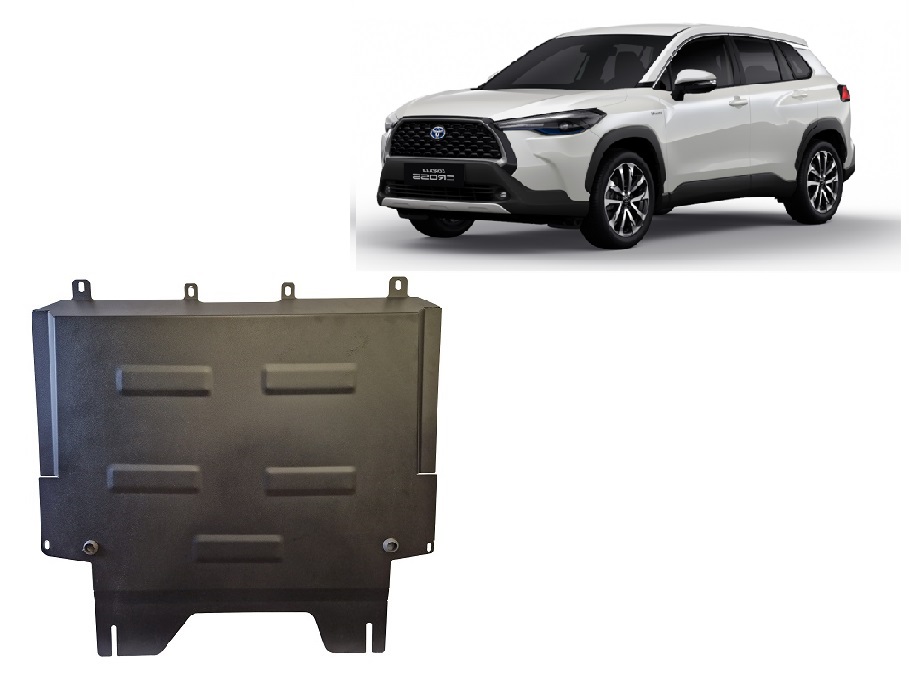
The listed Toyota Corolla Cross engine, gearbox and radiator skid plate is manufactured from 2 mm steel and has a listed weight of 11 kg. It is intended for selected Corolla Cross applications within the 2022–2026 product fitment range.
This plate is listed without an oil-sump service opening. That means oil-change access should be checked before installation. Depending on the vehicle and workshop procedure, the plate may need to be removed or partially lowered during servicing.
What the front skid plate can help protect
- The lower engine and oil-sump area
- Exposed sections beneath the gearbox
- The lower front and radiator area
- Vulnerable components exposed to debris from the front wheels
A correctly fitted plate should protect these lower areas without interfering with steering, suspension movement, exhaust components, drainage points or the airflow required for engine, transmission or, where applicable, hybrid-system cooling.
Catalytic-Converter Protection
The catalytic converter is a separate protection zone positioned farther underneath the vehicle. Its exact location and surrounding underbody layout can differ between engines, drivetrains and market specifications. For this reason, compatibility must be checked independently from the main engine skid plate.
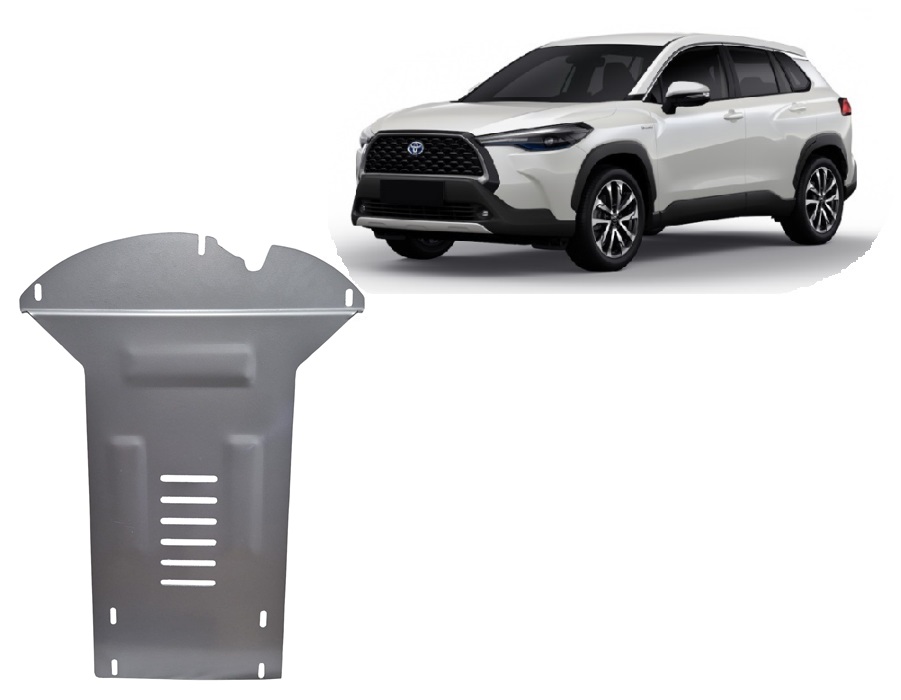
The listed Toyota Corolla Cross catalytic-converter skid plate is manufactured from 3 mm aluminium and has a listed weight of 3 kg. It provides targeted protection rather than replacing the larger engine, gearbox and radiator plate.
Catalytic-converter protection may be relevant for drivers who regularly use rough access roads, damaged urban roads, gravel routes or areas where debris can strike the centre section of the vehicle. It may also make access to the converter more difficult, but it should not be described as an absolute theft-prevention device.
Do You Need Both Plates?
The two plates protect different parts of the vehicle. Drivers wanting broader underbody coverage may consider both products, provided that both are compatible with the exact Corolla Cross configuration and can be installed together without conflicting mounting points.
| Driving situation | Suggested priority |
|---|---|
| Normal urban and motorway driving | Engine, gearbox and radiator protection first |
| Frequent potholes, winter roads or loose debris | Front protection, followed by catalytic-converter protection if compatible |
| Gravel roads and uneven access routes | Consider both protection zones |
| Concern focused on the exhaust component | Dedicated catalytic-converter plate |
The correct choice depends on actual exposure. A driver using well-maintained roads may prioritise the front plate, while a vehicle frequently travelling over gravel, damaged roads or uneven worksites may benefit from more extensive coverage.
Steel vs Aluminium for the Corolla Cross
The two products in this guide use different materials because they cover different zones and have different designs. Their listed weights and thicknesses should not be compared as if they were two versions of the same plate.
2 mm steel front protection
Steel is commonly selected where stiffness, impact resistance and durability are the main priorities. The Toyota Corolla Cross front plate covers a relatively large area and has a listed weight of 11 kg.
3 mm aluminium catalytic-converter protection
Aluminium provides lower weight and strong resistance to conventional red-rust corrosion. The dedicated catalytic-converter plate has a listed weight of 3 kg. Fasteners, mounting points and areas where different metals meet still require correct installation and periodic inspection.
Material alone does not determine protection quality. Plate shape, bends, reinforcement, mounting-point placement and the size of the protected area are also important.
Fitment: Why Model Year Alone Is Not Enough
Two Toyota Corolla Cross vehicles from the same model year may have different underbody layouts. Differences can result from the engine, transmission, drivetrain, hybrid configuration, production date, destination market or equipment package.
Before ordering, verify:
- VIN
- Exact model year and production date
- Engine and powertrain type
- Transmission
- Front-wheel-drive or AWD configuration
- Hybrid or non-hybrid specification
- Existing factory covers
- Underbody shape and mounting points
- Compatibility between multiple plates if ordering both products
The 2022–2026 dates stated in the listings are product fitment ranges. They should not be interpreted as universal confirmation for every Corolla Cross manufactured during those years.
Installation and Service Access
A vehicle-specific plate should use the mounting points specified for the listed application. Installation should not rely on drilling structural areas or improvising attachment points unless this is explicitly required by the manufacturer’s fitting instructions.
Before installation:
- Compare the delivered plate with the vehicle’s underbody
- Confirm that all mounting hardware is present
- Inspect factory covers and existing fasteners
- Check clearance around the exhaust and moving components
- Review oil-change and other service-access requirements
- Confirm that ventilation and drainage paths remain unobstructed
After installation, inspect the plate and fasteners after the initial driving period. Recheck them periodically and after any significant impact. Dirt, road salt and compacted mud should not be allowed to accumulate between the guard and the protected components.
Ground Clearance and Cooling
A properly designed skid plate follows the lower profile of the vehicle, but every installed guard occupies some space beneath the chassis. The relevant measurement is the plate’s installed position, not only its material thickness.
The plate must also preserve the airflow required by the vehicle. Protection around the lower radiator area should not block cooling openings or trap debris where it could reduce cooling efficiency.
Which Protection Should Be Installed First?
For most Corolla Cross owners, the engine, gearbox and radiator plate is the logical first step because it protects several important components across the front underside. The catalytic-converter plate is a complementary product for drivers wanting targeted protection farther underneath the vehicle.
- Inspect the vehicle’s existing factory protection.
- Identify the lowest and most exposed components.
- Prioritise the engine, gearbox and lower radiator area.
- Assess whether the catalytic-converter area is also exposed.
- Confirm the exact vehicle and product fitment.
- Verify that the selected plates can be installed together.
Frequently Asked Questions
Does every Toyota Corolla Cross need a skid plate?
No. The need depends on road conditions, existing factory protection and the owner’s risk tolerance. A skid plate is more relevant where the vehicle regularly encounters potholes, gravel, winter ice, loose debris or uneven access roads.
Does the engine skid plate protect the catalytic converter?
No. The listed steel plate protects the engine, gearbox and radiator areas. The catalytic converter requires the separate 3 mm aluminium plate listed for that protection zone.
Can both Toyota Corolla Cross plates be installed together?
Potentially, but compatibility must be confirmed for the exact vehicle. Check the VIN, powertrain, drivetrain, underbody layout and mounting points before ordering both products.
Is the catalytic-converter plate an anti-theft device?
It is an underbody protection plate intended to shield the catalytic-converter area from impacts. It may make access more difficult, but it should not be treated as a guaranteed theft-prevention system.
Is steel always stronger than aluminium?
Not automatically. Performance depends on the alloy or steel grade, thickness, plate shape, reinforcement and mounting design. The products discussed here also protect different areas, so they are not direct material alternatives.
Does the steel plate have an oil-sump opening?
No. The current product listing states that the 2 mm steel engine, gearbox and radiator plate does not include an oil-sump opening. Service-access requirements should therefore be checked before installation.
Will a skid plate affect cooling?
A compatible plate should preserve the airflow required by the engine, transmission or, where applicable, hybrid-system cooling. Correct fitment and periodic cleaning remain important.
How should compatibility be checked?
Check the VIN, model year, engine, transmission, drivetrain, body version, market specification and underbody mounting points. Do not order solely because the vehicle name and year appear in the product title.
Final Recommendation
Begin with the area most exposed on the specific vehicle. For many Toyota Corolla Cross applications, the 2 mm steel engine, gearbox and radiator plate provides the broadest first stage of protection. The separate 3 mm aluminium catalytic-converter plate adds targeted coverage farther underneath the vehicle.
Neither listing should be treated as universally compatible with every Corolla Cross from 2022 to 2026. Confirm the exact VIN and underbody layout before ordering, especially for hybrid and AWD configurations or when combining both plates.
