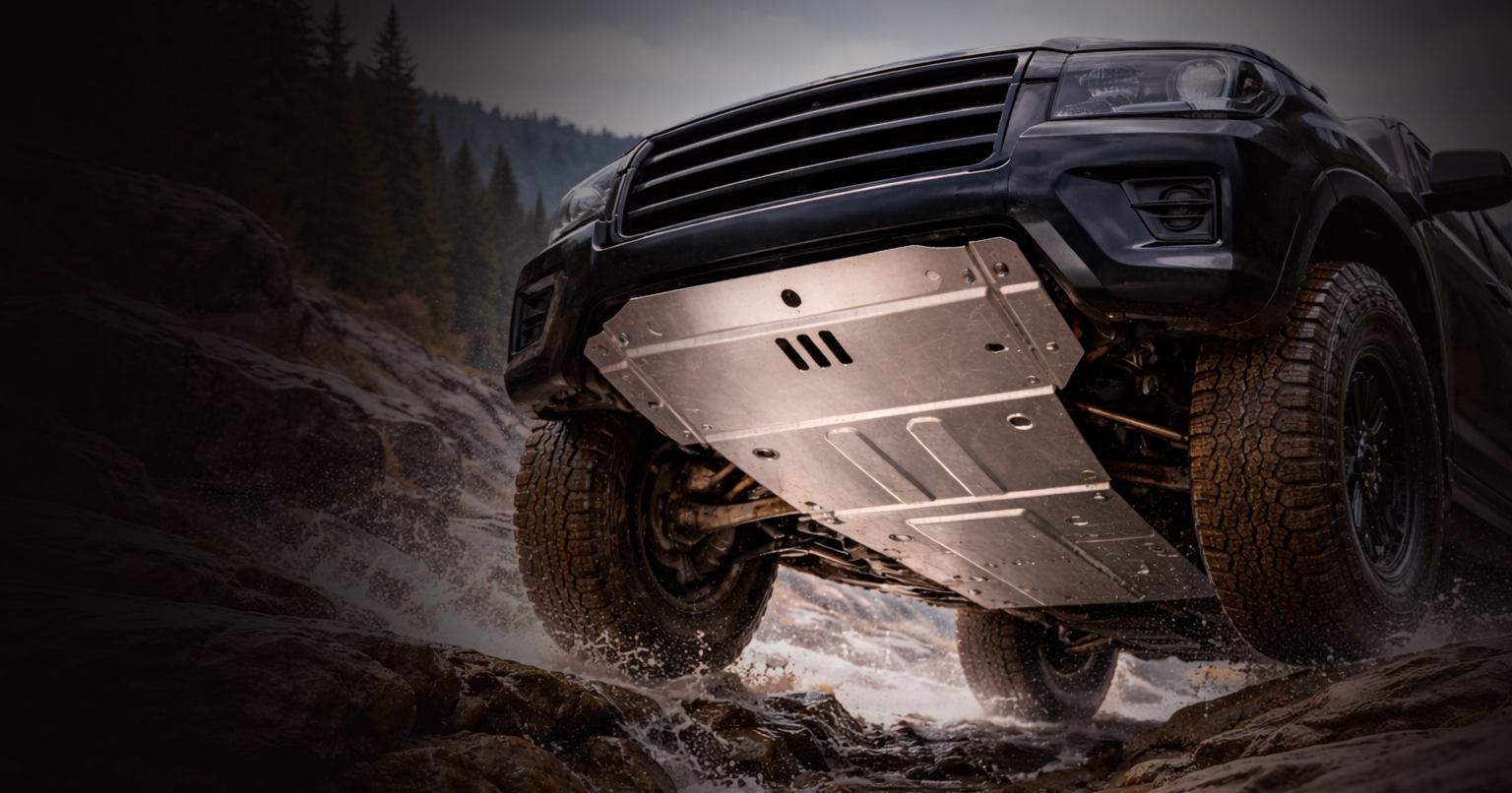
Suzuki Grand Vitara Skid Plates: Engine, Gearbox and Transfer Case Protection
A Suzuki Grand Vitara skid plate can protect exposed components that sit below the vehicle and face stones, potholes, compacted snow, deep ruts and uneven ground. The correct protection depends on the exact generation and the area at risk: the engine and lower radiator section, gearbox, transfer case or fuel tank.
For most drivers, the engine and radiator area is the first priority. Vehicles regularly used on gravel roads, forest tracks or rough terrain may also benefit from gearbox and transfer-case protection. Browse the available Suzuki Grand Vitara skid plates and underbody protection, but confirm the model year, generation, drivetrain and mounting layout before ordering.
Quick Answer: What Should You Protect First?
Start with the component most likely to contact an obstacle and the component whose damage could stop the vehicle. On many Grand Vitara configurations, that means the engine oil sump and lower front area. Protection can then be extended rearwards according to the vehicle and its use.
| Priority | Protection zone | Why it matters | Most relevant use |
|---|---|---|---|
| 1 | Engine and lower radiator area | Located near the front and exposed to direct impacts from below | Daily driving, damaged roads, winter and gravel |
| 2 | Gearbox and transfer case | Front protection does not automatically cover components farther back | Forest tracks, ruts, construction access and off-road use |
| 3 | Fuel tank | A long exposed surface can be vulnerable to stones and raised ground | Older compatible models, deep tracks and rocky routes |
This order is a practical starting point, not a universal fitment rule. A vehicle-specific inspection is still necessary because underbody layouts and mounting points can differ between generations and configurations.
Grand Vitara Generations Must Be Kept Separate
The name “Grand Vitara” covers more than one vehicle range. The current UnderbodyGuards catalogue includes protection listed for selected Suzuki Grand Vitara configurations from 1998 to 2019, including Grand Vitara, Grand Vitara 2 and XL7 applications.
- Grand Vitara 1999–2005: available protection includes engine and radiator plates, gearbox plates and a dedicated fuel-tank plate.
- Grand Vitara 2 2005–2019: available options include separate front and centre protection as well as multi-piece steel and aluminium sets.
- Grand Vitara XL7 1998–2009: this is a separate listed application with its own engine, radiator and gearbox protection options.
These are product fitment ranges, not a claim that one plate fits every vehicle produced within those dates. Body version, engine, transmission, drivetrain and mounting points must all match. Suzuki Vitara and Suzuki Grand Vitara should also not be treated as interchangeable model names when selecting a skid plate.
1. Engine and Radiator Protection
The engine oil sump and lower front area are normally the first zones to consider. A stone, broken road edge or hard contact with uneven ground can strike the sump or nearby lower components before the driver has time to react. The lower radiator area may also be vulnerable on applications where it sits close to the impact path.
A vehicle-specific engine and radiator skid plate creates a rigid barrier below these components. For example, the 3 mm steel engine and radiator skid plate for Suzuki Grand Vitara 2 (2005–2019) is listed for the front protection zone and includes an oil-sump service opening.
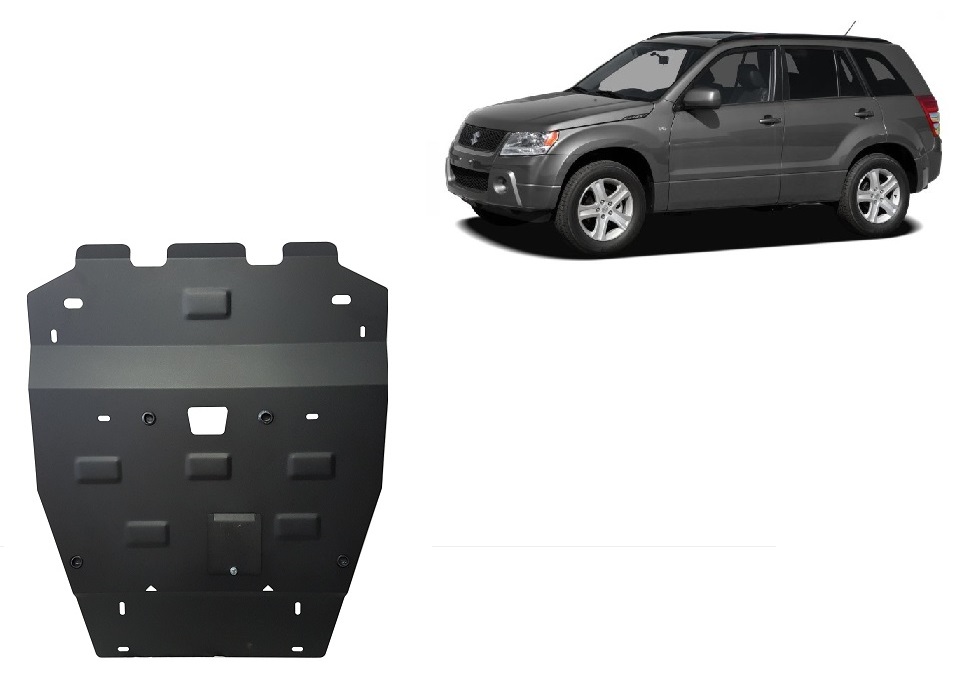
A front skid plate should be strong enough for the intended use, correctly supported by its mounting points and shaped so that it does not interfere with steering, suspension, exhaust components or required cooling airflow. Oil-change access also varies by product: some versions include a service opening, while others may need to be removed for maintenance.
2. Gearbox and Transfer Case Protection
Protecting the engine does not mean that the centre of the vehicle is protected. The gearbox and transfer case sit farther back and may remain exposed between the axles. On rutted tracks, the front wheels can clear an obstacle while the centre of the vehicle contacts it.
This makes extended centre protection particularly relevant for Grand Vitara vehicles used on forest roads, farm access routes, rocky surfaces or uneven worksites. A dedicated 3 mm steel gearbox and transfer-case skid plate for Grand Vitara 2 (2005–2019) covers these areas separately from the front plate.
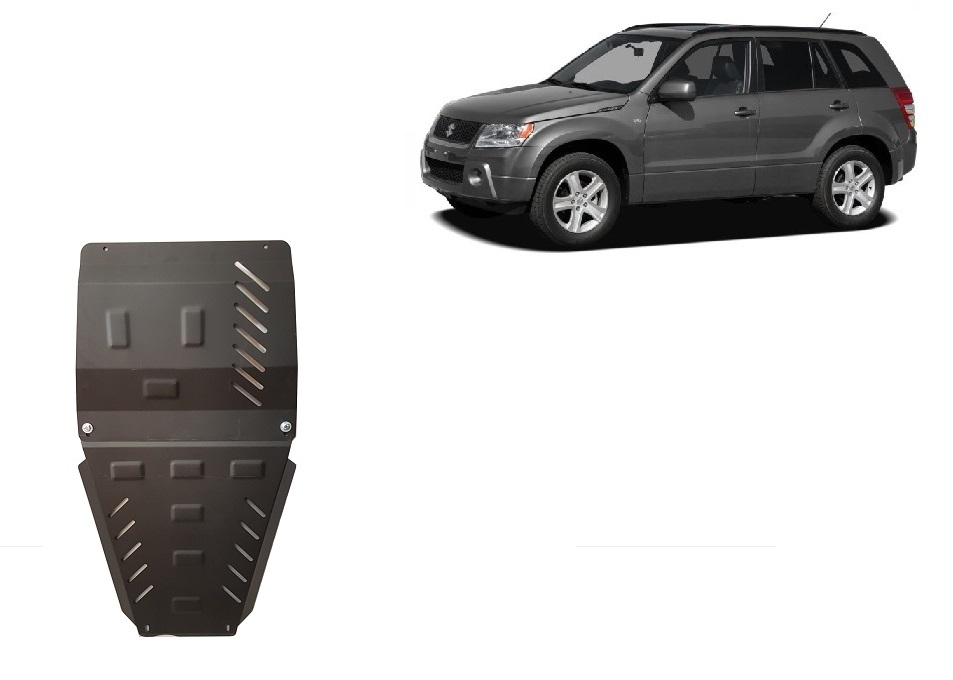
Some centre plates are designed to work with a compatible front plate and may not be intended for independent installation. Check the product notes, installation sequence and required mounting hardware before combining separate protection sections.
3. Fuel-Tank Protection
The fuel tank has a larger surface area than many drivetrain components. On compatible older Grand Vitara models, its lower section may be exposed to stones, branches, ridges between wheel tracks and contact with uneven ground.
A dedicated tank guard spreads contact over a metal plate instead of allowing a sharp obstacle to strike the tank directly. The catalogue includes a 2 mm steel fuel-tank skid plate for Suzuki Grand Vitara (1999–2005). This is a generation-specific product, so it should not be selected for a later Grand Vitara merely because the vehicle name is similar.
Fuel-tank protection becomes a higher priority when the vehicle regularly travels over deep ruts or raised centre sections. For ordinary paved-road driving, front protection may provide greater practical value first.
Steel or Aluminium?
Both materials can provide effective protection when the plate is correctly designed and mounted. The choice should be based on the vehicle’s use, total coverage, plate construction and acceptable added weight—not material name alone.
| Factor | Steel | Aluminium |
|---|---|---|
| Typical reason to choose | Repeated contact and stronger impact resistance | Lower weight and good corrosion resistance |
| Available Grand Vitara examples | 2 mm, 2.5 mm and 3 mm depending on protection zone | Selected 3 mm plates and sets |
| Maintenance | Coating damage and exposed edges should be inspected | Fasteners and contact points still require inspection |
Steel is often preferred where harder or repeated impacts are expected. Aluminium offers strong resistance to conventional red-rust corrosion and can reduce the added mass of a larger protection system. Actual performance depends on material grade, thickness, reinforcement, plate shape and mounting design. For a broader comparison, read Steel vs Aluminium Skid Plates: Which Material Is Right for You?
Separate Plates or a Complete Protection Set?
Separate plates allow the vehicle owner to protect the highest-priority area first and add coverage later. A complete set provides a planned sequence of protection across several zones and may reduce gaps between individual plates.
For the listed 2005–2019 fitment range, available examples include a 2.5 mm steel complete underbody protection set covering the engine, gearbox and transfer case, and a 3 mm aluminium set covering the engine, radiator, gearbox and transfer case.
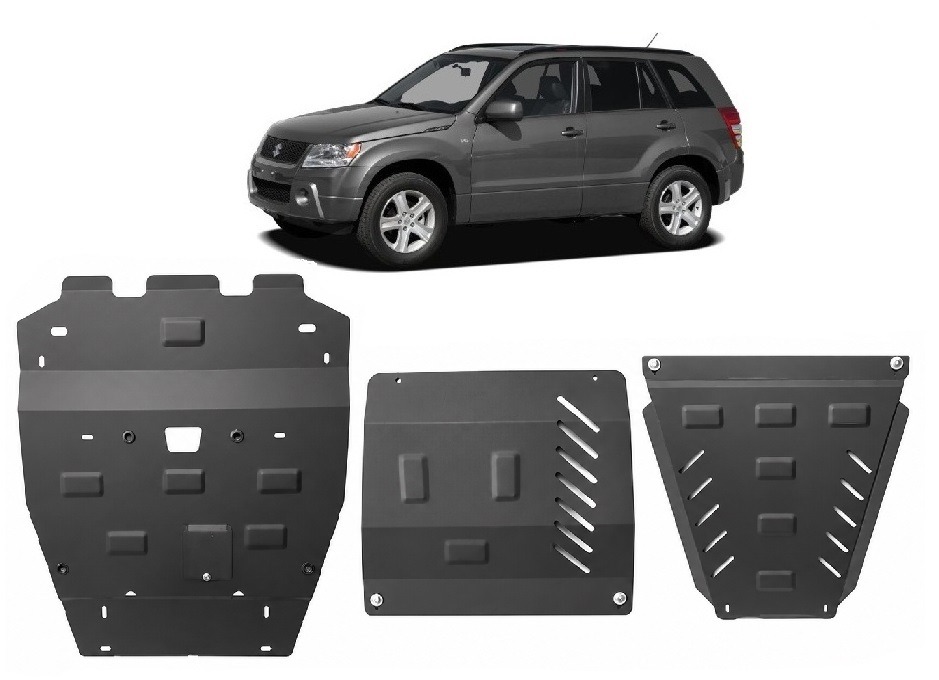
The word “complete” must always be read together with the product’s stated coverage. One set may include the engine, gearbox and transfer case, while another may also include the radiator area. It does not automatically mean that the fuel tank, exhaust, differential or every part of the underbody is covered.
How to Choose the Correct Grand Vitara Skid Plate
Do not choose a plate using the model name alone. Before ordering, confirm:
- the exact production year and Grand Vitara generation;
- whether the vehicle is Grand Vitara, Grand Vitara 2 or XL7;
- engine and transmission configuration;
- drivetrain and transfer-case layout;
- three-door or five-door body version where relevant;
- the component or zones that require protection;
- material, thickness, weight and service openings;
- whether a centre plate requires a compatible front plate.
If the fitment is uncertain, use the free VIN compatibility check. A VIN check can help identify the vehicle configuration, but photographs of the underbody or existing mounting points may still be requested when production-year or market differences require confirmation.
Installation, Ground Clearance and Maintenance
A skid plate should follow the underside of the vehicle as closely as its design permits while retaining sufficient clearance around moving and heat-producing components. Any protection plate occupies some space below the vehicle, so compare its installed position—not only its thickness—when ground clearance is important.
Before installation, inspect the mounting points and supplied hardware. The plate must not contact the exhaust, steering or suspension, and ventilation openings must remain unobstructed. Tighten fasteners using the supplied instructions and recheck them after the first period of driving, especially after off-road use.
After a significant impact, inspect the plate for deformation, damaged coating, loose fasteners and contact with nearby components. Mud, stones and road salt trapped above a skid plate should be removed during routine maintenance.
Which Setup Fits Your Driving?
- Mainly paved roads: start with engine and radiator protection, particularly where potholes, curbs or winter damage are common.
- Gravel and rural roads: add gearbox and transfer-case coverage if the centre underside remains exposed.
- Forest tracks and deep ruts: consider broader multi-zone protection and a compatible fuel-tank guard where available.
- Frequent rough-terrain use: prioritise coverage, mounting strength, serviceability and installed ground clearance rather than choosing by thickness alone.
Frequently Asked Questions
Does one skid plate fit every Suzuki Grand Vitara?
No. Compatibility depends on the generation, model year, engine, transmission, drivetrain, body version and mounting layout. Grand Vitara, Grand Vitara 2, XL7 and Vitara must not be assumed to use the same protection.
What is the first area to protect?
For most vehicles, the engine oil sump and lower front area are the first priority because they face direct impacts from the road. The correct order can change if the vehicle’s use or underbody layout exposes another component more severely.
Do I need gearbox and transfer-case protection?
It is especially useful for vehicles driven on rutted tracks, gravel roads or uneven terrain. An engine plate alone does not necessarily protect components positioned farther back.
Is a sump guard the same as a skid plate?
“Sump guard” usually describes protection focused on the engine oil sump. “Skid plate” is a broader term that may refer to protection for the engine, radiator, gearbox, transfer case, fuel tank or another underbody zone.
Is steel or aluminium better for a Grand Vitara?
Steel is often chosen for repeated or harder impacts, while aluminium is lighter and highly resistant to conventional red-rust corrosion. Plate design, reinforcement and mounting points are as important as the material.
Does every plate have an oil-change opening?
No. Service access is product-specific. Check the “Oil sump opening” specification before ordering and confirm whether the plate must be removed during an oil change.
Is drilling required?
Many listed products use existing mounting points, and the 2005–2019 complete steel set is specified as requiring no drilling. Installation requirements can vary, so follow the instructions supplied with the exact product.
Conclusion
The best Suzuki Grand Vitara underbody protection is not simply the thickest plate or the largest set. It is the system that matches the exact vehicle and protects the zones exposed by its real driving conditions.
Start with the engine and radiator area, extend protection to the gearbox and transfer case when the vehicle regularly leaves paved roads, and add fuel-tank protection where the correct generation-specific product is available. Compare all Suzuki Grand Vitara skid plates or submit the VIN before ordering if compatibility is uncertain.
