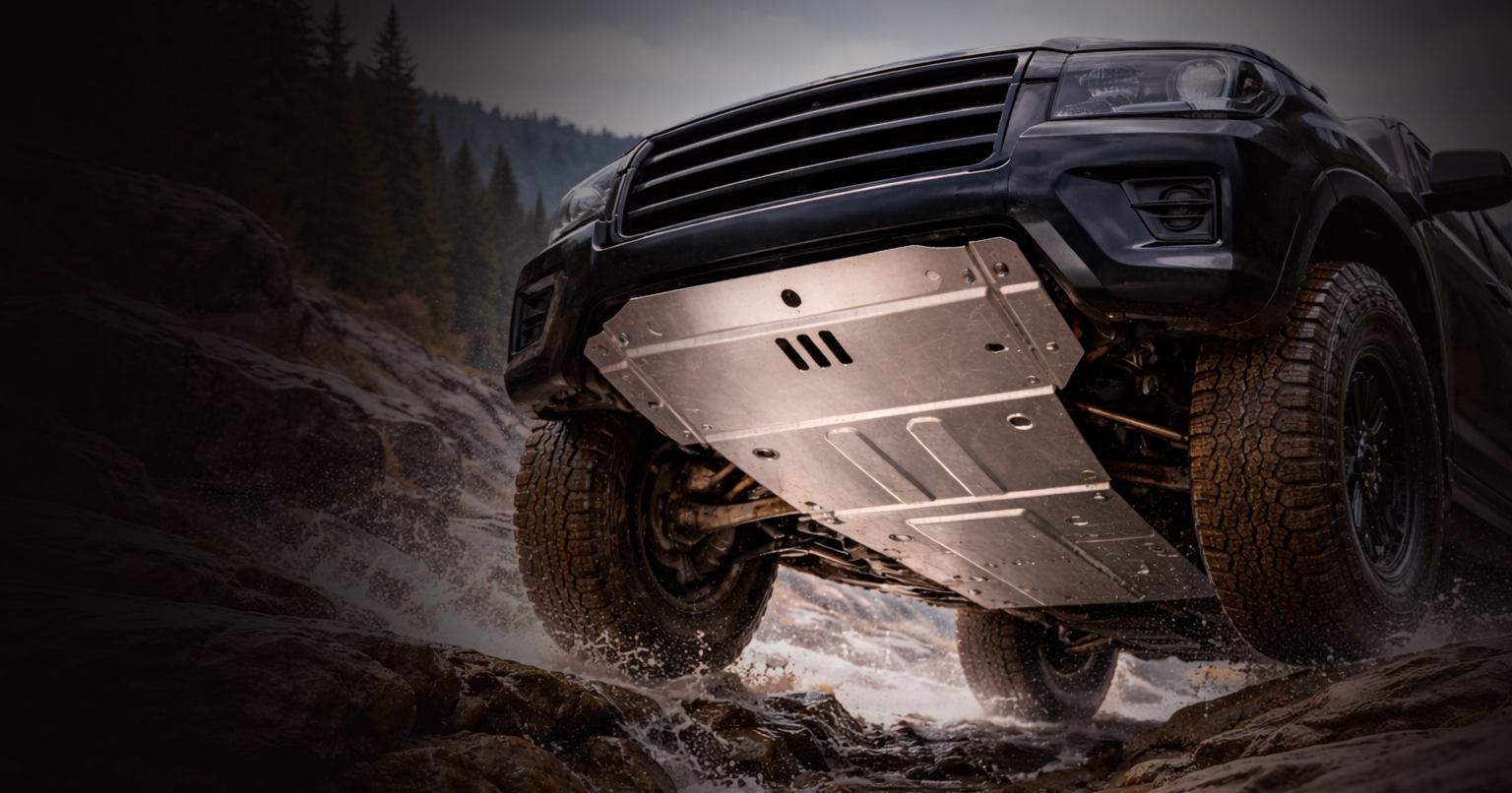
Toyota 4Runner (2002–2009) Skid Plates: What Should You Protect First?
The fourth-generation Toyota 4Runner is a body-on-frame SUV built for the kind of use that can expose its underside to rocks, ruts, washboard roads, snow, road debris and uneven trail surfaces. Ground clearance helps the vehicle pass over obstacles, but it does not prevent a concentrated impact from reaching the engine, radiator area or transmission housing. For owners who use a 4Runner for daily driving, hunting, camping, towing or overlanding, the practical question is not simply whether to install a skid plate, but which area should be protected first.
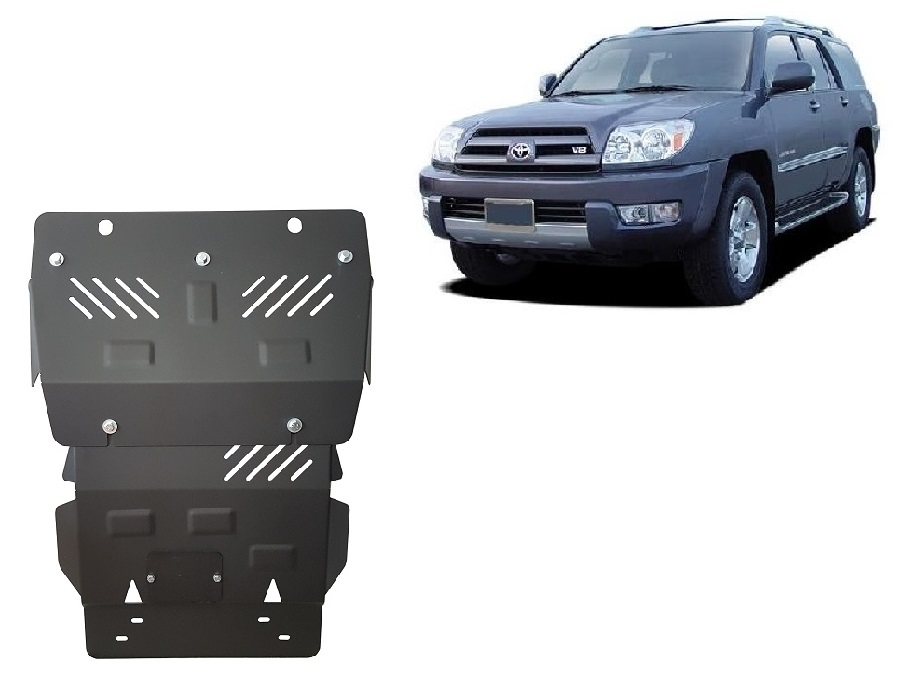
This guide covers the vehicle application listed in the UnderbodyGuards catalogue as Toyota 4Runner 2002–2009. Toyota identifies the fourth-generation 4Runner as model years 2003–2009, so a vehicle registered or produced in 2002 may fall close to a generation or market-specification boundary. Owners of 2002 vehicles should therefore confirm the VIN, production date, engine, drivetrain and mounting layout before ordering.
Quick answer: what should you protect first?
For most Toyota 4Runner owners, the first priority is the combined engine, radiator and front bumper protection. This is the leading edge of the underbody: it encounters obstacles first and protects components whose damage can quickly stop the vehicle.
The gearbox skid plate is the logical second step. It extends protection rearward and is especially important for vehicles used on rocky trails, deep ruts, forestry roads or overlanding routes where the vehicle can crest an obstacle after the front wheels have passed it.
| Driving profile | First priority | Recommended next step |
|---|---|---|
| Daily driving, potholes and winter roads | Engine, radiator and front bumper plate | Add gearbox protection if roads are regularly rough |
| Gravel roads, camping and occasional trails | Front protection | Gearbox plate strongly recommended |
| Rocky trails, ruts and overlanding | Front and gearbox protection together | Inspect the full underbody after hard contact |
Why the front underside is the first priority
The front underside sits closest to the first point of contact with rocks, broken pavement, frozen snow, branches and trail edges. A correctly matched plate creates a physical barrier between these hazards and the lower engine area. In the available Toyota 4Runner application, the front plate is designed to protect three connected zones:
- Engine area: helps shield the lower engine and oil-pan region from direct impact.
- Radiator area: helps protect the vulnerable lower front cooling-system zone.
- Front bumper area: extends coverage toward the leading underside where contact often begins.
A damaged lower engine component can lead to fluid loss, warning lights or immediate immobilisation. Damage near the cooling system can cause coolant loss and overheating. The value of a skid plate is therefore not limited to avoiding a dent: it can reduce the risk that a relatively small obstacle turns into a recovery, towing or major mechanical repair situation.
Available front protection:
- Toyota 4Runner 2002–2009 Engine, Front Bumper and Radiator Skid Plate — 2.5 mm Steel
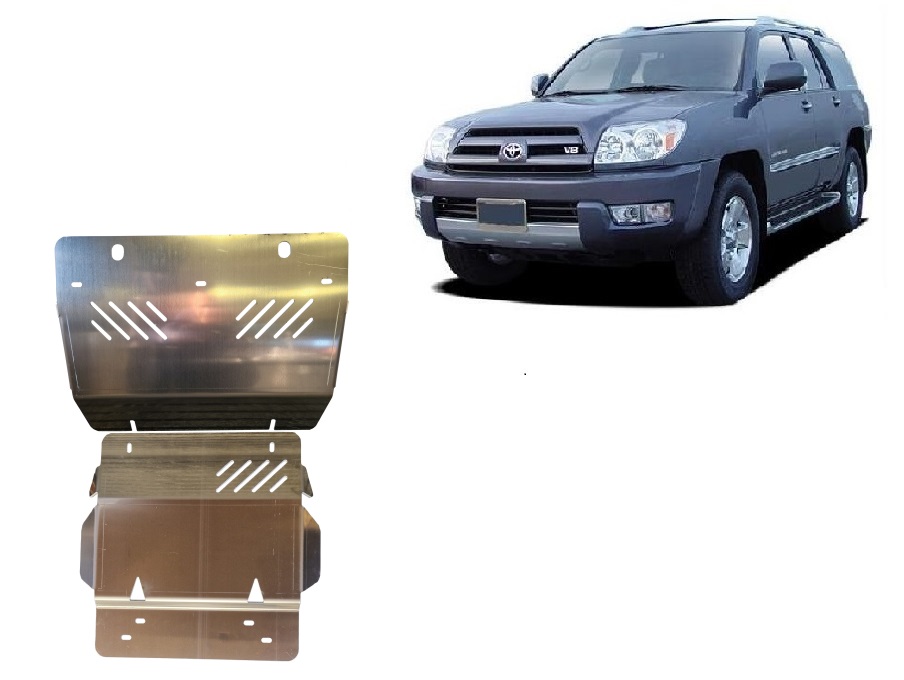
- Toyota 4Runner 2002–2009 Engine, Front Bumper and Radiator Skid Plate — 4 mm Aluminium
Why gearbox protection matters between the axles
After the front wheels climb over an obstacle, the middle of the vehicle can become the next contact point. This is particularly relevant when crossing a ridge, leaving a rut diagonally or travelling over uneven rock steps. The gearbox housing and surrounding components are not designed to function as sliding or impact surfaces.
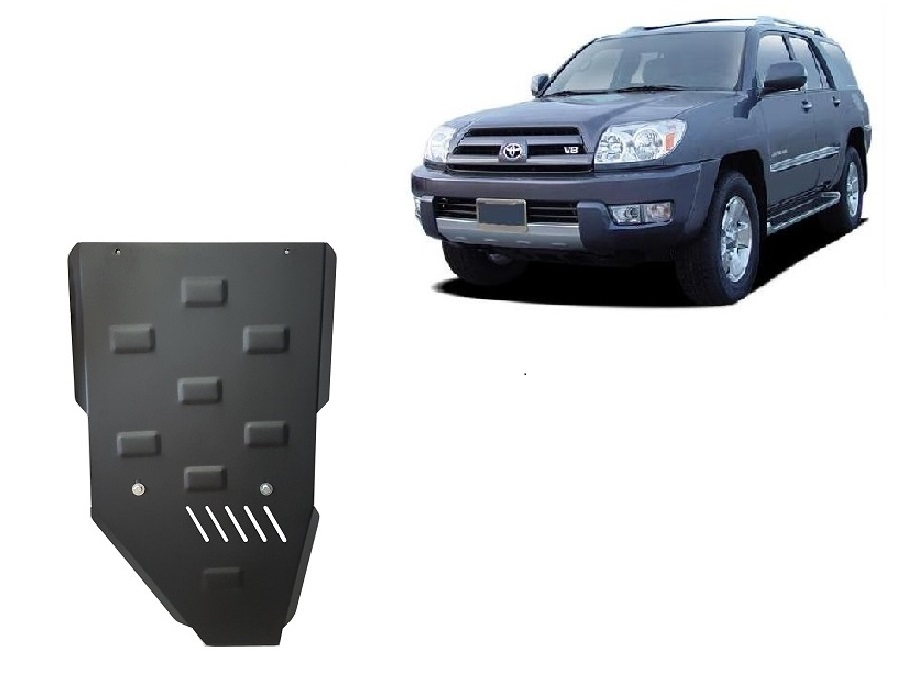
A gearbox plate is most valuable when the vehicle regularly travels beyond maintained pavement. It also makes sense for an older 4Runner kept for long-term use: even if the vehicle is not driven aggressively, a single unexpected contact can damage a housing, mounting area or nearby line.
Available gearbox protection:
- Toyota 4Runner 2002–2009 Gearbox Skid Plate — 2.5 mm Steel
- Toyota 4Runner 2002–2009 Gearbox Skid Plate — 4 mm Aluminium
Possible damage and typical cost risk
| Exposed zone | Possible damage | Typical cost risk |
|---|---|---|
| Lower engine area | Impact damage, oil loss or damage to lower engine components | High: towing, fluid loss and possible engine-related repair |
| Lower radiator area | Coolant leak, damaged lower support or reduced cooling-system integrity | Medium to high: cooling-system repair and overheating risk |
| Gearbox area | Cracked or deformed housing, fluid leak or damaged mounting area | High to very high: recovery and transmission-related repair |
| Unprotected mounting and service areas | Bent brackets, damaged fasteners or abrasion near lines and connectors | Variable: inspection, parts replacement and labour |
Actual repair costs vary by state, workshop, parts availability and the extent of secondary damage. The purpose of this table is to compare risk levels, not to quote a repair price.
2.5 mm steel or 4 mm aluminium?
Both materials provide vehicle-specific coverage, but they suit different priorities. Thickness alone should not be used to compare them because steel and aluminium have different mechanical properties and weights.
| Factor | 2.5 mm steel | 4 mm aluminium |
|---|---|---|
| Best suited to | Drivers prioritising robust impact resistance and value | Drivers prioritising lower weight and corrosion resistance |
| Front plate listed weight | 18 kg | 10 kg |
| Gearbox plate listed weight | 15 kg | 10 kg |
| Corrosion behaviour | Protected by coating; inspect scratches and chips after impacts | Naturally resistant to red rust |
| Maintenance | Clean mud and salt; inspect coating and fasteners | Clean packed debris; inspect deformation and fasteners |
For repeated contact with rocky terrain, steel is the straightforward heavy-duty choice. For overlanding builds where total accessory weight matters, or for vehicles exposed to road salt and wet climates, aluminium can provide a useful balance of coverage, corrosion resistance and reduced weight.
For a broader material comparison, read Steel vs Aluminium Skid Plates: Which Material Is Right for You?
Fitment: why the 2002 model year needs extra attention
Toyota describes the fourth-generation 4Runner as 2003–2009, while the available skid plates are listed in the catalogue for 2002–2009. Registration year, production date and model year are not always identical, especially around a generation change or for vehicles imported between markets.
Before ordering, confirm:
- the full 17-character VIN;
- production date and model year;
- engine and drivetrain configuration;
- body version and any suspension or underbody modifications;
- the existing mounting points and underbody layout.
Use UnderbodyGuards GuardPass™ to identify the vehicle and review compatible protection. If the vehicle is a 2002 model or has been modified, contact the UnderbodyGuards team before ordering.
Installation and inspection
The listed plates are supplied with mounting hardware and installation instructions and are designed to use the specified mounting points for the vehicle application. Welding and drilling are normally not required, but the vehicle should be inspected before installation. Corrosion, bent brackets, previous impact damage, aftermarket bumpers, suspension lifts or modified exhaust components can affect fitment.
After installation:
- confirm clearance around moving, hot and serviceable components;
- tighten fasteners according to the supplied installation instructions;
- recheck the fasteners after the first period of driving;
- remove accumulated mud, salt and stones during routine maintenance;
- inspect the plate and mounting points after a significant impact.
USA shipping
UnderbodyGuards ships Toyota 4Runner skid plates to the United States by FedEx for a fixed €139 per order. Any applicable import duties, taxes, customs-clearance fees or brokerage charges are paid by the recipient. See the Shipping page for complete conditions.
Frequently asked questions
Which skid plate should I install first on a Toyota 4Runner?
For most drivers, the combined engine, radiator and front bumper plate is the first priority because it protects the leading underside and several critical front components. Add the gearbox plate for more continuous coverage on trails and rough roads.
Does this guide cover every Toyota 4Runner generation?
No. It covers the product application listed for Toyota 4Runner 2002–2009. It does not claim compatibility with later 4Runner generations.
Why does the catalogue include 2002 when Toyota identifies the fourth generation as 2003–2009?
Production date, registration year and market specification can differ. A 2002 vehicle sits close to the generation boundary, so compatibility must be confirmed using the VIN and the actual mounting layout before ordering.
Is steel always stronger than aluminium?
The materials cannot be compared by thickness alone. The 2.5 mm steel and 4 mm aluminium versions use different materials and weights. Steel is generally selected for robust impact resistance, while aluminium is selected for lower weight and corrosion resistance.
Do the skid plates fit both 2WD and 4WD models?
Do not assume compatibility from the model name alone. Confirm the VIN, drivetrain, engine, production year and underbody layout before ordering, particularly for imported or modified vehicles.
Can I install the plates myself?
Installation may be completed by an experienced owner with appropriate tools, but professional installation is recommended when the vehicle has corrosion, previous underbody damage or aftermarket modifications. Always follow the supplied installation instructions.
How much does delivery to the USA cost?
FedEx delivery to the United States costs a fixed €139 per order. Import duties, taxes, customs-clearance fees and brokerage charges, if applicable, are paid by the recipient.
Final recommendation
Start with the engine, radiator and front bumper plate if the 4Runner is mainly used on pavement, winter roads or occasional gravel. Add gearbox protection when the vehicle regularly travels on rutted roads, rocky trails or overlanding routes. For frequent hard use, protecting both zones creates a more logical continuous system than relying on a single front plate.
Choose 2.5 mm steel when impact resistance and value are the main priorities. Choose 4 mm aluminium when lower weight and corrosion resistance are more important. In every case, confirm the exact vehicle configuration before purchase.
View all Toyota 4Runner skid plates
UnderbodyGuards — vehicle-specific underbody protection for cars, SUVs, vans and 4×4 vehicles.
