Toyota C-HR Underbody Protection by Generation: Engine, Gearbox, Radiator and Catalytic Converter Guide
Quick answer: Toyota C-HR underbody protection must be selected for the correct generation and protection zone. The main front skid plate protects the engine, gearbox and lower radiator area, while a separate plate protects the catalytic converter. Products listed for the 2016–2023 C-HR should not be assumed to fit the redesigned 2023–2026 model, even when their material, thickness and protected components appear similar.
The Toyota C-HR is primarily a road-focused crossover, but important lower components can still be exposed to potholes, broken asphalt, loose debris, winter ice, compacted snow and unpaved access roads. Vehicle-specific skid plates create a physical barrier between these hazards and vulnerable areas underneath the vehicle.
This guide covers products currently listed for selected Toyota C-HR models within the 2016–2023 and 2023–2026 fitment ranges. These are product-listing ranges rather than universal compatibility guarantees. Always confirm the VIN, production year, engine, powertrain, drivetrain, body version and mounting points before ordering.
Browse our Toyota C-HR underbody protection range to compare vehicle-specific skid plates by generation, protected area and material.
Toyota C-HR Generations and Fitment
The original Toyota C-HR entered production in 2016 and was offered with different powertrains depending on the market, including hybrid and petrol configurations. A redesigned generation entered production in 2023 with an electrified European range that includes hybrid and plug-in hybrid versions.
The 2023 model change is important when choosing protection. Differences in the platform, powertrain packaging, exhaust layout, cooling components and mounting points mean that a plate for the earlier C-HR should not be transferred to the newer generation without explicit fitment confirmation.
| Product fitment range | Available protection zones | Available materials |
|---|---|---|
| 2016–2023 | Engine, gearbox, radiator and catalytic converter | 2 mm steel and selected 3 mm aluminium |
| 2023–2026 | Engine, gearbox, radiator and catalytic converter | 2 mm steel and selected 3 mm aluminium |
The overlapping 2023 date makes the exact production generation especially important. Do not select the plate solely from the registration year.
Which Toyota C-HR Components Need Protection?
The products covered in this guide address two main areas:
- Engine, gearbox and lower radiator area
- Catalytic-converter area
These are separate protection zones. The main front plate does not automatically protect the catalytic converter, while a catalytic-converter plate does not replace the larger engine, gearbox and radiator guard.
| Protection zone | Typical exposure | Suggested priority |
|---|---|---|
| Engine, gearbox and radiator | Potholes, raised obstacles, road debris, ice and uneven surfaces | Usually the first area to consider |
| Catalytic converter | Impacts and debris around the central exhaust area | Additional targeted protection |
First-Generation Toyota C-HR Protection: 2016–2023
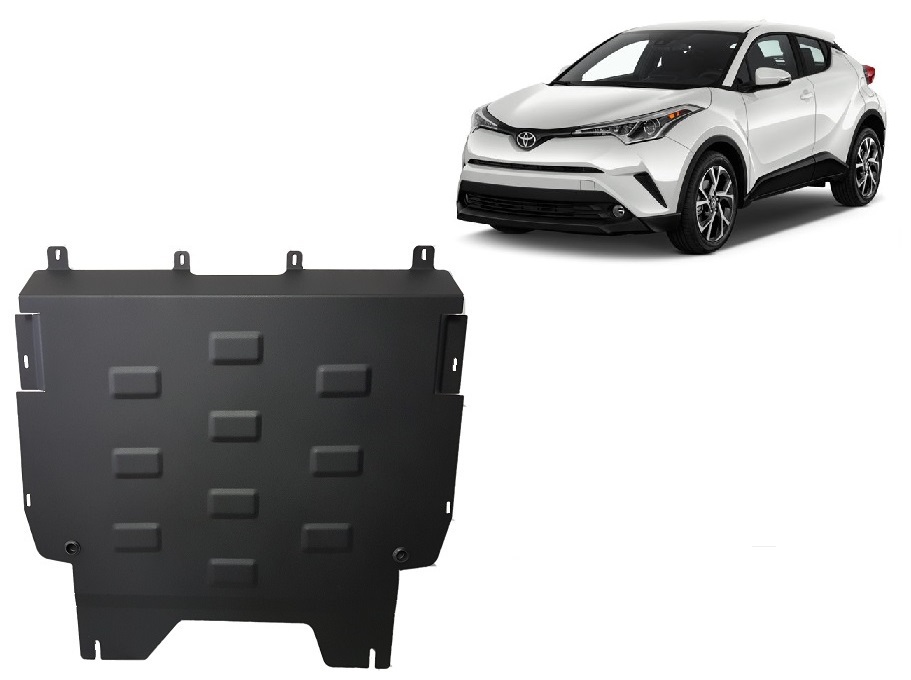
For selected first-generation Toyota C-HR applications, the catalogue includes front skid plates covering the engine, gearbox and radiator areas. Both steel and aluminium versions are available, but compatibility still needs to be checked against the exact vehicle.
2 mm steel front skid plate
The listed Toyota C-HR 2016–2023 engine, gearbox and radiator skid plate is manufactured from 2 mm steel and has a listed weight of 11 kg.
Steel is normally considered where stiffness, durability and resistance to repeated road exposure are important. The plate is listed without an oil-sump opening, so service-access requirements should be checked before installation.
3 mm aluminium front skid plate
A separate 3 mm aluminium engine, gearbox and radiator plate is also listed for selected 2016–2023 applications. Its listed weight is 10 kg.
The relatively small weight difference between these particular products shows why material should not be considered independently from coverage and plate design. The aluminium version should be selected for its complete combination of fitment, construction, corrosion resistance and weight rather than because aluminium is always dramatically lighter.
Second-Generation Toyota C-HR Protection: 2023–2026
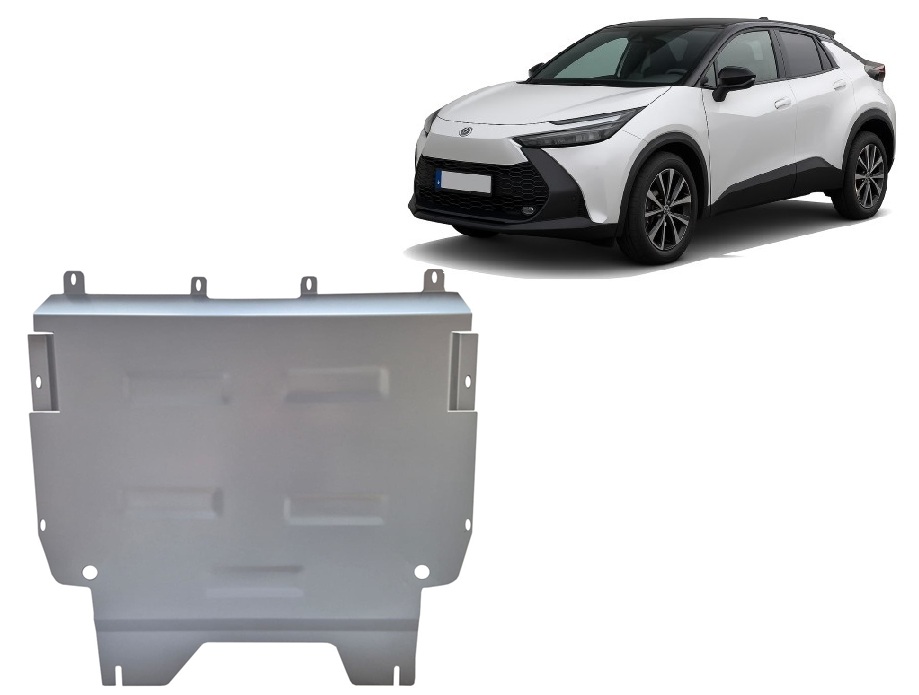
The redesigned Toyota C-HR requires generation-specific protection. The catalogue includes separate front plates for selected vehicles within the 2023–2026 fitment range. These products must not be confused with plates carrying the earlier 2016–2023 range.
2 mm steel front skid plate
The listed Toyota C-HR 2023–2026 steel engine, gearbox and radiator skid plate has a thickness of 2 mm and a listed weight of 11 kg.
3 mm aluminium front skid plate
The corresponding Toyota C-HR 2023–2026 aluminium front skid plate has a thickness of 3 mm and a listed weight of 10 kg.
Both products are listed without an oil-sump opening. Depending on the service procedure, the plate may need to be removed or partially lowered during an oil change or other maintenance.
The newer C-HR range includes hybrid and plug-in hybrid powertrains in Europe. Hybrid or plug-in hybrid status alone does not confirm that a particular plate fits. Powertrain packaging, exhaust routing, underbody covers and mounting points must be verified for the exact vehicle.
Catalytic-Converter Protection
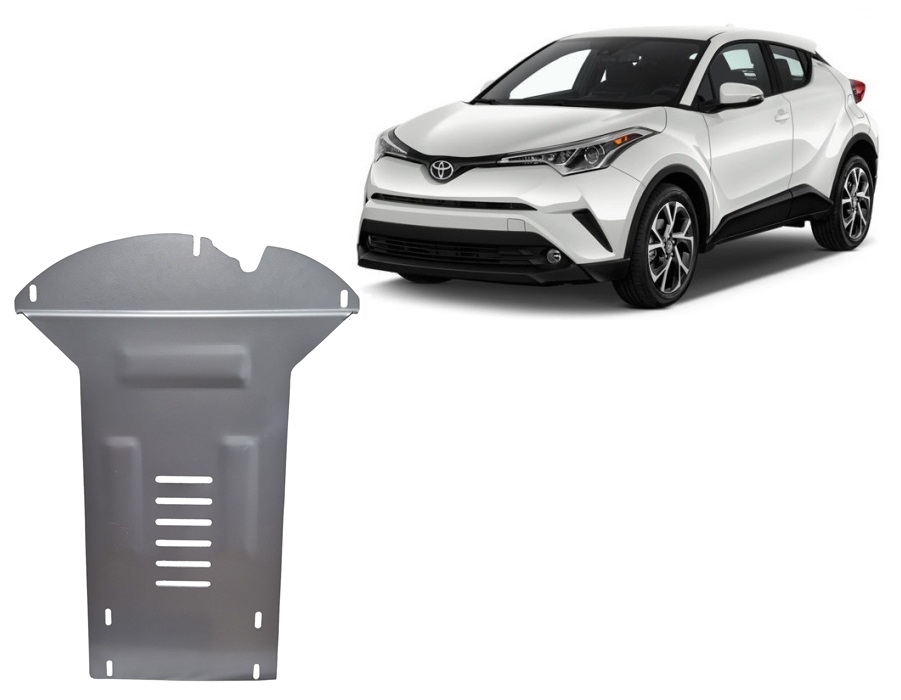
The catalytic converter is positioned separately from the main front protection zone. Its location and surrounding components can vary between generations and powertrains, so the catalytic-converter guard requires its own fitment confirmation.
Catalytic-converter protection for 2016–2023
For selected first-generation applications, available options include:
- 2 mm steel catalytic-converter skid plate, listed at 5 kg
- 3 mm aluminium catalytic-converter skid plate, listed at 3 kg
Catalytic-converter protection for 2023–2026
For selected second-generation applications, available options include:
- 2 mm steel catalytic-converter guard, listed at 5 kg
- 3 mm aluminium catalytic-converter skid plate, listed at 3 kg
These products provide targeted physical protection around the catalytic-converter area. They may make access more difficult, but they should not be presented as guaranteed theft-prevention devices.
Do You Need Both Protection Zones?
The front skid plate and catalytic-converter plate perform different jobs. Drivers seeking broader underbody protection may consider both, but only after confirming that the two selected products match the same generation and can be installed together without conflicting mounting points.
| Driving conditions | Protection priority |
|---|---|
| Normal urban and motorway driving | Inspect the front engine and gearbox area first |
| Frequent potholes and winter road damage | Engine, gearbox and radiator protection |
| Gravel roads and uneven access routes | Consider both compatible protection zones |
| Concern focused on the exhaust component | Generation-specific catalytic-converter plate |
Steel vs Aluminium for the Toyota C-HR
Material should be selected only after the correct generation and protection zone have been identified.
Steel protection
- Commonly selected where stiffness and durability are priorities
- Suitable for regular exposure to damaged roads and loose debris
- Requires a durable protective coating and periodic inspection
- Normally heavier than an otherwise comparable aluminium design
Aluminium protection
- Offers strong resistance to conventional red-rust corrosion
- Can reduce weight compared with an equivalent steel design
- Still requires correctly protected fasteners and contact points
- Should be judged by its full construction, not material name alone
Thickness figures cannot be compared in isolation. Plate shape, reinforcement, mounting design, protected area and installed position also influence performance.
Fitment: Why the Registration Year Is Not Enough
The 2023 transition between Toyota C-HR generations creates a particular fitment risk. A vehicle registered in 2023 may belong to either product range depending on its production generation and market history.
Before ordering, verify:
- Full 17-character VIN
- Exact production date and generation
- Engine and powertrain type
- Hybrid or plug-in hybrid configuration
- Transmission and drivetrain
- Existing factory underbody covers
- Exhaust and catalytic-converter layout
- Mounting-point position
- Compatibility between multiple plates
The wording “all engine variants” in a product listing does not replace an exact vehicle check. Market-specific powertrains, production changes, previous repairs and non-standard equipment can still affect compatibility.
If the exact configuration is uncertain, use the GuardPass VIN compatibility guide before ordering.
Installation, Cooling and Service Access
A vehicle-specific plate should use the mounting points specified for the listed application. It should not interfere with the exhaust, steering, suspension movement, drainage paths or the airflow required for engine, transmission or hybrid-system cooling.
Before installation:
- Compare the delivered plate with the actual underbody
- Confirm that the plate matches the correct C-HR generation
- Check that all mounting hardware is present
- Inspect clearance around the exhaust and catalytic converter
- Review oil-change and other service-access requirements
- Confirm that ventilation and drainage paths remain open
After installation, inspect the fasteners following the initial driving period. Recheck the plate periodically and after any significant impact. Remove accumulated dirt, road salt and compacted mud from around the plate and its mounting points.
Frequently Asked Questions
Will a 2016–2023 Toyota C-HR skid plate fit a 2023–2026 model?
Not automatically. The two fitment ranges represent different vehicle generations. Confirm the VIN, production date, underbody layout and product mounting points before ordering.
Which Toyota C-HR area should be protected first?
For many drivers, the engine, gearbox and lower radiator area is the logical first priority because it covers several important front components. Catalytic-converter protection is a separate additional option.
Does the engine skid plate protect the catalytic converter?
No. The main front plate and catalytic-converter plate protect different areas underneath the vehicle.
Can the front plate and catalytic-converter guard be installed together?
Potentially, but both products must match the same generation and exact vehicle configuration. Their mounting points should also be checked for compatibility.
Is the catalytic-converter plate an anti-theft device?
It is an underbody protection product that creates a physical barrier around the catalytic-converter area. It may make access more difficult, but it does not guarantee theft prevention.
Are the listed plates suitable for every hybrid version?
No universal assumption should be made. Hybrid or plug-in hybrid status alone does not confirm fitment. Check the VIN, powertrain, exhaust layout and mounting points.
Do the front plates include an oil-sump opening?
The listed Toyota C-HR front plates covered in this guide are specified without an oil-sump opening. Check the required service procedure before installation.
Is aluminium always much lighter than steel?
No. Weight depends on the plate’s coverage, shape and reinforcement as well as its material. For the listed C-HR front plates, the steel version is 11 kg and the aluminium version is 10 kg.
Will underbody protection affect cooling?
A compatible plate should preserve the airflow required by the engine, transmission or hybrid system. Correct installation and periodic cleaning are important.
Final Recommendation
Begin by identifying the exact Toyota C-HR generation. For most owners, the main engine, gearbox and radiator plate provides the broadest first stage of protection. A generation-specific catalytic-converter plate can then add targeted coverage farther underneath the vehicle.
Choose the protection zone before comparing steel and aluminium. Never rely on the model name or registration year alone, especially for vehicles produced around the 2023 generation change. Confirm the VIN, powertrain, underbody layout and mounting points before ordering.
