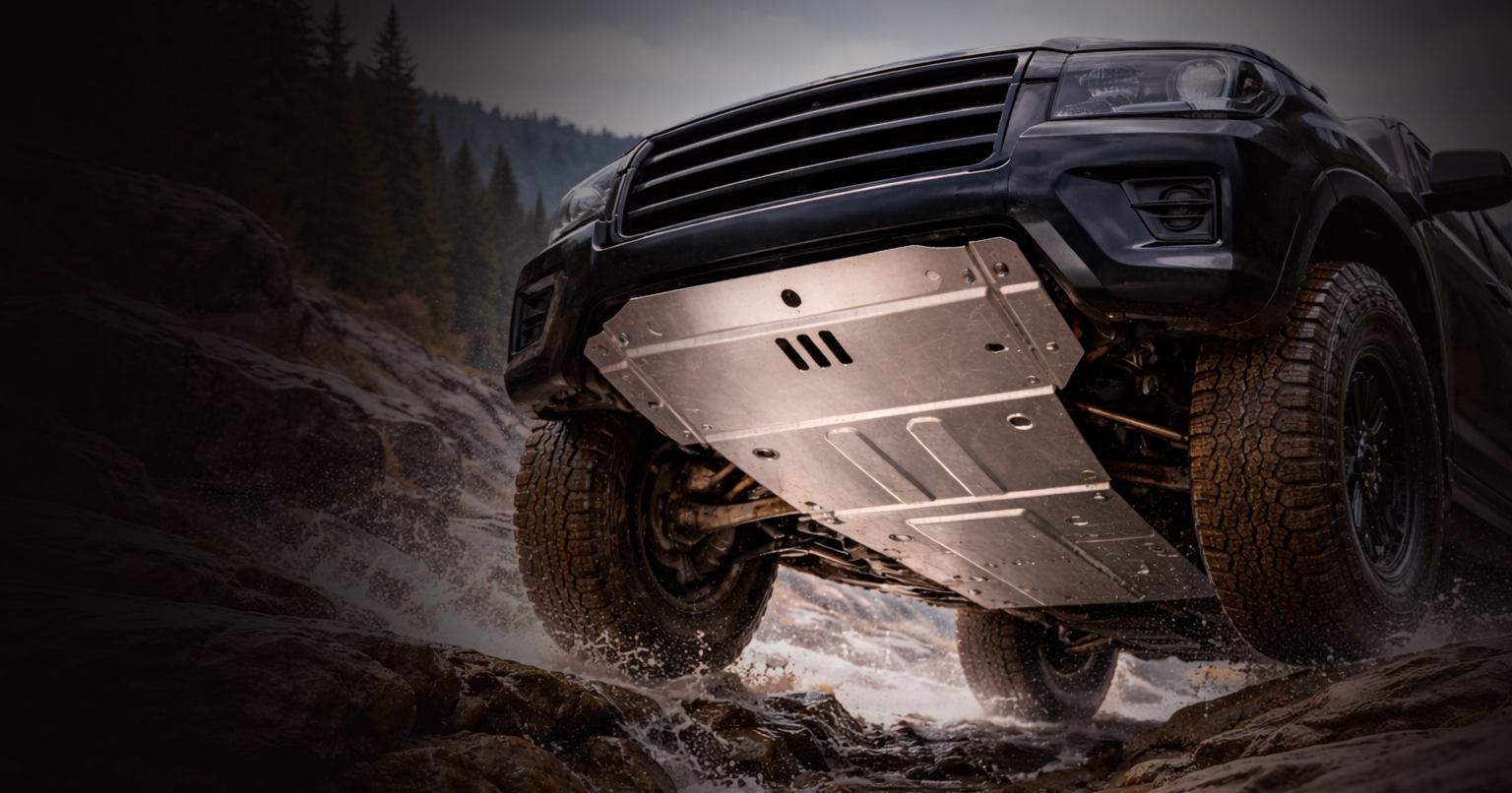
Alfa Romeo Stelvio Skid Plates: Engine, Gearbox and Radiator Protection Guide
The Alfa Romeo Stelvio combines road-focused handling with SUV ground clearance, but the model badge alone does not reveal how much protection is fitted underneath a particular vehicle. Lower engine, gearbox and front cooling components can still face loose stones, broken road surfaces, compacted snow, raised track centres and objects hidden in standing water or roadside debris.
For the Stelvio, the useful decision is not simply whether to install a skid plate. It is whether the vehicle needs targeted engine-and-gearbox protection or wider front coverage that also includes the lower radiator and front-bumper area. Material is the second decision: the current UnderbodyGuards range includes 2 mm steel and 3 mm aluminium versions of both coverage layouts.
Quick answer: For normal road, winter and occasional gravel use, begin by inspecting the engine and gearbox area and the protection already fitted to the vehicle. Choose extended coverage when the lower radiator and front section are also exposed. Steel is often selected where harder or repeated impacts are more likely; aluminium reduces added weight and is highly resistant to conventional red-rust corrosion. Fitment must still be confirmed against the exact model year, engine, transmission, drivetrain and mounting layout.
Alfa Romeo Stelvio Skid Plate Options at a Glance
| Protection layout | Available material | Listed weight | Best reason to choose it |
|---|---|---|---|
| Engine and gearbox | 2 mm steel | 14 kg | Targeted central protection with steel construction |
| Engine and gearbox | 3 mm aluminium | 11 kg | Targeted coverage with lower listed weight |
| Engine, gearbox, radiator and lower front area | 2 mm steel | 20 kg | Wider front coverage with steel construction |
| Engine, gearbox, radiator and lower front area | 3 mm aluminium | 11 kg | Wider coverage with substantially lower listed weight than the steel equivalent |
The weights and fitment years above are taken from the current product listings. They should be used to compare these specific products, not as universal specifications for every aftermarket Stelvio guard.
Why a Stelvio Needs Vehicle-Specific Underbody Protection
The Stelvio is not a body-on-frame off-road vehicle, and most owners do not need a heavy plate system running from bumper to rear axle. Its real use case is more focused: protecting exposed front and central components without creating unnecessary weight, reducing clearance more than necessary or interfering with cooling and service access.
A light factory undertray and a structural metal skid plate do not perform the same job. Plastic or composite panels are useful for airflow management, splash control and keeping dirt out of the engine bay. A vehicle-specific metal plate is intended to provide a stronger physical barrier where contact with stones, ice, road debris or uneven surfaces is a realistic concern.
That does not mean every Stelvio needs the widest available plate. The correct level of protection depends on what is already installed, which areas remain exposed and where the vehicle is actually driven.
1. Engine and Lower Powertrain Area: The First Inspection Point
The lower engine area is normally the first section to inspect because it sits close to the front of the vehicle and may encounter debris before components positioned further back. The gearbox area can remain exposed behind it, so a plate that covers only the front edge may leave a vulnerable transition further along the powertrain.
For owners who want focused coverage, the range includes an Alfa Romeo Stelvio engine and gearbox skid plate in 2 mm steel. The product listing gives a weight of 14 kg and states that there is no oil-sump service opening. An alternative 3 mm aluminium engine and gearbox plate is listed at 11 kg.
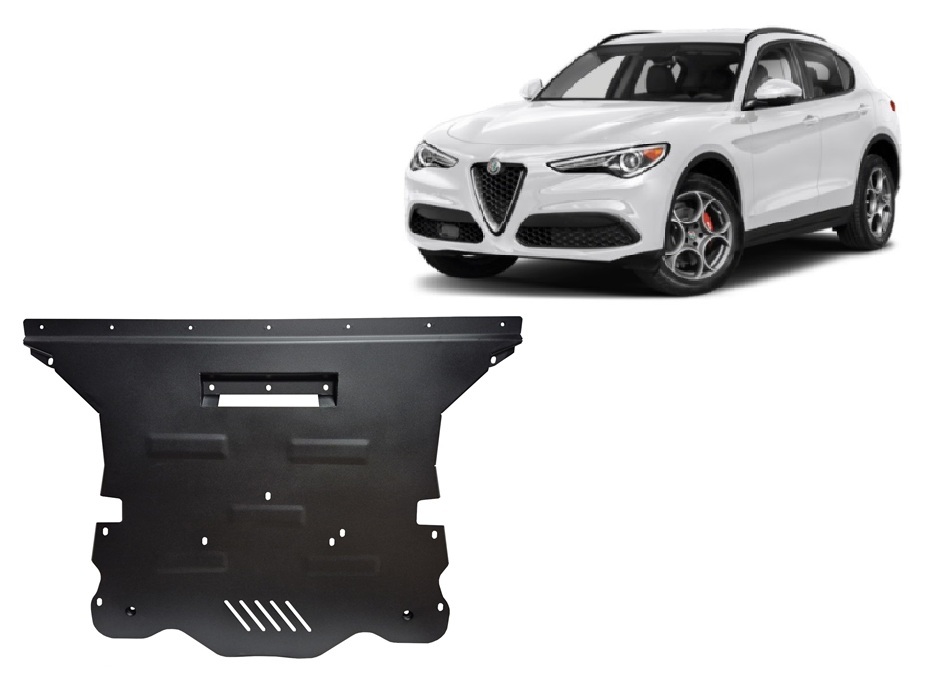
Because these listed versions do not include an oil-sump opening, routine service access should be discussed before installation. Depending on the workshop procedure and exact vehicle layout, the plate may need to be removed for some maintenance operations. That is not necessarily a disadvantage, but it should be understood before purchase rather than discovered during the first service.
2. Radiator and Lower Front Area: When Wider Coverage Makes Sense
The lower radiator and front-bumper area face hazards that an engine-and-gearbox plate may not cover. Loose stones can be thrown into the lower front section, while compacted snow, road-edge debris and abrupt ramps can contact the leading underside before reaching the engine area.
Extended Stelvio plates are designed to cover the engine and gearbox while also reaching the lower radiator and front-bumper area. The current range includes a 2 mm steel extended-coverage skid plate listed at 20 kg and a 3 mm aluminium extended-coverage skid plate listed at 11 kg.
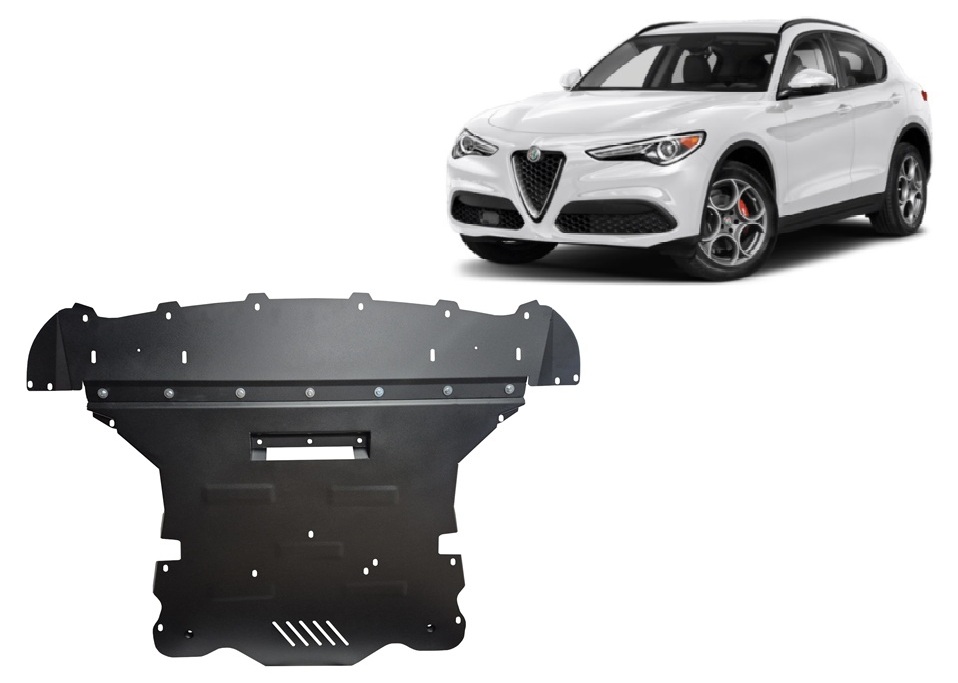
The word “extended” is important. It does not mean that the entire underbody is protected. These products cover the zones named in their listings; they do not automatically protect the fuel tank, rear differential, exhaust system, suspension or every panel underneath the vehicle.
Protection around the radiator must also preserve the airflow required by the engine and transmission cooling systems. A plate should be used only in the mounting position intended for that application, without improvised extensions or blocked openings.
Targeted Plate or Extended Front Coverage?
The wider option is not automatically the better choice. First inspect the vehicle on a lift or from a safe workshop position and compare the exposed areas with the coverage shown in the product photographs and fitting instructions.
| Driving and vehicle condition | More logical starting point |
|---|---|
| Engine and gearbox are exposed, but the lower front area already has suitable protection | Targeted engine-and-gearbox plate |
| Lower radiator and leading front section are also visibly exposed | Extended engine, gearbox, radiator and lower-front plate |
| Mostly urban and motorway driving with occasional winter or gravel-road exposure | Protect the exposed zones only; avoid unnecessary coverage |
| Frequent broken roads, gravel approaches, steep ramps or compacted snow | Inspect the complete lower front section and consider wider coverage |
2 mm Steel or 3 mm Aluminium for the Stelvio?
Thickness numbers cannot be compared without considering the material, plate geometry, reinforcement and mounting system. A 3 mm aluminium plate is not simply “stronger” because the number is larger, and a 2 mm steel plate is not automatically the correct choice for every harder use case.
Choose steel when impact resistance has priority
Steel is often preferred where harder or repeated contact is more likely. It normally accepts local impact differently from aluminium and can be a practical choice for vehicles that regularly use damaged rural roads, stony access routes or poorly maintained surfaces. Its trade-offs are additional weight and the need to maintain the coating, particularly after scratches and winter salt exposure.
Choose aluminium when lower weight and corrosion resistance matter
Aluminium is lighter and highly resistant to conventional red-rust corrosion, although the plate, fasteners and contact points still require inspection. In the extended-coverage Stelvio listings, the difference is substantial: 11 kg for the aluminium version compared with 20 kg for the steel version. That makes the aluminium option especially relevant to road-focused owners who want wider coverage without adding the full weight of the steel plate.
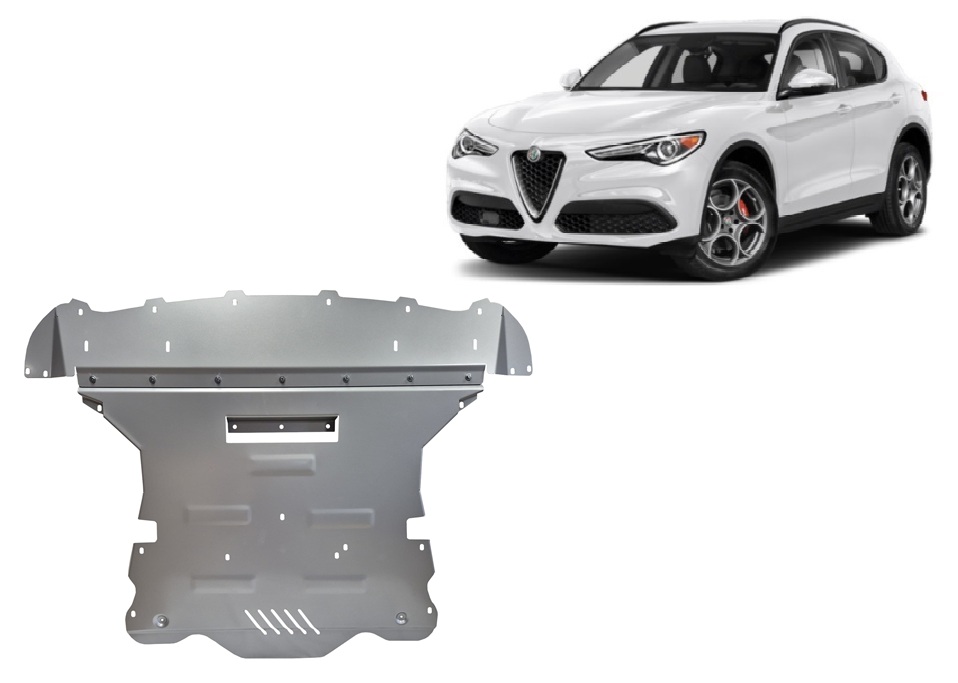
For a deeper material comparison, read our guide to steel vs aluminium skid plates.
RWD, AWD and Q4: Why Drivetrain Still Matters
Stelvio vehicles have been sold with different engines and drivetrains across markets and production years. This means the badge, body shape and registration year alone are not enough to confirm the exact underbody layout or the correct skid plate fitment.
Before ordering, check the VIN, model year, engine, transmission, drivetrain and existing underbody configuration. If the exact version is uncertain, use our VIN compatibility check before selecting engine, gearbox or radiator protection.
The product listings describe the four plates in this guide as suitable for “all engine variants” within their stated range. That wording is useful catalogue data, but it does not replace a vehicle-level fitment check. Transmission casing, drivetrain layout, market specification, previous repairs, factory undertrays and mounting points can still affect installation.
Do not infer that every Stelvio is Q4 or that a plate fitted to one drivetrain must fit another. Confirm the exact engine, transmission and drivetrain from the vehicle data, then compare the mounting layout with the selected product.
Fitment notice: Fitment ranges refer to the listed product applications and do not confirm compatibility with every vehicle produced within those years. Always verify the exact model year, generation, engine, transmission, drivetrain and mounting layout before ordering. If fitment is uncertain, submit the VIN for compatibility checking.
Ground Clearance, Cooling and Installation
A useful skid plate must protect exposed components without becoming the lowest avoidable point underneath the vehicle. Installed position matters as much as nominal plate thickness. The plate should sit in the intended relationship to the subframe, engine, gearbox, exhaust and lower front structure.
Before installation:
- compare the product code, plate and supplied hardware with the fitting instructions;
- inspect the original mounting points for corrosion, deformation or previous repair;
- confirm clearance from the exhaust, steering and moving drivetrain components;
- check that cooling openings and drainage paths remain unobstructed;
- confirm how the plate affects oil, filter and other routine service access;
- tighten the hardware in the specified sequence and recheck it after the initial driving period.
Do not drill, cut or relocate brackets unless the product instructions explicitly require it. If the hardware does not align naturally, stop and verify the vehicle and product rather than forcing the installation.
Which Stelvio Drivers Benefit Most?
Urban and motorway use
The main risks are damaged road surfaces, road debris, steep ramps, kerbs and winter ice rather than deliberate off-road driving. Targeted protection can be sufficient when the lower front area is already adequately covered.
Winter roads
Compacted snow and ice can create direct contact underneath the vehicle, while salt and trapped dirt increase maintenance requirements. Both materials should be washed and inspected; damaged steel coating and mixed-metal contact points deserve particular attention.
Gravel roads and rural access routes
Repeated loose-stone impacts and uneven surfaces make the engine, gearbox and lower front area more relevant. Wider coverage can be justified when the radiator area is exposed, but only when the plate is correct for the exact vehicle.
Occasional rough tracks
A skid plate increases protection but does not turn the Stelvio into a dedicated off-road vehicle. Tyres, clearance, approach angle, suspension travel and driver judgement still determine whether a route is suitable.
How to Choose the Correct Alfa Romeo Stelvio Skid Plate
- Confirm the production year and market version.
- Identify the exact engine and transmission.
- Confirm whether the vehicle is RWD, AWD or Q4.
- Inspect the factory undertray and identify the genuinely exposed zones.
- Choose between engine-and-gearbox coverage and extended lower-front coverage.
- Compare steel and aluminium using the complete product design, listed weight and intended driving conditions.
- Check mounting points, service access and compatibility with any existing underbody components.
- Use a VIN check when any part of the fitment remains uncertain.
Browse the complete Alfa Romeo Stelvio skid plate and underbody protection range. If the vehicle configuration is unclear, use the GuardPass™ VIN compatibility check before ordering.
Frequently Asked Questions
What should an Alfa Romeo Stelvio skid plate protect first?
Begin by inspecting the lower engine and gearbox area. If the lower radiator and front section are also exposed, consider an extended plate that covers all four listed zones.
Does one skid plate fit every Alfa Romeo Stelvio from 2016 to 2026?
Do not assume universal compatibility. The years describe the current product-listing range. Verify the exact year, engine, transmission, drivetrain and mounting layout before ordering.
Is the wider Stelvio skid plate a complete underbody protection set?
No. It covers the engine, gearbox, lower radiator and front-bumper area named in the listing. It does not mean that every component underneath the vehicle is protected.
Is steel better than aluminium for a Stelvio?
Neither material is automatically better. Steel is often chosen where repeated or harder impacts are expected. Aluminium provides lower listed weight and strong resistance to conventional red-rust corrosion. Plate shape, reinforcement and mounting design also affect performance.
Can the skid plate affect oil-service access?
The listed Stelvio plates do not include an oil-sump opening. Confirm the workshop procedure before installation because removal may be required for some service operations.
Can I choose the plate from the model year alone?
No. The same model year can include different engines, transmissions, drivetrains and market specifications. Use the full vehicle data and, where necessary, the VIN.
Will a skid plate reduce ground clearance?
Any plate occupies some space underneath the vehicle, but the practical effect depends on its installed position and design. Check the mounting layout rather than judging only by material thickness.
Choose Coverage Before Choosing Material
The most important Stelvio decision is the protection layout. First determine whether the vehicle needs targeted engine-and-gearbox coverage or an extended plate that also protects the lower radiator and front area. Only then compare 2 mm steel with 3 mm aluminium.
This order avoids buying a stronger or lighter plate that protects the wrong zones. It also keeps the setup proportionate to the vehicle’s real use, from everyday road and winter driving to gravel roads and occasional rough access routes.
Before ordering, confirm the exact model year, engine, transmission, drivetrain and mounting layout. When the underbody configuration is uncertain, submit the VIN and, if requested, photographs of the existing undertray and mounting points for manual compatibility checking.
