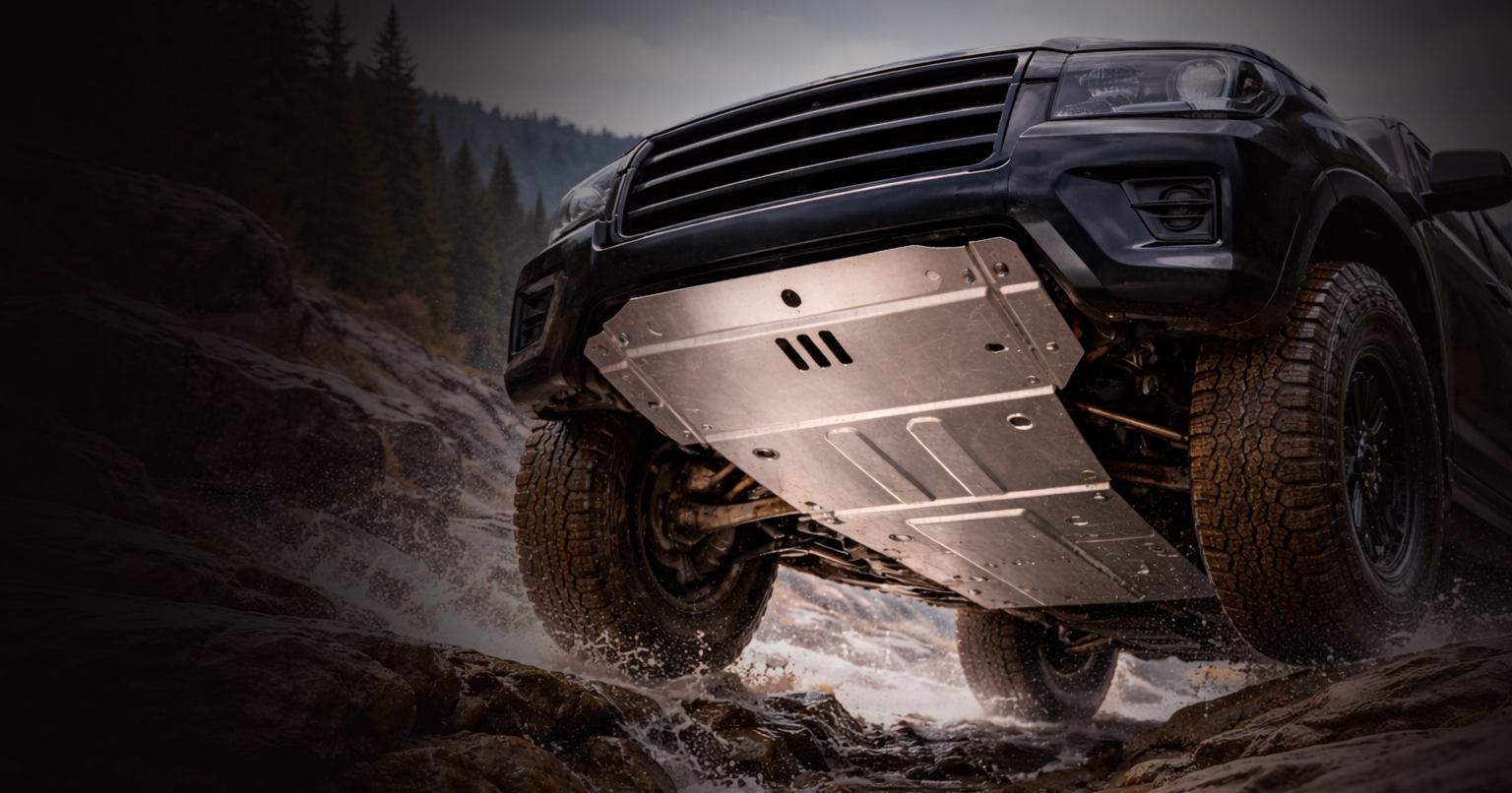
Engine Skid Plate vs Full Underbody Protection: What Do You Really Need?
When choosing underbody protection, many drivers ask the same question: do you only need an engine skid plate, or is a wider underbody protection kit a better choice?
The answer depends on your vehicle, road conditions and which components are exposed underneath. For some cars, engine protection is enough. For SUVs, vans, pickups, hybrids or vehicles used on rough roads, it may make sense to protect more than one area under the vehicle.
This guide explains the difference between an engine skid plate and wider underbody protection, so you can choose the right setup before ordering. In many cases, wider protection does not mean one single large plate — it can be a set of separate vehicle-specific skid plates for the engine, gearbox, radiator, fuel tank, differential, transfer case or hybrid components.
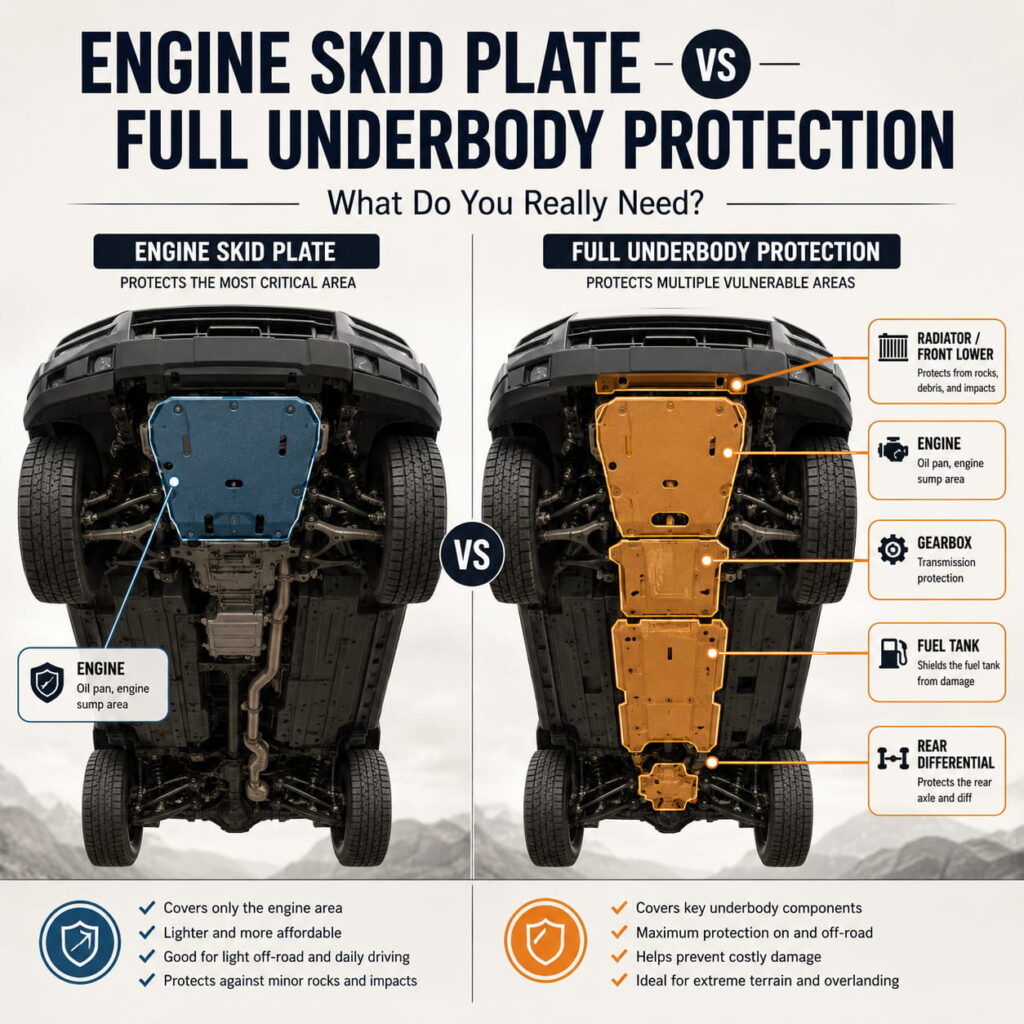
What Is an Engine Skid Plate?
An engine skid plate is a metal protective plate installed under the front part of the vehicle. Its main purpose is to protect the lower engine area from impact.
Depending on the vehicle, this area may include:
- engine oil pan;
- lower engine block area;
- oil filter area;
- front subframe area;
- lower radiator support area;
- factory plastic undertray replacement area.
For many vehicles, the engine and oil pan are among the most vulnerable underbody parts. A strong impact from a pothole, stone, curb, ice block or road debris can damage the oil pan and lead to oil loss, towing and expensive repairs. Learn which components may be affected and what to inspect after an impact in our guide to pothole damage to the oil sump, gearbox and underbody.
If you are still deciding whether you need underbody protection at all, read this guide first: Do You Really Need an Underbody Skid Plate?
What Is Wider Underbody Protection?
Wider underbody protection goes beyond the engine area. Instead of protecting only one zone, it can include several separate skid plates or protective sections for different components under the vehicle.
Depending on the car, SUV, van, pickup or hybrid, a wider underbody protection setup may include:
- engine skid plate;
- gearbox or transmission skid plate;
- radiator protection;
- front bumper lower protection;
- transfer case protection;
- fuel tank protection;
- differential protection;
- battery or hybrid component protection;
- additional underbody guards for exposed areas.
The goal is not always to cover the entire underside with one plate. The goal is to protect the components that are most exposed on the exact vehicle.
Engine Skid Plate vs Wider Underbody Protection: Main Difference
The main difference is coverage. An engine skid plate protects the front lower engine area. A wider underbody protection kit protects several exposed areas underneath the vehicle.
| Protection type | Main coverage | Best for |
|---|---|---|
| Engine skid plate | Engine, oil pan and front lower underbody area | Daily drivers, city cars, crossovers and vehicles with exposed oil pans |
| Wider underbody protection kit | Several exposed areas such as engine, gearbox, radiator, fuel tank, transfer case, differential or hybrid components | SUVs, vans, pickups, hybrids, rough roads, winter roads and business vehicles |
Engine protection is usually the first and most important step. A wider underbody protection kit is the next level when more than one expensive component is exposed to impact.
When Is an Engine Skid Plate Enough?
An engine skid plate may be enough if your main risk is damage to the lower engine area. This is common on many passenger cars, crossovers and daily drivers.
Engine protection is usually a good choice if:
- your oil pan sits low under the car;
- you mostly drive in the city or on highways;
- you want protection from potholes, curbs and road debris;
- your factory plastic cover is damaged or too weak;
- the gearbox, fuel tank and other components are not highly exposed;
- you want a practical first upgrade for underbody protection.
For many drivers, an engine skid plate gives the best balance between cost, protection and everyday usefulness.
When Do You Need a Wider Underbody Protection Kit?
A wider underbody protection kit is worth considering when several important components are exposed underneath.
This is especially relevant on uneven or unpaved surfaces, where the engine, gearbox, radiator area and drivetrain components can be exposed to stones, deep ruts and raised ground. See our guide to underbody protection for gravel roads to understand which areas should be protected first.
You may need wider underbody protection if:
- you drive on rough roads, gravel roads or rural roads;
- you often drive in winter conditions;
- your vehicle is an SUV, van, pickup or work vehicle;
- your gearbox or transmission sits low;
- your fuel tank is exposed;
- your radiator or lower cooling components are vulnerable;
- your vehicle has all-wheel drive, a transfer case or rear differential;
- your vehicle is a hybrid with model-specific underbody components;
- you want to reduce the risk of downtime, towing and repair costs.
For vehicles used for work, deliveries, travel, construction sites or rural routes, protecting several exposed areas can be more practical than protecting only the engine.
For a vehicle-specific pickup example, read our Toyota Hilux underbody protection guide by generation to compare engine-only skid plates with wider protection for the gearbox, radiator, differential, transfer case and fuel tank.
For an SUV-specific example where protection can be extended in stages, see our Jeep Grand Cherokee WK skid plate guide. It explains why the engine and radiator plate should be installed first and how a separate gearbox plate extends protection farther rearward.
For a commercial-van example where generation and drivetrain strongly affect protection choice, see our Mercedes Sprinter underbody protection guide. It explains how engine, gearbox, radiator and lower-front protection differ between FWD, RWD and 4×4/AWD applications.
For a crossover example where generation and protection zone both affect the correct choice, see our Nissan X-Trail skid plate guide by generation. It compares T30, T31, T32 and T33 applications for engine, gearbox, radiator, front-bumper and rear-differential protection in steel and aluminium.
For a crossover-specific example where protection can be expanded from the engine and gearbox to the radiator and differential areas, see our Suzuki S-Cross underbody protection guide, covering 2013–2026 applications by model year, drivetrain and protection priority.
Why the Gearbox and Transmission Matter
Many drivers focus only on the engine, but the gearbox or transmission can also be vulnerable. On some vehicles, the gearbox housing sits low enough to be exposed to stones, ice, uneven roads and road debris.
Damage to the gearbox area can be expensive and may make the vehicle impossible to drive. This is especially important for automatic transmissions, all-wheel-drive vehicles, SUVs and vans.
If your vehicle has a low gearbox position or you regularly drive on bad roads, gearbox protection can be a smart addition to engine protection.
For a closer look at when transmission protection is worth adding, read our guide to gearbox and transmission skid plates.
Radiator and Front Lower Protection
The lower radiator area can also be exposed on some vehicles. A strong impact to this area may damage cooling components, lower mounts or front underbody parts.
Radiator and front lower protection may be useful if you often drive on winter roads, gravel roads, construction zones or uneven parking ramps.
One vehicle-specific plate may protect several connected front underbody areas without covering the entire underside. Our Mazda CX-5 skid plate guide explains the available 2 mm steel protection for the catalogue-listed engine, gearbox and radiator zone on Mazda CX-5 models from 2011 to 2026.
Another crossover example is the Mitsubishi ASX. Our Mitsubishi ASX underbody protection guide compares the 2010–2022 engine and gearbox skid plate with the 2023–2026 version that also includes radiator protection.
The same principle applies to passenger cars where one front plate is catalogued for several connected protection areas. Our Toyota Camry underbody protection guide compares the listed 2 mm steel and 4 mm aluminium options for the engine, front bumper, gearbox and radiator zone on Toyota Camry models from 2018 to 2026.
Fuel Tank Protection
Fuel tank protection is not necessary for every car, but it can be important for vehicles where the tank is exposed or positioned low.
This is more common on SUVs, vans, pickups and vehicles used outside smooth city roads.
To decide whether your vehicle needs this additional protection, read our guide to fuel tank skid plates and when fuel tank protection is worth it.
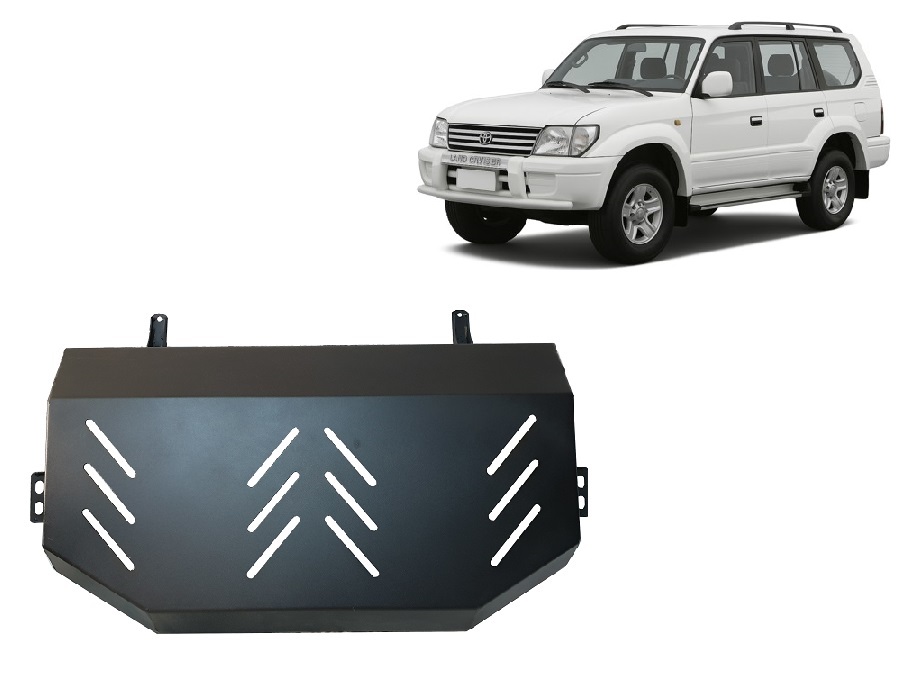
Protect the fuel tank on your Toyota Land Cruiser J90
This steel fuel tank skid plate is designed for Toyota Land Cruiser J90 / Prado 90 and 95 models from 1995 to 2002. It helps protect the fuel tank area from stones, road debris, gravel roads and winter driving conditions.
View fuel tank skid plateFuel tank protection can be useful if:
- you drive on gravel roads;
- you use the vehicle for work;
- you drive in rural areas;
- the fuel tank is exposed underneath;
- you want stronger protection for long trips or mixed road conditions.
Hybrid Vehicles: Why Vehicle-Specific Protection Is Essential
Hybrid vehicles can make the choice between engine-only protection and wider underbody protection more important. Compared with a standard petrol or diesel version of the same model, a hybrid version may have a different underbody layout, different covers, different mounting points or additional components positioned underneath the vehicle.
This is why fitment matters. A skid plate designed for a non-hybrid version may not fit the hybrid version, even if the model name, body shape and production years look similar. In some cases, the right protection also depends on drivetrain layout, hybrid-specific components and the exact underbody area that needs protection.
For example, the Toyota RAV 4 Hybrid 2018–2026 differential skid plate is designed for a specific hybrid SUV and rear drivetrain component area. The Dacia Duster Hybrid 2024–2026 battery skid plate protects the hybrid battery area. The Hyundai i20 Hybrid 2021–2026 skid plate is a wider front underbody protection kit for the engine, front bumper, gearbox and radiator areas. The Subaru Forester 5 Hybrid 2018–2026 skid plate focuses on engine and radiator protection.
These examples show why hybrid underbody protection should be selected by exact model year, drivetrain and component area — not only by model name. If you are not sure whether you need engine protection only or a wider underbody kit, check compatibility before ordering.
Engine Skid Plate or Wider Protection Kit: Quick Recommendation
Use this simple guide to decide which option is more suitable.
| Your situation | Recommended protection |
|---|---|
| City driving, occasional potholes and curbs | Engine skid plate |
| Low oil pan or damaged factory plastic cover | Engine skid plate |
| Winter roads, snow ridges, ice blocks | Engine protection or wider underbody kit |
| Gravel roads, rural roads, poor road surfaces | Engine and gearbox protection |
| SUV, van, pickup or work vehicle | Wider underbody protection kit if available |
| Exposed fuel tank, transfer case or differential | Wider underbody protection kit |
| Hybrid vehicle with model-specific underbody components | Vehicle-specific protection confirmed by VIN |
Why Vehicle-Specific Fitment Is Essential
Underbody protection must fit the exact vehicle. Two cars with the same model name may have different underbody layouts depending on year, engine, gearbox, drivetrain or hybrid configuration.
A vehicle-specific skid plate is designed around factory mounting points, engine layout, gearbox type, drivetrain, service access points and the exact component area that needs protection.
This is why universal skid plates are usually not the best choice for modern vehicles. They may not cover the right area, may require modifications and may not align correctly with factory mounting points.
When to Check Compatibility by VIN
If you are not 100% sure which protection kit fits your vehicle, check compatibility before ordering.
VIN checking is especially useful if your vehicle has several engine options, facelift versions, all-wheel drive, hybrid configuration or if you are choosing between several similar products.
You can send us your VIN here: Check Compatibility by VIN.
What About Material and Repair Costs?
Material and repair cost also matter, but they are separate topics. Steel is commonly selected when impact resistance and durability are the main priorities, while aluminium is usually lighter and does not develop conventional red iron rust. Real-world performance also depends on the material grade, plate shape, mounting system and direction of impact.
One serious underbody impact can also cost more than a skid plate, especially if it damages the oil pan, gearbox, radiator, fuel tank or hybrid-related components.
For more detail, read Is a Skid Plate Worth It? Underbody Protection vs Repair Costs and Steel vs Aluminium Skid Plates: Which Material Is Right for You?.
So, What Do You Really Need?
For most everyday drivers, an engine skid plate is the best first step. It protects the lower engine area and oil pan, which are often among the most vulnerable and expensive underbody parts.
A wider underbody protection kit makes more sense when your vehicle has several exposed components or is used in tougher conditions. This includes SUVs, vans, pickups, hybrids, work vehicles and cars driven on gravel, rural, winter or poorly maintained roads.
Wider protection does not always mean one single plate covering the whole underside of the car. In many cases, it means choosing the right combination of vehicle-specific skid plates for the exposed areas: engine, gearbox, radiator, fuel tank, differential, transfer case or hybrid components.
The best choice is not always the largest kit. The best choice is the protection that fits your exact vehicle and protects the parts that are most exposed to real-world damage.
Find the Right Underbody Protection for Your Vehicle
UnderbodyGuards supplies vehicle-specific underbody protection kits for European cars, SUVs, vans, pickups and hybrids.
You can browse available skid plates by vehicle brand, model and year here: Shop by Vehicle.
If you are not sure which kit fits your car, send us your VIN and we will help confirm compatibility before you order: Check Compatibility by VIN.
FAQ
Is an engine skid plate enough?
For many everyday drivers, an engine skid plate is enough because it protects the lower engine area and oil pan. If you drive on rough roads or have other exposed components, wider underbody protection may be better.
What is a wider underbody protection kit?
A wider underbody protection kit can include separate skid plates for the engine, gearbox, radiator, fuel tank, transfer case, differential or hybrid components, depending on the vehicle.
Do I need gearbox protection?
Gearbox protection is useful if the transmission area is exposed or if you often drive on rough roads, gravel, winter roads or uneven surfaces.
Do hybrid vehicles need special underbody protection?
Hybrid vehicles may have a different underbody layout compared with petrol or diesel versions of the same model. Choose vehicle-specific protection and check compatibility before ordering.
How do I know which underbody protection kit fits my car?
Choose your vehicle by brand, model and year, then check engine and drivetrain compatibility. If you are not sure, use a VIN compatibility check before ordering.
