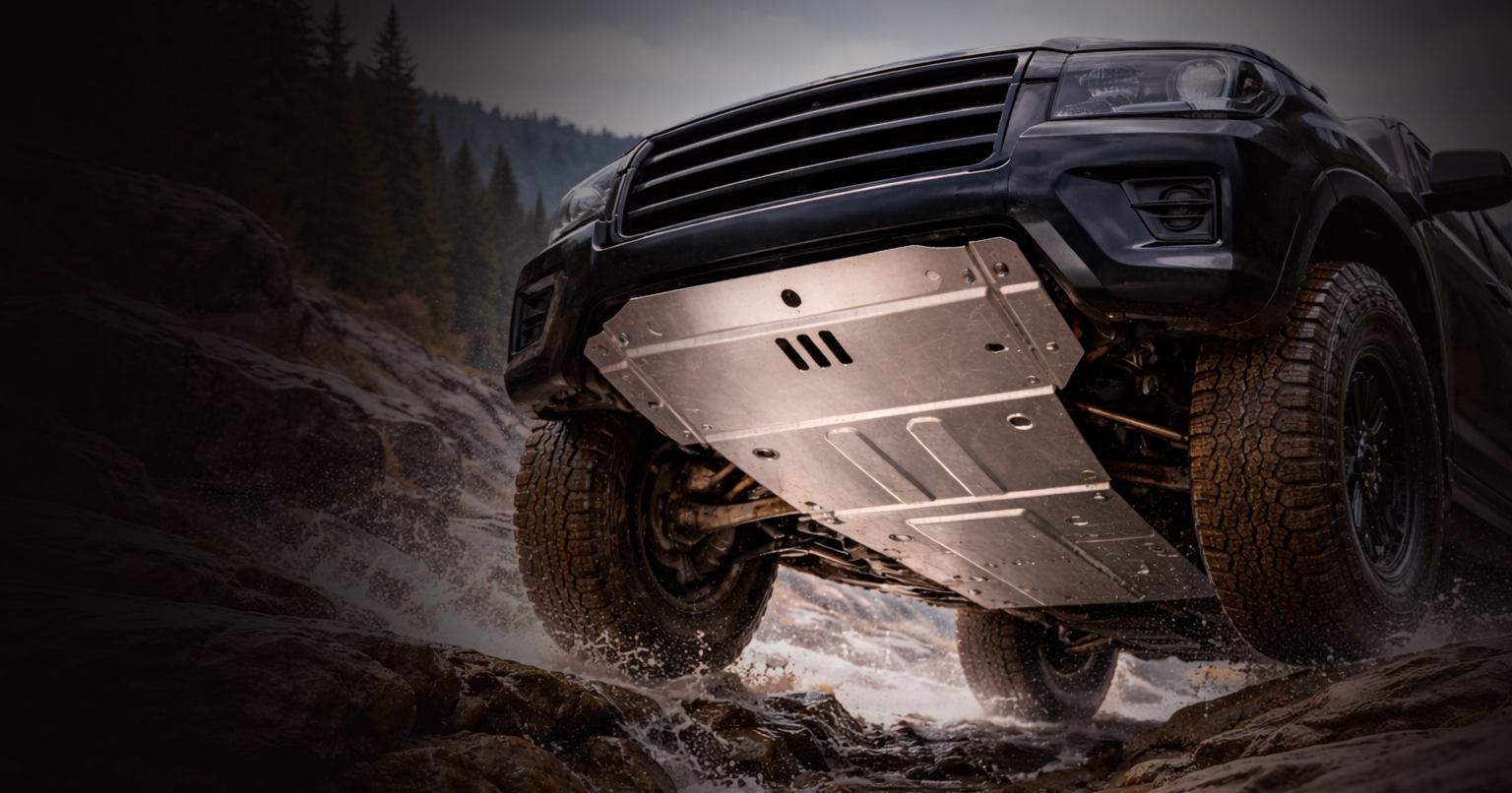
Is a Skid Plate Worth It? Underbody Protection vs Repair Costs
For many drivers, the decision to install a skid plate comes down to cost: is it worth paying for underbody protection now, or is the risk of future damage too small to justify the expense?
A properly fitted skid plate cannot prevent every possible type of damage, but it can reduce the chance that a pothole, curb, broken road edge, ice block or road debris reaches an expensive component directly. The financial value comes from reducing the risk of a repair that may also involve towing, workshop labour, replacement fluids and vehicle downtime.
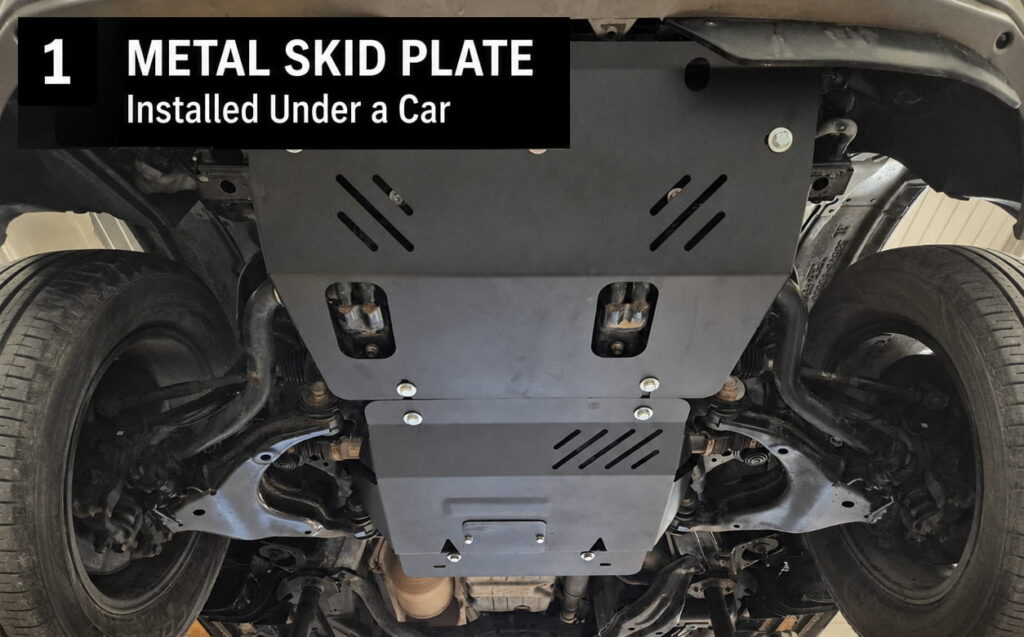
This guide focuses on the financial side of the decision: what can be damaged underneath a vehicle, what a single impact may cost and when the price of vehicle-specific protection can make economic sense.
What Can Become Expensive After an Underbody Impact?
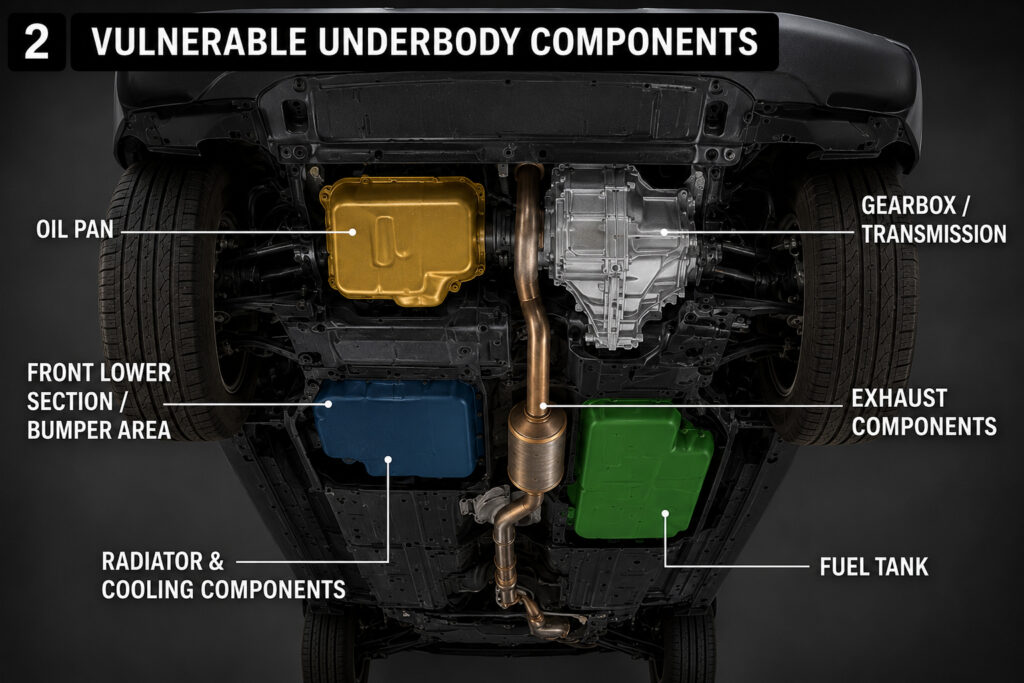
The underside of a vehicle contains several components that can be costly to repair or replace. Depending on the model and drivetrain, exposed areas may include:
- engine oil pan;
- gearbox or transmission housing;
- lower radiator and cooling components;
- fuel tank;
- exhaust and emissions components;
- transfer case or differential;
- hybrid or EV-related underbody components;
- factory underbody covers, brackets and sensors.
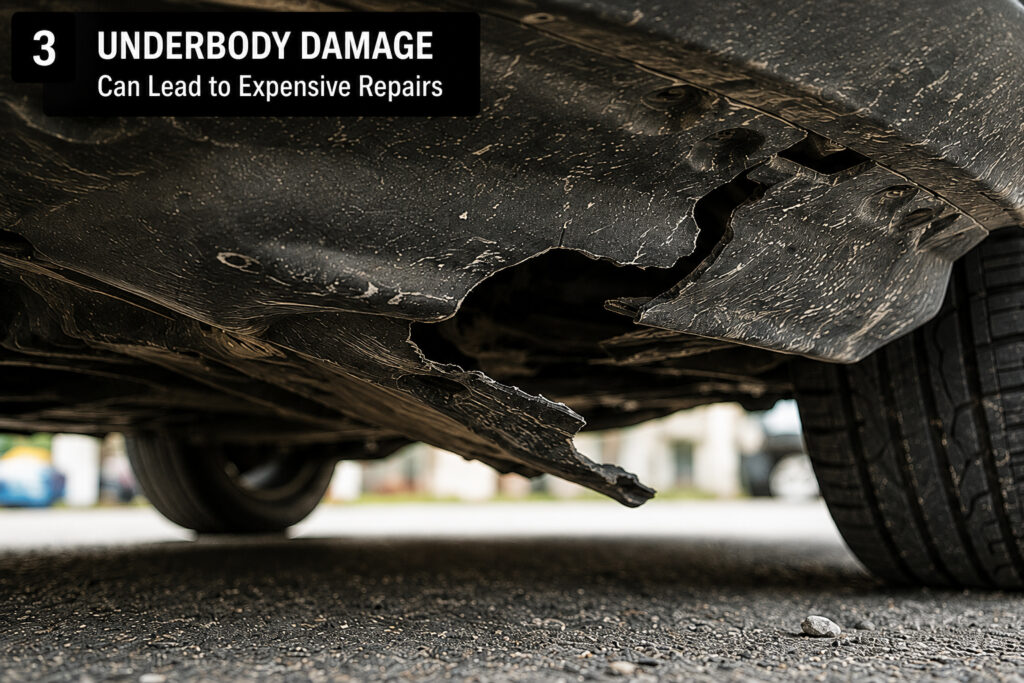
A light scrape may only damage a plastic undertray. A stronger strike can crack an oil pan, deform a gearbox casing, damage a cooling component or cause a fluid leak that makes the vehicle unsafe to continue driving.
Repair Cost Risk After Underbody Damage
Repair prices vary substantially by vehicle, country, workshop, labour rate and part availability. The figures below are illustrative ranges rather than quotations or guaranteed repair costs. Their purpose is to show why one serious underbody impact can cost considerably more than the damaged component alone.
| Possible damage | Illustrative cost risk |
|---|---|
| Damaged plastic undertray or splash shield | €100–€300+ |
| Damaged oil pan or oil sump | €300–€900+ |
| Towing after fluid loss or breakdown | €100–€300+ |
| Lower radiator or cooling-system damage | €250–€800+ |
| Gearbox or transmission-related damage | €700–€2,000+ |
| Fuel-tank-related damage | Potentially higher |
| Hybrid or EV underbody component damage | Potentially much higher |
The real financial impact may include more than the replacement part. Towing, diagnostics, workshop labour, replacement fluids, missed work, disrupted travel and vehicle downtime can all increase the total cost of one incident.
A skid plate does not need to prevent every possible impact to have financial value. Avoiding one serious repair may be enough to justify the initial cost of protection.
Factory Plastic Cover vs Metal Skid Plate: What Are You Paying For?
Many vehicles leave the factory with plastic undertrays or aerodynamic covers. These parts are useful, but they normally serve a different purpose from a metal skid plate.
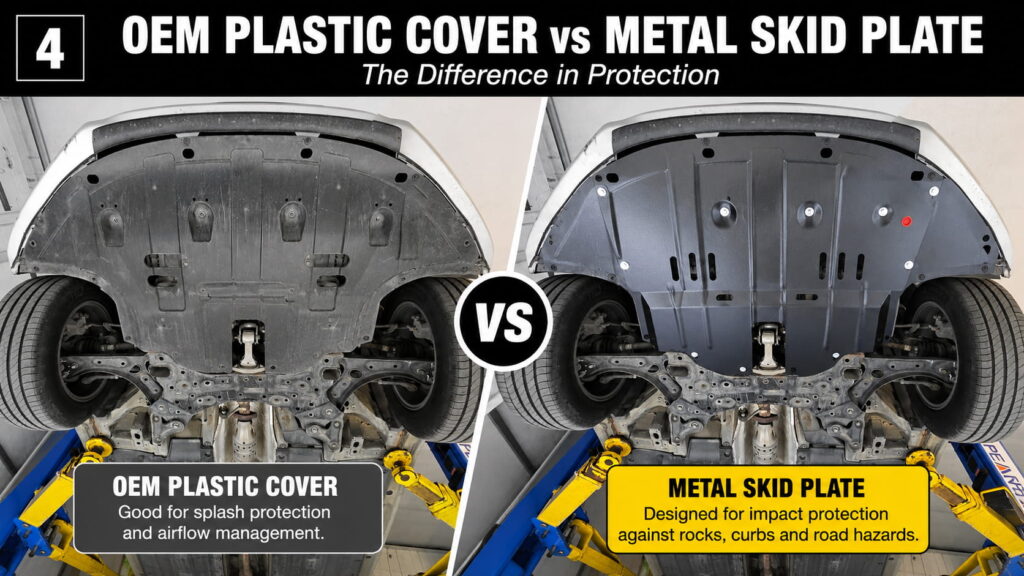
Factory plastic covers commonly help with:
- splash protection;
- airflow management;
- dirt reduction;
- noise control;
- light debris exposure.
A steel or aluminium skid plate is designed to create a stronger physical barrier around its stated protection zone. The additional cost therefore pays for impact protection rather than simply replacing the function of the factory plastic cover.
If your question is whether your normal driving conditions justify installing a skid plate at all, read our separate guide to whether you really need a skid plate.
When Does the Cost of a Skid Plate Make Financial Sense?
The strongest financial case exists when the potential cost of one underbody impact is significantly higher than the cost of protecting the exposed component.
The calculation should include more than the price of the damaged part. It can also include towing, labour, diagnostics, replacement fluids, downtime and disruption to work or travel.
A skid plate is easier to justify financially when:
- the vehicle has expensive exposed components;
- underbody contact is a realistic risk in normal use;
- a fluid leak or damaged drivetrain component could immobilise the vehicle;
- towing or downtime would create additional costs;
- the vehicle is used commercially or for frequent travel;
- you plan to keep the vehicle for several years.
For example, a vehicle-specific product such as the Toyota RAV4 2018–2026 2 mm steel engine, front bumper, gearbox and radiator skid plate protects several listed front-underbody zones with one application. The value of that protection should be judged against the exposure and potential repair cost of those specific components, not simply against the price of the plate.
Can a Skid Plate Pay Off Without Off-Road Driving?
Yes. Financial value does not depend on off-road driving alone. A pothole, curb strike, frozen road edge, damaged speed bump or motorway debris can create an expensive repair during ordinary road use.
For road-driven vehicles, the relevant comparison is the cost of protecting an exposed component versus the probability and consequences of damaging it. A vehicle that rarely encounters underbody hazards may have a weaker financial case than one regularly driven on damaged roads or in harsh winter conditions.
For winter-specific exposure, see our winter and bad-roads underbody protection guide. For gravel and rural routes, see our guide to underbody protection for gravel roads.
Steel or Aluminium: Does Material Change the Value?
Both steel and aluminium skid plates can provide useful protection. The best financial choice is not automatically the cheapest or lightest product; it is the correctly fitted plate that protects the required area for the vehicle’s real use.
Steel is commonly selected where repeated or concentrated impacts are expected. Aluminium can reduce added weight and does not develop conventional red iron rust. Product design, thickness, reinforcement, mounting system and protected area must also be considered.
For a full comparison, read our steel vs aluminium skid plate guide.
Why Vehicle-Specific Fitment Matters Financially
A skid plate that does not fit correctly has poor value even if its purchase price is low. Incorrect fitment can create installation problems, additional labour, return shipping or the need to replace the product.
A vehicle-specific protection kit should therefore be checked against:
- model year;
- engine;
- transmission;
- drivetrain;
- body version;
- factory mounting points;
- service access;
- airflow and clearance requirements;
- the exact protected component area.
You can browse available products in our underbody protection shop. If compatibility is uncertain, use the VIN compatibility checker before ordering.
When a Skid Plate May Not Be Good Value
Additional protection is not automatically the best use of money for every vehicle. The financial case may be weaker if the car is used almost exclusively on smooth roads, has generous ground clearance, already has substantial factory protection and has no important low-mounted components exposed to realistic impact risk.
In that situation, inspect the underside first and protect only the areas where the potential repair risk justifies the added cost.
The best-value setup is therefore not necessarily the largest skid plate kit. It is the smallest vehicle-specific protection system that adequately covers the components exposed in the way the vehicle is actually used.
Is a Skid Plate Worth It? Final Assessment
A skid plate can be financially worthwhile when the cost and consequences of one potential underbody repair are significantly greater than the cost of protecting the vulnerable area.
The strongest case is usually found on vehicles with exposed engine, gearbox, radiator, drivetrain, fuel-tank or electrified components, particularly where underbody contact is a realistic possibility and a breakdown would also involve towing or downtime.
If you first need to decide whether your vehicle and driving conditions require additional protection at all, read Do You Really Need an Underbody Skid Plate?.
FAQ
Is a skid plate worth the money?
It can be. The financial case is strongest when an exposed component is expensive to repair and there is a realistic risk of underbody contact. One avoided repair, towing event or period of vehicle downtime may justify the cost of protection.
Can a skid plate save money on repairs?
A skid plate cannot guarantee that damage will never occur, but it can reduce direct exposure of the protected component. If it prevents or reduces one serious impact, the avoided repair cost may exceed the cost of the plate.
Can a skid plate be financially worthwhile for normal road driving?
Yes. Potholes, curbs, broken asphalt, winter ice and road debris can cause expensive underbody damage without off-road use. The financial case depends on the component being protected, its repair cost and the likelihood of impact.
Is a factory plastic undertray enough?
A factory plastic cover is useful for airflow, dirt, splash and noise control, but it is not automatically equivalent to a metal skid plate designed for stronger impact protection.
Should I choose steel or aluminium underbody protection?
Choose according to the exact product, protected area and driving conditions rather than material name alone. Steel and aluminium have different weight, corrosion and impact characteristics, while plate geometry and mounting design also affect real-world performance.
How do I know which skid plate fits my car?
Check the vehicle make, model, production year, engine, transmission and drivetrain against the product specification. If anything is uncertain, use the UnderbodyGuards VIN compatibility check before ordering.
