Ford Ranger Skid Plates: What to Protect First for Work, Towing and Off-Road Driving
A Ford Ranger may spend one day on the motorway and the next on a construction site, farm track or rutted access road. That range of uses is exactly why there is no single underbody protection setup that suits every Ranger. The most useful skid plate is the one that protects the component most exposed on your vehicle and in your driving conditions.
For many owners, the engine and lower front area are the logical starting point. A Ranger used regularly on rough tracks may also need protection for the gearbox, transfer case, fuel tank, DPF or rear differential. Model year, engine, transmission, drivetrain and underbody layout must all be checked before ordering.
Quick answer: Start with the engine and lower front area if the vehicle has limited protection underneath. Add gearbox and transfer-case protection for frequent rough-road or off-road use. Fuel-tank, DPF and rear-differential guards are more configuration-specific and should be selected only after confirming the exact vehicle.
Ford Ranger Skid Plate Priorities at a Glance
| Protection area | Typical priority | Most relevant use | Important fitment check |
|---|---|---|---|
| Engine and lower front area | First | Daily driving, work sites, gravel and rough roads | Model year, engine, existing undertray and mounting points |
| Radiator and lower cooling area | High | Loose stones, forestry roads and rough access routes | Airflow, front layout and compatibility with engine protection |
| Gearbox and transfer case | High for rough use | 4×4 use, deep ruts, rocks and uneven terrain | Transmission type, drivetrain and service access |
| Fuel tank | Use-dependent | Farm, forestry, work-site and expedition routes | Tank shape, body configuration and mounting position |
| DPF and lower exhaust area | Vehicle-specific | Compatible diesel models on gravel or rough ground | Engine, exhaust layout, ventilation and heat clearance |
| Rear differential | Off-road priority | Compatible rear-drive and 4×4 vehicles crossing rocks and deep ruts | Rear axle and differential configuration |
1. Start with the Engine and Lower Front Area
The engine oil sump and lower front section are normally the first areas to inspect. They are positioned close to the leading edge of the vehicle and may be exposed to stones, broken road surfaces, compacted snow, deep ruts and objects hidden in mud or grass.
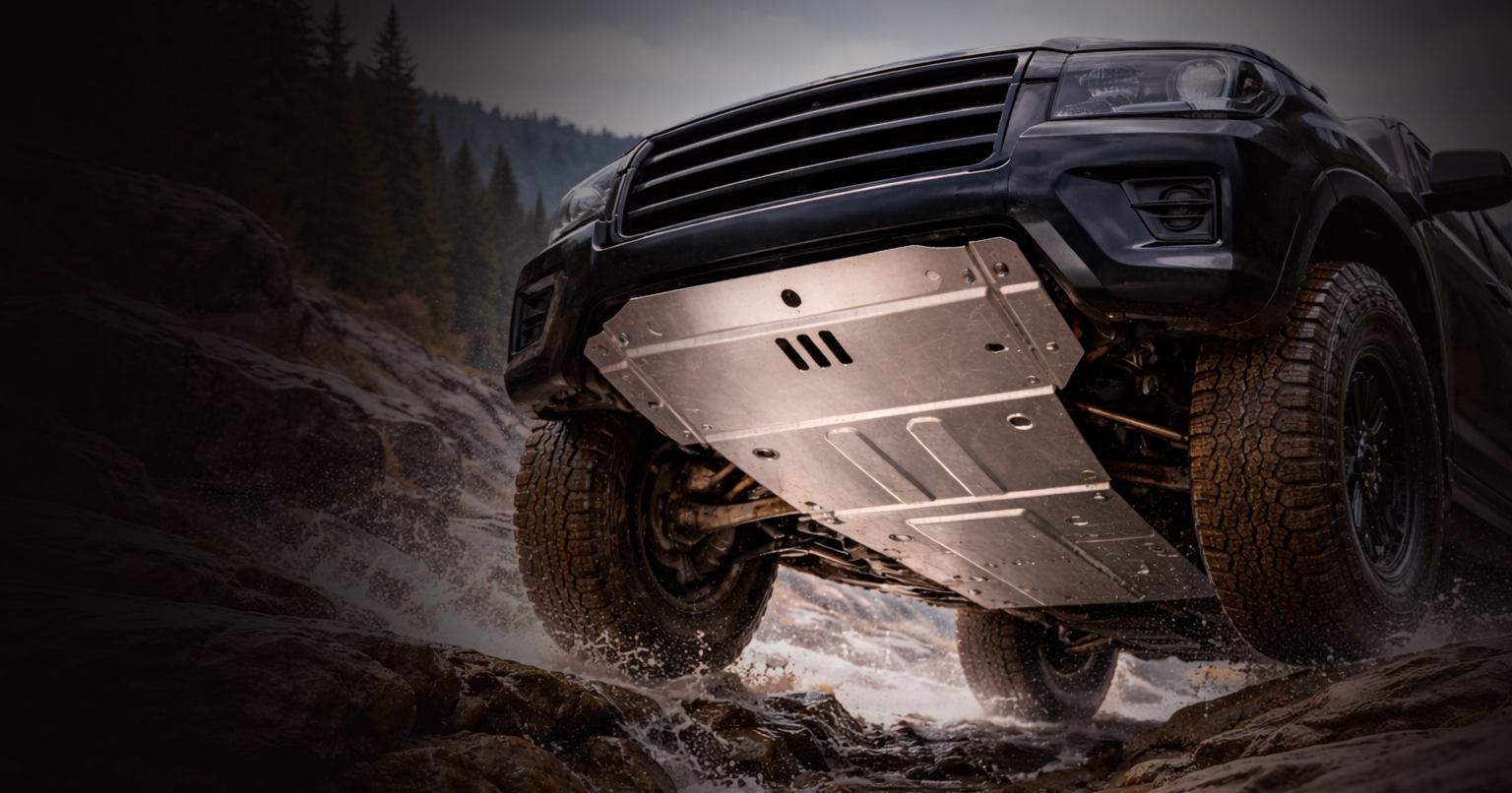
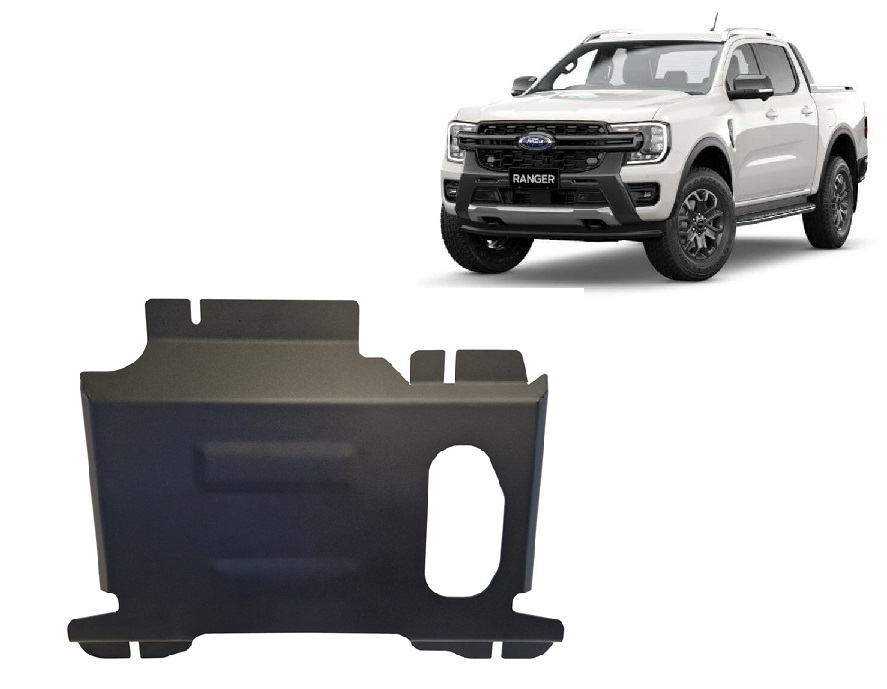
A vehicle-specific Ford Ranger engine skid plate, sometimes called a bash plate, creates a stronger barrier than a light plastic splash shield. Depending on the product, coverage may include the engine alone or extend towards the front bumper and radiator area. One current example is the 3 mm steel engine skid plate for Ford Ranger 2023–2026, subject to confirmation of the exact vehicle configuration.
For a Ranger used mainly on paved roads, this may be the only additional protection required. For vehicles that regularly enter construction sites, farms, forest tracks or unpaved access roads, it should usually form the front section of a wider protection system.
Do not forget the radiator area
The lower radiator and cooling-system area can also be exposed at the front of the vehicle. A dedicated radiator plate may be useful where loose stones, branches or broken surfaces are common. Protection must be designed so that it does not obstruct the airflow required by the engine, transmission or, where applicable, hybrid-system cooling.
Separate radiator plates are listed for selected 2023–2026 vehicles, including a 3 mm steel radiator skid plate and a 3 mm aluminium radiator skid plate. They should be matched to the exact front layout and checked for compatibility with any engine plate already installed.
2. Add Gearbox and Transfer-Case Protection for Rougher Use
An engine plate does not automatically protect the components positioned further back. The gearbox and, on compatible drivetrains, the transfer case can remain exposed behind the front protection. These areas become more important when the Ranger crosses deep ruts, rocks, raised track centres or abrupt changes in ground level.
A dedicated gearbox skid plate protects one zone. A combined gearbox and transfer-case plate extends coverage further along the drivetrain. For example, a combined 2 mm steel gearbox and transfer-case plate is listed for selected 2020–2023 applications. For listed 2023–2026 configurations, the catalogue also includes separate 3 mm steel gearbox and 3 mm steel transfer-case protection. The correct choice depends on the transmission and drivetrain fitted to the vehicle; a plate listed for one configuration must not be assumed to fit another.
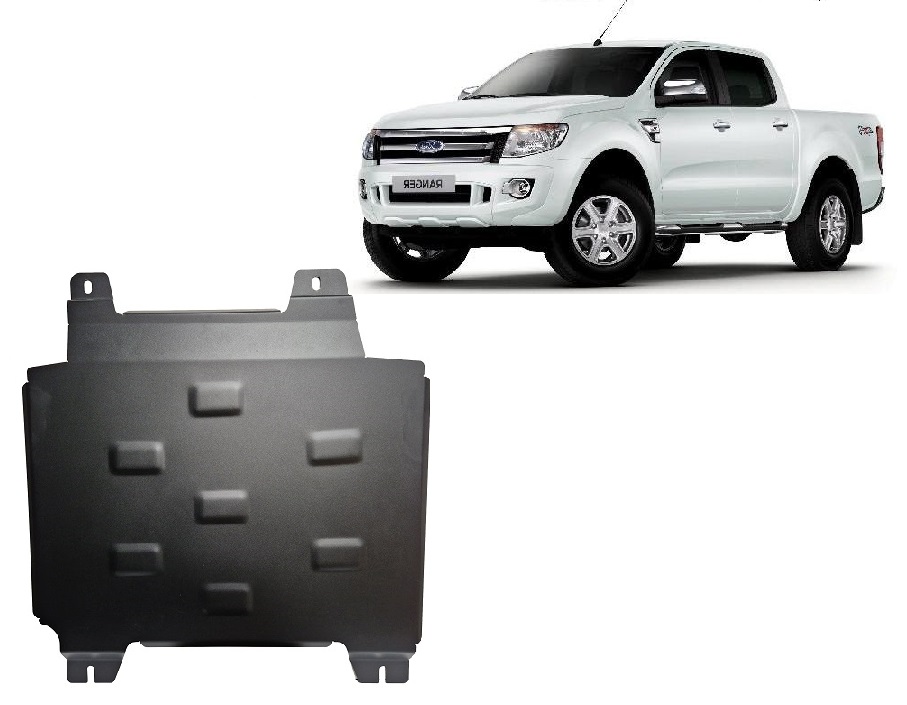
For occasional gravel-road use, front protection may still take priority. For repeated off-road driving or commercial work on badly surfaced sites, extending protection from the engine towards the gearbox and transfer case provides a more logical front-to-back system.
For another working-pickup example with staged front-to-centre protection, see our Maxus T60 MAX underbody protection guide. It shows how a 3 mm steel engine and radiator skid plate forms the base of the system, with separate gearbox and transfer-case protection added for more demanding worksite, forestry and 4×4 use.
3. Consider Fuel-Tank Protection for Exposed Routes
The fuel tank occupies a large area underneath the pickup. Its exposure varies with the Ranger generation, body configuration, tank design and surrounding factory equipment. A fuel-tank skid plate is most relevant when the vehicle regularly crosses deep ruts, stony tracks, forestry roads, agricultural land or uneven work sites. Available examples include a 2 mm steel fuel-tank plate for listed 2011–2023 models and a separate 2023–2026 fuel-tank protection option.
Towing alone does not automatically mean that a fuel-tank plate is required. The stronger case is a towing vehicle that must reach campsites, worksites, fields or remote access points over rough ground, particularly when load and terrain reduce the available clearance.
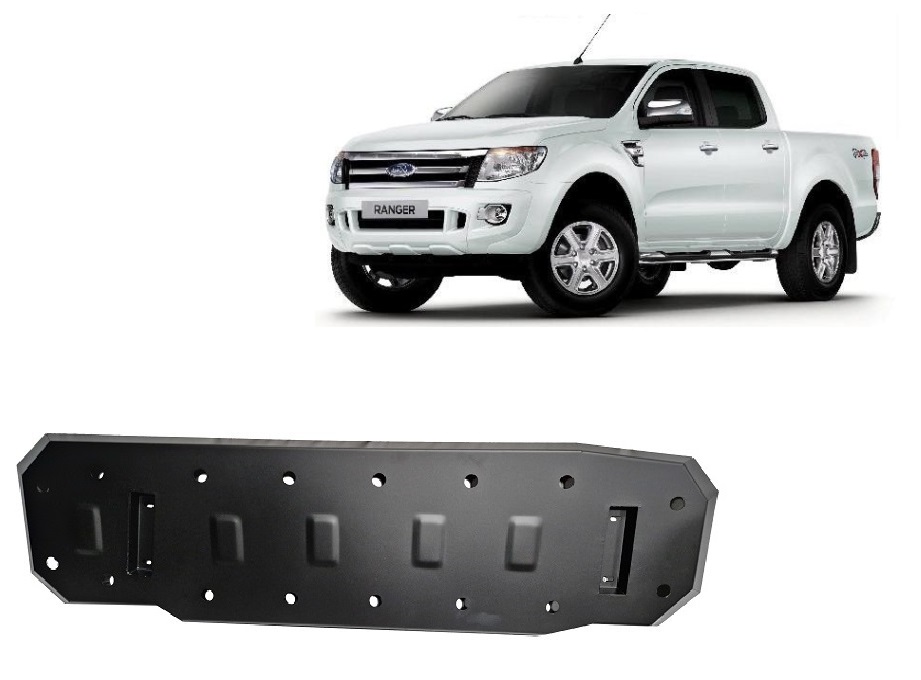
Fuel-tank protection is especially sensitive to fitment. Similar-looking Rangers can use different tanks, brackets or underbody layouts. Confirm the exact production year, body version and mounting position before ordering.
4. DPF Protection Is Useful Only on Compatible Diesel Models
A diesel particulate filter can be positioned low enough to face stones, debris or direct contact on rough ground. Dedicated protection is available for selected applications, including the listed Ford Ranger 2020–2023 DPF skid plate in 2 mm steel.
This is not a universal recommendation for every Ranger. Petrol, diesel and PHEV versions use different exhaust and powertrain layouts. A DPF plate must match the exact diesel application and maintain the clearances, ventilation and heat management specified for the exhaust system.
If your Ranger is used on normal paved roads and the DPF is already adequately shielded, another zone may deserve priority. If the filter is visibly exposed and the vehicle works on stony or rutted ground, a compatible guard can become an important part of the protection plan.
5. Protect the Rear Differential for Demanding 4×4 Use
On compatible rear-wheel-drive and four-wheel-drive Rangers, the rear differential housing can be vulnerable to rocks, ledges and the raised centre of a deeply rutted track. Differential protection therefore has a strong off-road use case, but it should not be treated as a universal upgrade for every Ranger.
A rear differential skid plate must match the axle and differential configuration. The catalogue includes a 4 mm steel rear-differential skid plate for selected 2023–2026 applications. Confirm the drivetrain and mounting arrangement before purchase.
What Should You Protect for Different Types of Driving?
| Vehicle use | Recommended starting point | Possible additional protection |
|---|---|---|
| Normal road use | Inspect the engine and lower front area | Radiator protection where the lower cooling area is exposed |
| Construction and utility work | Engine and radiator | Gearbox, transfer case and fuel tank according to site conditions |
| Towing on mixed surfaces | Engine and lower front protection | Fuel tank and drivetrain where access routes are rough |
| Farm, forestry and gravel-road use | Engine, radiator and gearbox | Transfer case, fuel tank and compatible DPF protection |
| Frequent off-road driving | Front-to-back drivetrain protection | Fuel tank and rear differential for the compatible configuration |
Model Years and Fitment: Why the Badge Is Not Enough
The Ford Ranger name covers different generations, engines, transmissions, body styles and drivetrains. UnderbodyGuards products are therefore listed by specific fitment ranges rather than by the Ranger name alone.
- 2010/2011–2020 applications: selected engine, gearbox and fuel-tank plates are listed for these earlier ranges.
- 2020–2023 applications: available options include dedicated DPF protection and combined gearbox/transfer-case coverage for listed vehicles.
- 2023–2026 applications: the range includes separate engine, radiator, gearbox, transfer-case, fuel-tank and rear-differential options.
- PHEV applications: use only protection specifically confirmed for the plug-in-hybrid underbody layout, such as the listed Ford Ranger PHEV gearbox and transfer-case skid plate. Do not assume that a diesel or petrol plate will fit.
The year ranges above describe product listings, not universal compatibility with every Ranger built in those years. Always verify the exact production year, engine, transmission, drivetrain, body version and mounting points.
What About the Ford Ranger Raptor?
The Ranger Raptor must not be treated as a standard Ranger with different styling. Its drivetrain, suspension and factory protection can differ, and it has its own vehicle-specific skid plates.
Ford states that the next-generation European Raptor uses a larger 2.3 mm high-strength-steel front bash plate which, together with the engine undershield and transfer-case shield, is designed to protect areas including the engine sump, radiator, steering, front crossmember and front differential. That factory equipment does not prove that every component further back is protected, and it does not make standard-Ranger aftermarket plates interchangeable with Raptor parts.
Raptor owners should use the separate Ford Ranger Raptor underbody protection range and confirm the engine, model year and protected zone before ordering.
Steel Thickness and Protection Design
The Ford Ranger range includes 2 mm, 3 mm and selected 4 mm steel plates, as well as selected aluminium applications. Thickness alone does not determine performance. Material grade, shape, reinforcing bends, mounting design, coverage and the type of impact all matter.
As a practical rule, lighter 2 mm steel plates can suit targeted areas and mixed road use, while 3 mm steel is commonly selected for engine and drivetrain protection where harder or repeated contact is more likely. A 4 mm plate may be used for a highly exposed component such as the rear differential on a listed application.
For a broader material comparison, read our guide to steel vs aluminium skid plates.
Installation, Cooling and Service Access
A skid plate should use the mounting points specified for its vehicle application. Installation must not interfere with steering, suspension movement, the exhaust system, drivetrain movement or required cooling airflow.
Before fitting:
- compare the plate and supplied hardware with the installation instructions;
- inspect the mounting points for damage or corrosion;
- check clearance around the exhaust, DPF and moving components;
- confirm whether the plate affects routine oil or filter access;
- tighten fasteners in the specified sequence and recheck them after initial use.
Professional installation is recommended when the vehicle configuration is unclear or when several plates must work together as one system.
How to Choose the Correct Ford Ranger Skid Plate
- Identify the exact production year and body version.
- Confirm the engine, including whether the vehicle is diesel, petrol or PHEV.
- Confirm the transmission and whether the vehicle is 2WD or 4×4.
- Inspect which areas already have factory protection.
- Rank the exposed components according to your actual driving conditions.
- Check that every selected plate is compatible with the vehicle and with any adjacent protection already fitted.
Browse the complete Ford Ranger skid plate and underbody protection range. If fitment is uncertain, use the GuardPass™ VIN compatibility check before ordering.
Frequently Asked Questions
Which Ford Ranger skid plate should I install first?
For many vehicles, the engine and lower front area are the first sections to inspect and protect. The correct priority still depends on existing factory protection and the surfaces on which the vehicle is used.
Does one skid plate fit every Ford Ranger?
No. Compatibility can change with production year, generation, engine, transmission, drivetrain, body version and mounting points.
Do I need gearbox and transfer-case protection?
It is most relevant for compatible vehicles used repeatedly on rutted tracks, rocks, work sites or uneven terrain. Normal road users may reasonably prioritise the engine and lower front area first.
Does towing mean I need a fuel-tank skid plate?
Not by itself. Fuel-tank protection becomes more relevant when a towing vehicle also travels over rough access roads, fields, campsites or construction areas where the tank may face direct contact or debris.
Can a standard Ranger skid plate fit a Ranger Raptor?
Do not assume that it can. Ranger Raptor versions have their own underbody configuration and dedicated protection products. Use only a plate whose fitment explicitly includes the exact Raptor version.
Can I combine several Ford Ranger skid plates?
Yes, when the plates are designed for the same vehicle configuration and are compatible with one another. Check mounting points, overlap, cooling, exhaust clearance and service access before installation.
Build Protection Around the Way Your Ranger Is Used
The best Ford Ranger underbody protection setup is not necessarily the one with the most plates. It is the one that protects the exposed areas most likely to be hit in your real driving conditions.
Begin with the engine and lower front section, then extend coverage towards the gearbox and transfer case when rough-road or off-road use justifies it. Add fuel-tank, DPF or rear-differential protection only where the vehicle configuration and terrain make those zones relevant.
Before ordering, verify the VIN, model year, engine, transmission, drivetrain, body version and existing underbody equipment. This avoids incorrect fitment and produces a more coherent protection system from front to rear.
