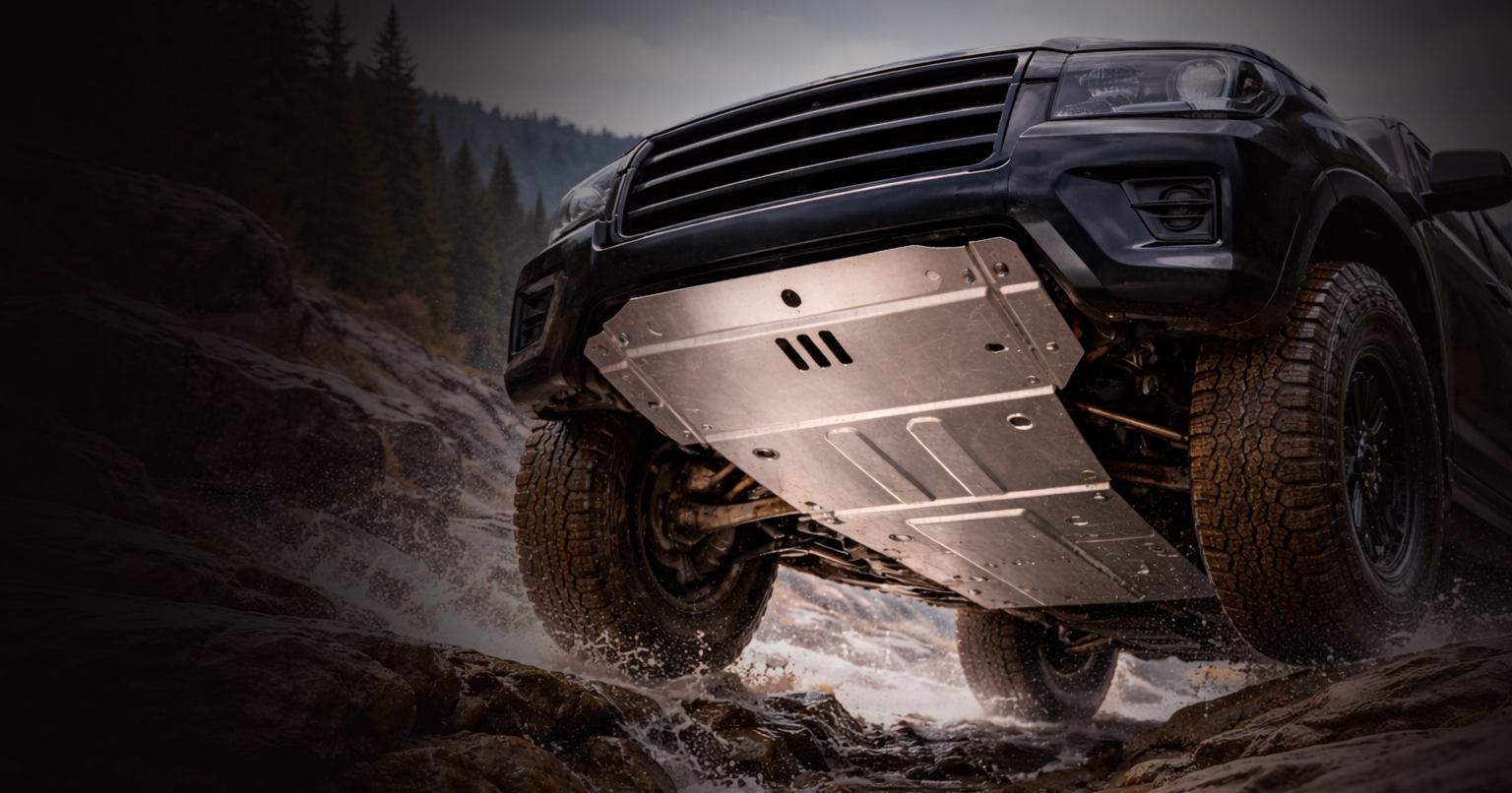
Fuel Tank Skid Plate: When Is Fuel Tank Protection Worth It?
Many drivers think first about engine protection, but the fuel tank can also be exposed underneath some vehicles. If the tank sits low or is positioned in a vulnerable area, damage from stones, gravel, ice, road debris or rough road impacts can become a serious problem.
A fuel tank skid plate helps protect the fuel tank area from direct impact. It can be especially useful for SUVs, vans, pickups, 4×4 vehicles and cars used on gravel roads, rural roads, winter roads or mixed road surfaces.
This guide explains what a fuel tank skid plate does, when fuel tank protection is worth considering and why correct vehicle-specific fitment is important before ordering.
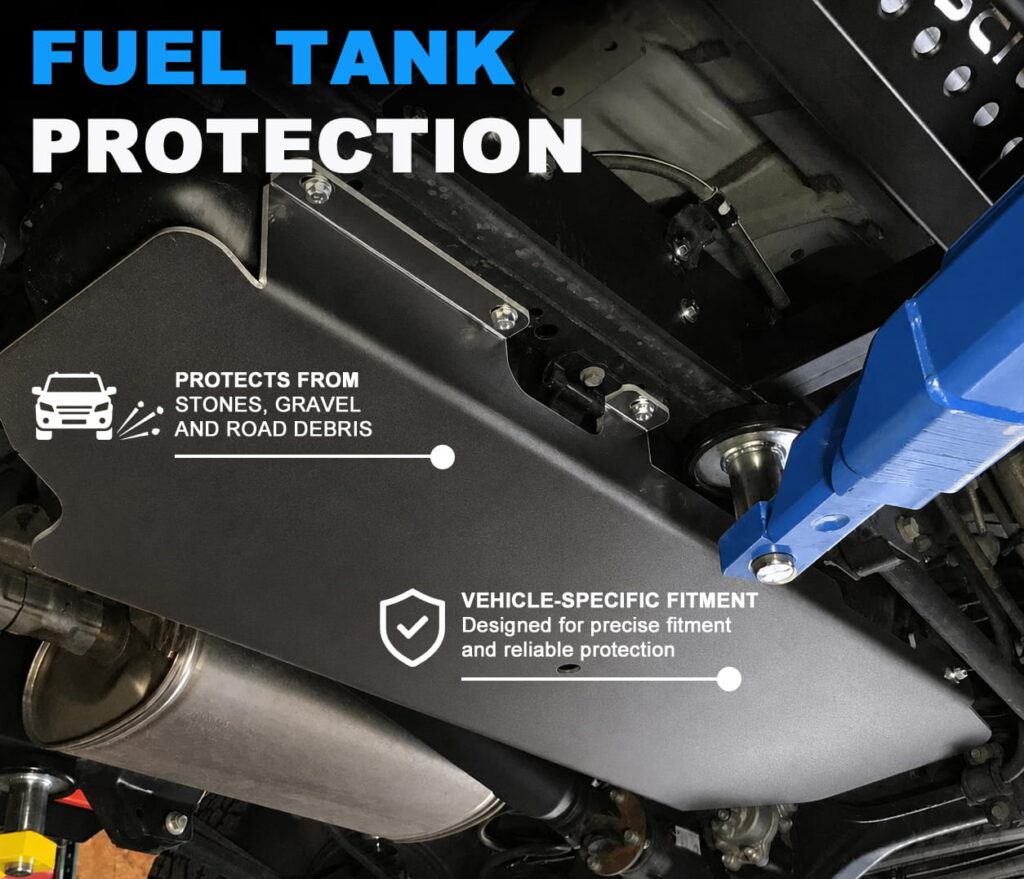
What Is a Fuel Tank Skid Plate?
A fuel tank skid plate is metal underbody protection installed under or around the fuel tank area of the vehicle. Its purpose is to create a strong barrier between the fuel tank and road hazards.
Depending on the vehicle, this area may include:
- plastic fuel tank;
- metal fuel tank;
- fuel tank lower section;
- fuel tank straps or brackets;
- nearby fuel lines or underbody components;
- rear or central underbody area near the tank.
Fuel tank protection is not necessary for every car. On some vehicles, the tank is well protected by the body structure. On others, the tank may be more exposed, especially on SUVs, vans, pickups and vehicles used outside smooth city roads.
Why Fuel Tank Protection Can Be Important
The fuel tank is not a part you want to damage. A strong impact to the fuel tank area can cause leaks, deformation, damaged brackets, towing, repair costs and safety concerns.
Even if the tank is made from durable plastic or metal, repeated contact with stones, gravel, ice blocks, hard snow ridges or road debris can increase the risk of damage over time.
A fuel tank skid plate does not make the vehicle indestructible, but it can reduce the risk of direct impact to one of the more sensitive areas underneath the vehicle.
When Do You Need Fuel Tank Protection?
You may need a fuel tank skid plate if the fuel tank is exposed underneath your vehicle or if you often drive in conditions where underbody impacts are possible.
Fuel tank protection can be useful if:
- your fuel tank is positioned low under the vehicle;
- the tank is exposed to stones, gravel or road debris;
- you drive on gravel roads, rural roads or forest roads;
- you often drive in winter conditions with ice blocks or hard snow ridges;
- your vehicle is an SUV, van, pickup or 4×4 vehicle;
- you use the vehicle for work, travel, towing or mixed road conditions;
- you drive on poorly maintained roads;
- you want protection beyond the engine and gearbox areas.
If your vehicle is used only on smooth city roads and the fuel tank is not exposed, fuel tank protection may not be the first priority. In that case, engine protection is usually the more important first upgrade.
Fuel Tank Skid Plate vs Engine Skid Plate
An engine skid plate protects the front lower engine area, including the oil pan and lower engine components. A fuel tank skid plate protects the fuel tank area, which is usually located further back under the vehicle.
| Protection type | Main coverage | Best for |
|---|---|---|
| Engine skid plate | Engine oil pan, lower engine area, front underbody | Daily drivers, city cars and vehicles with exposed oil pans |
| Fuel tank skid plate | Fuel tank area, tank lower section, tank brackets or nearby exposed components | SUVs, vans, pickups, 4×4 vehicles, gravel roads, rural roads and winter roads |
For many vehicles, engine protection is the first step. Fuel tank protection becomes more important when the tank is exposed or when the vehicle is used in tougher driving conditions.
If you are comparing engine-only protection with a wider underbody protection setup, read this guide: Engine Skid Plate vs Full Underbody Protection: What Do You Really Need?
Fuel Tank Protection for SUVs, Vans and Pickups
SUVs, vans and pickups are more likely to benefit from fuel tank protection because they are often used on mixed road surfaces. This can include gravel roads, rural roads, construction sites, winter roads, forest roads or poorly maintained routes.
These vehicles may also have larger underbody components, longer wheelbases or exposed rear and central underbody areas. Depending on the model, the fuel tank may be more vulnerable to direct impact than on a small city car.
For work vehicles, fuel tank damage can also mean downtime. If the vehicle is used for deliveries, business routes, travel or rural driving, protecting the tank area can be more practical than dealing with damage after an impact.
For a vehicle-specific pickup example, read our Toyota Hilux underbody protection guide by generation to compare fuel tank protection with engine, gearbox and drivetrain skid plate options across 2000–2026 models.
Fuel Tank Protection for Gravel Roads and Rural Driving
Gravel roads can expose the underside of the vehicle to repeated stone impact. Small stones may not always cause immediate damage, but over time they can hit exposed areas such as the fuel tank, brackets, covers and nearby underbody components.
Fuel tank protection can be useful if you regularly drive on:
- gravel roads;
- rural roads;
- forest roads;
- farm roads;
- construction site roads;
- poorly maintained roads;
- mixed asphalt and gravel routes.
If the tank is positioned low or has limited protection from the vehicle body, a fuel tank skid plate can add a useful layer of protection.
Fuel Tank Protection for Winter Roads
Winter roads can be hard on the underside of a vehicle. Ice blocks, frozen snow ridges, road debris and hidden potholes can hit exposed components with significant force.
Fuel tank protection may be worth considering if you often drive in winter conditions and your tank area is exposed. This is especially relevant for SUVs, vans, pickups and vehicles used outside clean city roads.
For more detail about winter driving and underbody protection, read: Underbody Protection for Winter and Bad Roads
Fuel Tank Skid Plate as Part of a Wider Underbody Protection Kit
Fuel tank protection is often part of a wider underbody protection setup. On some vehicles, fuel tank protection may be a separate fuel tank skid plate. On others, it may be combined with other protective sections depending on the vehicle layout.
A wider underbody protection setup may include:
- engine skid plate;
- gearbox or transmission skid plate;
- radiator or front lower protection;
- fuel tank skid plate;
- transfer case protection;
- differential protection;
- hybrid component or battery protection.
This does not always mean one single skid plate covering the whole underside of the vehicle. In many cases, wider protection means selecting the correct vehicle-specific skid plates for the exposed areas.
Example of Vehicle-Specific Fuel Tank Protection
Fuel tank protection should be selected for a specific vehicle, not as universal underbody protection. The shape, mounting points and protected area can differ between models, years and body versions.
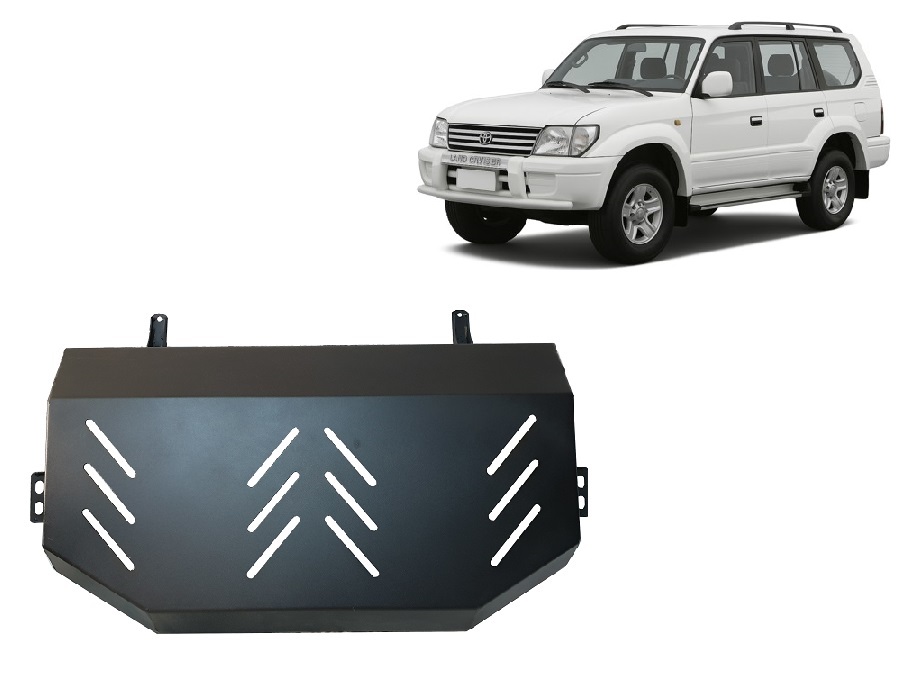
Protect the fuel tank on your Toyota Land Cruiser J90
This steel fuel tank skid plate is designed for Toyota Land Cruiser J90 / Prado 90 and 95 models from 1995 to 2002. It helps protect the fuel tank area from stones, road debris, gravel roads and winter driving conditions.
View fuel tank skid plateThis example shows why fuel tank skid plates should be chosen by exact vehicle model, production year and underbody layout. Fuel tank protection should match the correct vehicle generation, mounting points and protected underbody area.
Steel or Aluminium Fuel Tank Skid Plate?
Fuel tank skid plates are commonly made from steel or aluminium. Steel is often chosen for strength, durability and impact resistance. Aluminium is lighter and may be suitable when weight is more important.
For SUVs, vans, pickups, winter roads, gravel roads and work vehicles, steel protection is often a strong practical choice. For lighter use, aluminium may also be suitable depending on the vehicle and driving conditions.
For a full material comparison, read: Steel vs Aluminium Skid Plates: Which Material Is Right for You?
Why Vehicle-Specific Fitment Matters
A fuel tank skid plate must fit the exact vehicle. Two cars with the same model name may have different fuel tank shapes, underbody layouts, mounting points or drivetrain configurations.
A vehicle-specific fuel tank skid plate is designed around:
- factory mounting points;
- fuel tank shape and position;
- fuel tank straps or brackets;
- nearby exhaust and suspension components;
- drivetrain layout;
- service access points;
- the exact underbody area that needs protection.
This is why universal skid plates are usually not the best option for fuel tank protection. They may not cover the correct area, may require modifications and may not align properly with factory mounting points.
When to Check Compatibility by VIN
If you are not sure which fuel tank skid plate fits your vehicle, check compatibility before ordering.
VIN checking is especially useful if:
- your vehicle has several body versions;
- your model has facelift and pre-facelift versions;
- your vehicle has different fuel tank layouts;
- your vehicle has all-wheel drive or 4×4;
- you are choosing between several similar protection products;
- you are not sure whether you need engine-only protection or wider underbody protection.
You can send us your VIN here: Check Compatibility by VIN
So, Is Fuel Tank Protection Worth It?
Fuel tank protection is worth considering if the tank is exposed, if your vehicle is used on rough or winter roads, or if you drive an SUV, van, pickup, 4×4 vehicle or work vehicle.
For many drivers, engine protection is the first step. Fuel tank protection becomes more important when the tank area is also exposed to real-world damage.
The best choice is not always the largest kit. The best choice is the protection that fits your exact vehicle and protects the components that are most exposed underneath.
Find Fuel Tank Skid Plates for Your Vehicle
At UnderbodyGuards, we supply vehicle-specific underbody protection kits for European cars, SUVs, vans, pickups and hybrids.
You can browse available skid plates by vehicle brand, model and year here: Shop by Vehicle
If you are not sure which fuel tank or underbody protection fits your vehicle, send us your VIN and we will help confirm compatibility before you order: Check Compatibility by VIN
FAQ
What is a fuel tank skid plate?
A fuel tank skid plate is metal underbody protection installed under or around the fuel tank area. It helps protect the tank from stones, gravel, ice, road debris and rough road impacts.
Do I need fuel tank protection?
Fuel tank protection is useful if the tank is exposed underneath the vehicle, if you drive on rough roads or if your vehicle is an SUV, van, pickup, 4×4 vehicle or work vehicle.
Is fuel tank protection needed for city driving?
Not always. If the vehicle is used mainly on smooth city roads and the fuel tank is well protected by the body structure, engine protection may be the more important first upgrade.
Is a fuel tank skid plate the same as an engine skid plate?
No. An engine skid plate protects the lower engine area and oil pan. A fuel tank skid plate protects the fuel tank area, which is usually located further back under the vehicle.
Can fuel tank protection be part of a wider underbody protection kit?
Yes. On some vehicles, fuel tank protection can be combined with engine, gearbox, radiator, transfer case, differential or hybrid component protection as part of a wider underbody protection setup.
How do I know which fuel tank skid plate fits my vehicle?
Choose your vehicle by brand, model and year, then check compatibility with the exact underbody layout. If you are not sure, use a VIN compatibility check before ordering.
