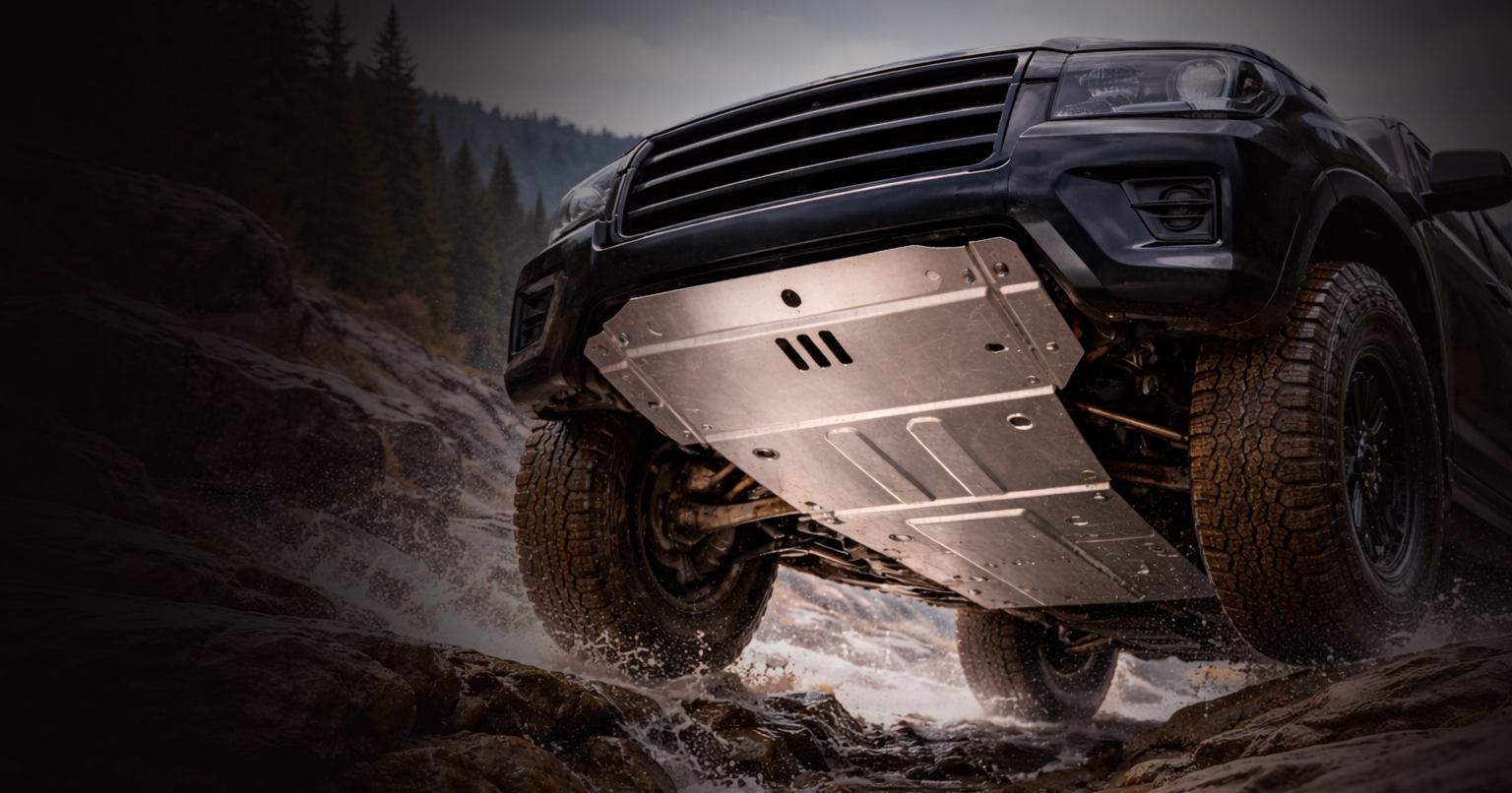
Winter and poorly maintained roads can be demanding environments for a vehicle’s underside. Snow, ice, hidden potholes and road salt create different challenges. A sensible
underbody protection strategy distinguishes between impact protection, corrosion protection and regular maintenance: each serves a different purpose. A correctly fitted, vehicle-specific skid plate adds a physical barrier beneath the components covered by its design. Depending on the product, these may include the engine, gearbox, lower radiator area or other specified zones. A front skid plate does not automatically protect the fuel lines, exhaust, subframe or the entire underside, and no plate can prevent damage from every impact.
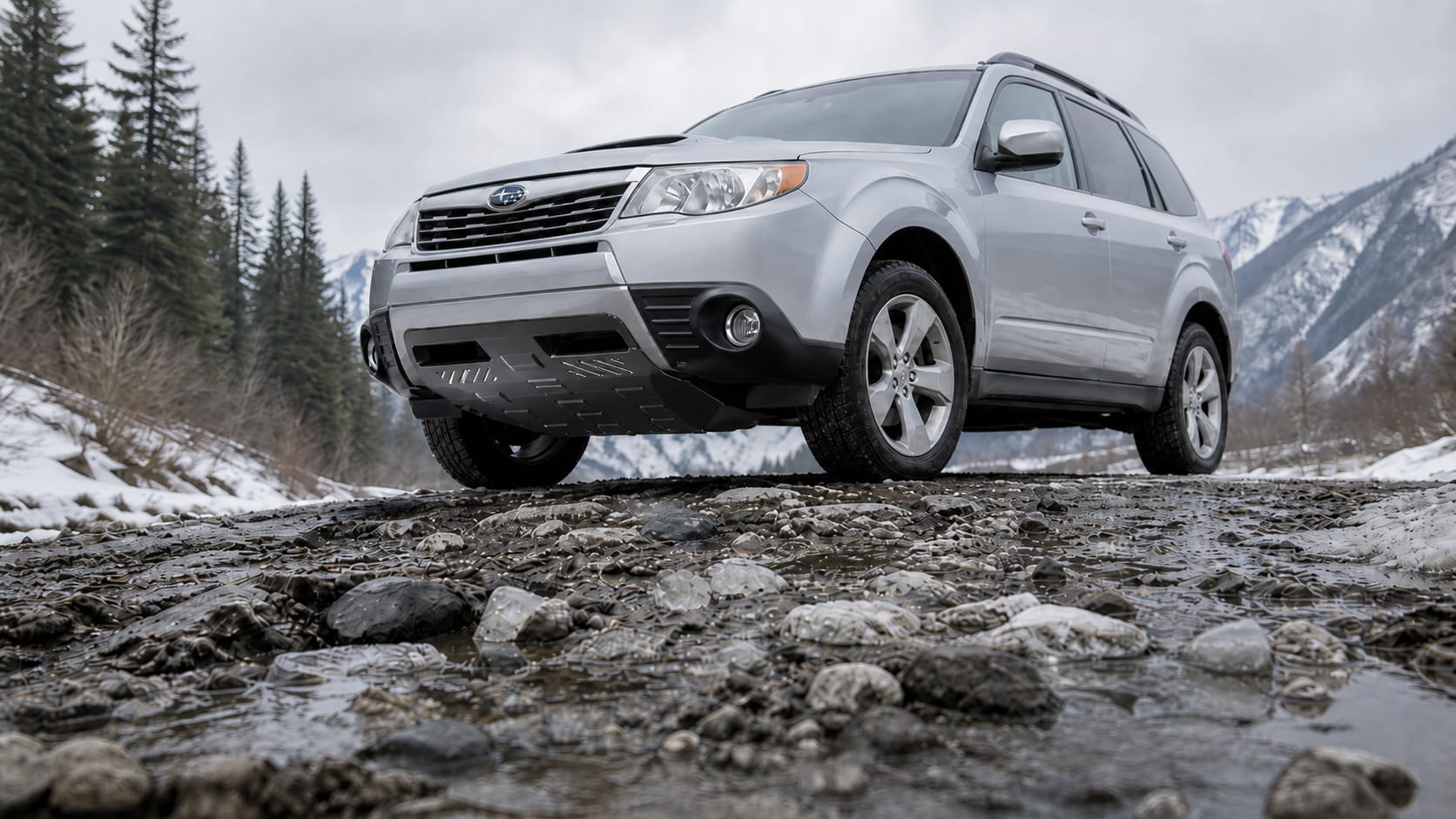
Winter can hide obstacles that would otherwise be easier to see. Compacted snow and ice can form hard ridges, while slush can conceal potholes and loose debris. If the underside contacts an obstacle, the area affected depends on the vehicle’s clearance, the obstacle and the direction of contact. A suitable skid plate can help shield its specified protection zone, but it does not increase ground clearance or make driving over an obstacle safe. For a detailed breakdown of the components at risk and the warning signs to check after a hard impact, read our
guide to pothole damage to the oil sump, gearbox and underbody.
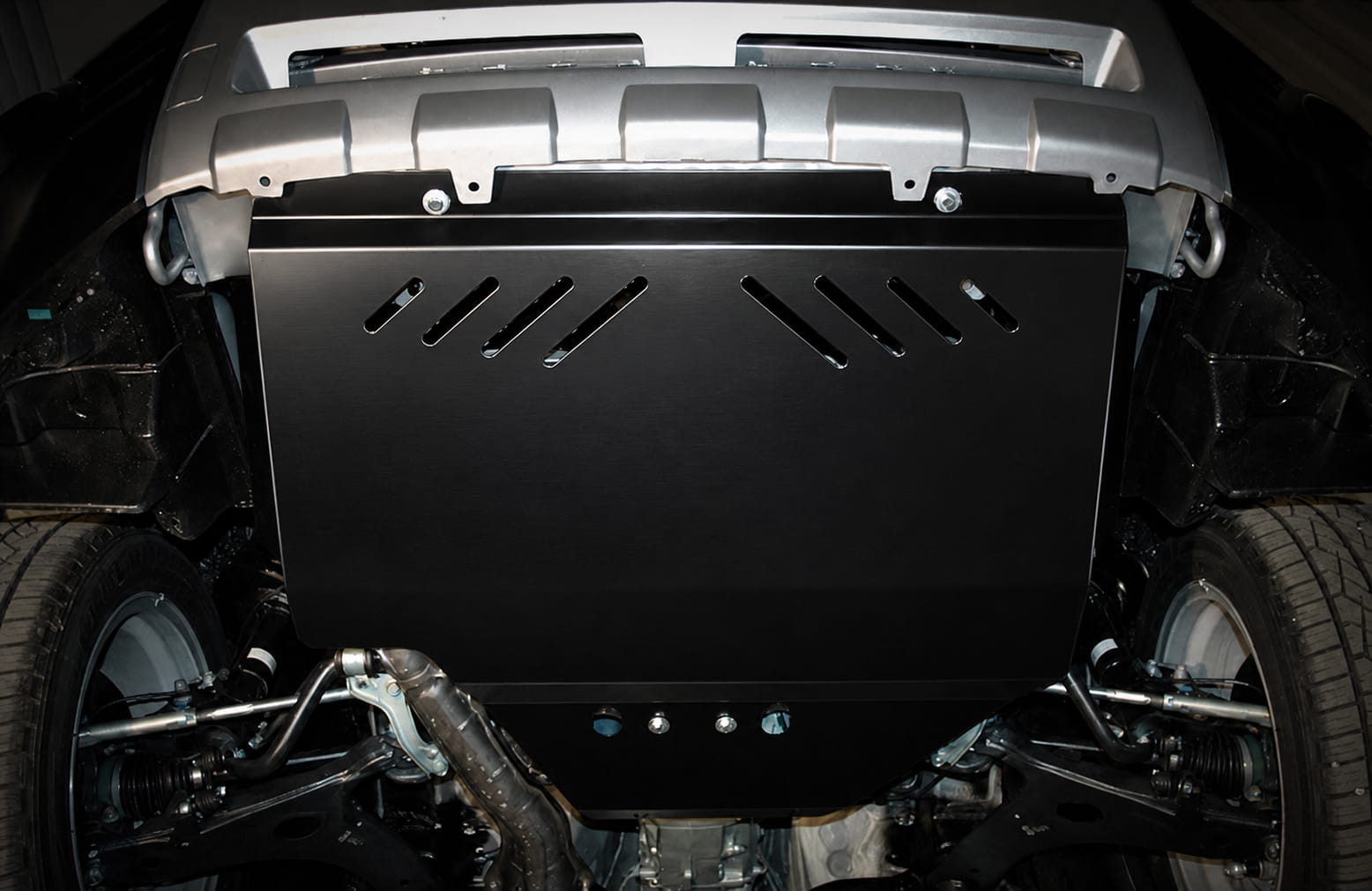
Road salt and moisture create a separate corrosion risk. A skid plate is not a sealed cover or an anti-corrosion treatment: water, salt and dirt can still reach the surrounding components and accumulate around or above the plate. Factory coatings, suitable corrosion treatments, drainage, cleaning and inspections therefore remain important after installation. Where centre-drivetrain protection is needed, the
Toyota Land Cruiser 250 4 mm aluminium gearbox and transfer-case skid plate is a vehicle-specific example for the listed 2024–2026 application. Its purpose is protection of the stated drivetrain zone, not corrosion protection for the whole vehicle. The need for additional protection depends on the vehicle and its use. Winter mountain roads, unpaved access tracks, damaged rural roads and worksites may expose the underside to obstacles and debris. Select protection for the areas relevant to your vehicle: an engine plate, gearbox or transfer-case plate, and fuel-tank guard are separate applications unless a specific product explicitly combines them. If you drive a Subaru Forester, you can browse our dedicated
Subaru Forester underbody protection range, and Toyota owners will find model-specific kits in our
Toyota underbody protection section. For a concrete front-protection example, the
Toyota RAV4 2018–2025 2 mm steel engine, gearbox and radiator skid plate combines several front-underbody protection zones in one vehicle-specific application. Confirm the exact vehicle configuration before ordering. For a more detailed explanation of when the lower radiator area needs dedicated protection, see our
radiator skid plate guide, covering winter roads, potholes, gravel and other lower-front impact risks. Owners of compact hatchbacks can also consider model-specific protection where potholes, frozen snow and damaged winter roads expose the lower engine area to contact. Our
Hyundai i20 underbody protection guide compares 2 mm steel skid plates for the 2009–2014, 2015–2020 and 2021–2026 product ranges, including the separate 48V mild-hybrid application. Hyundai Elantra sedans can encounter potholes, compacted snow, frozen road debris and uneven winter surfaces during everyday driving. Our
Hyundai Elantra underbody protection guide explains the available 2 mm steel skid plate for the catalogue-listed engine, front bumper, gearbox and radiator areas on Hyundai Elantra models from 2021 to 2026. Electric crossovers can also encounter front-underbody impacts from hidden potholes, compacted snow and ice. Our
Volkswagen ID.4 steel vs aluminium skid plate guide compares the available 2 mm steel and 3 mm aluminium protection for Volkswagen ID.4 models from 2021 to 2026. Front-underbody protection should not be assumed to protect the traction battery; check the specific product’s stated coverage. Mazda CX-5 crossovers can encounter potholes, compacted snow, loose debris and damaged winter roads during city, rural and motorway driving. Our
Mazda CX-5 skid plate guide explains the available 2 mm steel front underbody protection for the catalogue-listed engine, gearbox and radiator zone on Mazda CX-5 models from 2011 to 2026. Mitsubishi ASX models can encounter potholes, gravel, frozen ruts, compacted snow and broken winter roads during daily driving. Our
Mitsubishi ASX underbody protection guide for potholes, gravel and winter roads explains the relevant engine, gearbox and radiator protection zones for 2010–2022 and 2023–2026 applications. Toyota Camry models can encounter similar winter-road hazards. Our
Toyota Camry steel vs aluminium skid plate guide compares the available 2 mm steel and 4 mm aluminium protection for the catalogue-listed engine, front bumper, gearbox and radiator areas on Toyota Camry models from 2018 to 2026. Suzuki Vitara models used on snowy rural roads, gravel routes and damaged winter surfaces may require protection for different underbody zones. Our
Suzuki Vitara underbody protection guide covers steel and aluminium options for the engine, gearbox, radiator, transfer case and rear differential across different model generations. Audi Allroad models used in mixed road conditions can encounter frozen ruts, compacted snow, road debris and damaged winter surfaces. Our
Audi Allroad underbody protection guide compares the available 2 mm steel skid plates for Audi A4 Allroad and A6 Allroad generations from 2000 to 2026. Alfa Romeo Stelvio owners can also assess protection for the engine, gearbox and lower radiator area when driving on uneven winter roads. See our
Alfa Romeo Stelvio underbody protection guide for a vehicle-specific overview of these protection zones. Volkswagen Transporter vans used on winter roads, worksites and rough access routes can be candidates for vehicle-specific front underbody protection. Our
Volkswagen Transporter T5, T6 and T6.1 underbody protection guide compares the available 2 mm steel and 4 mm aluminium skid plates by generation, production years and SKU. Ford Transit Custom vans used on winter roads and worksites may require separate protection for the front underbody or AdBlue tank. Our
Ford Transit Custom underbody protection guide compares the available protection zones, materials and model-year applications from 2013 to 2026. For long-term ownership, treat impact protection and corrosion care as complementary tasks. A skid plate does not repair existing rust, restore damaged mounting points or guarantee lower repair costs, a higher resale value or a roadworthiness-test pass. Inspect the condition of the vehicle and mounting points before installation. Regular inspection remains important throughout winter and after significant underbody contact. Check the plate, brackets and fasteners for damage, looseness, coating wear and trapped debris. Clean away accumulated salt and dirt, keep drainage paths clear and repair coating damage using a method suitable for the material and finish. Follow the vehicle and skid-plate manufacturer’s maintenance instructions. Choose compatible products from our
underbody protection shop according to the zones you need to protect, and maintain both the plate and the surrounding underside.
Winter underbody protection FAQ
Do skid plates really help in winter conditions?
A correctly fitted skid plate adds a physical barrier beneath its specified protection zone and can help shield covered components from contact with ice, debris and uneven road surfaces. Coverage and performance depend on the product design, mounting system and impact. A front plate does not automatically protect the exhaust, fuel lines or the entire underside, and it cannot guarantee that damage will be avoided.
Will a skid plate rust faster because of road salt?
Road salt and moisture can accelerate corrosion of exposed steel, particularly where the protective coating is damaged. Aluminium does not develop red iron rust, but it can still corrode, and its fasteners and brackets also require attention. Inspect the assembly during winter and clean away accumulated salt and dirt rather than waiting until the season ends.
What is better for winter use: steel or aluminium?
Both materials can be suitable when the plate is designed for the vehicle and its intended use. Compare the actual product specifications, including weight, thickness, coating, coverage and mounting design. Material alone does not determine impact performance: the steel grade or aluminium alloy, shape, reinforcement and direction of impact also matter. For a detailed comparison of weight, impact resistance, corrosion behaviour and typical thicknesses, read our
steel vs aluminium skid plate guide.
Is underbody coating still needed if I install skid plates?
Skid plates do not replace the vehicle’s corrosion protection. Maintain existing factory coatings and assess any additional treatment according to the vehicle manufacturer’s guidance and the condition of the underside. Plates are not watertight, so cleaning, drainage and access for inspection remain important.
Are skid plates useful for Toyota SUVs in winter?
They can be useful where the vehicle’s underside is exposed to obstacles and debris. A compatible engine or fuel-tank skid plate from our
Toyota underbody protection range helps shield the zone specified for that product. Choose by exact vehicle application and required coverage rather than assuming that one plate protects every component.
Product compatibility help
Not sure which skid plate fits your vehicle? We can help check compatibility.
- Send us your vehicle details: make, model, year and engine, together with a link to the product you are interested in.
- Include your VIN or chassis number where available. We may also need drivetrain details or photographs of the existing underbody layout and mounting points.
Our team will review the available fitment information and let you know whether compatibility can be confirmed or further details are needed. Where a suitable alternative is available, we can help identify it. You can also use the
GuardPass™ VIN compatibility checker to help identify your vehicle and find relevant products before ordering. Final fitment should be checked against the product’s application and the vehicle’s configuration.