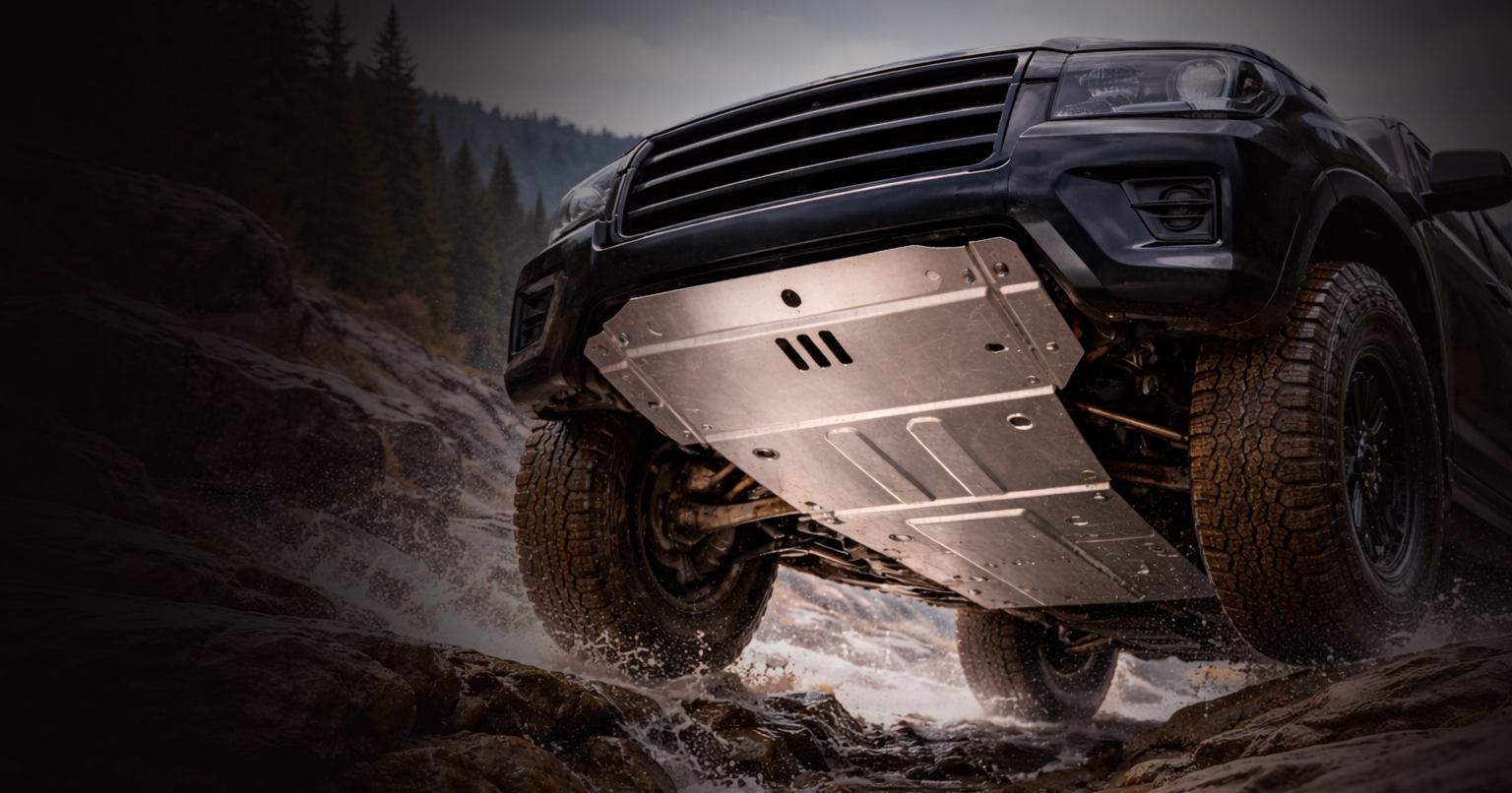
Hyundai Elantra Underbody Protection: Engine, Gearbox and Radiator Skid Plate Guide
The front underbody of the Hyundai Elantra can be exposed to pothole edges, raised speed bumps, compacted snow, road debris and steep entrances. Contact in this area may affect several closely positioned components rather than only the lower engine zone.
For Hyundai Elantra models from 2021 to 2026, the catalogue lists a vehicle-specific 2 mm steel skid plate covering the engine, front bumper, gearbox and radiator areas. The plate weighs 13 kg, uses the specified existing mounting points and is supplied with mounting hardware and an installation manual.
This guide examines the confirmed product specifications, plate layout, protection coverage, fitment checks and service requirements for the available Hyundai Elantra underbody protection.
Available Hyundai Elantra skid plate
The currently listed protection for Hyundai Elantra 2021–2026 is a formed steel plate designed for the vehicle’s front underbody. It is not a universal flat sheet: the product photographs and mounting diagram show a central protection panel, side sections, formed reinforcement areas, ventilation slots and model-specific fastening positions.
| Vehicle | Protected areas | Material | Thickness | Weight | Product |
|---|---|---|---|---|---|
| Hyundai Elantra 2021–2026 | Engine, front bumper, gearbox and radiator | Steel | 2 mm | 13 kg | View skid plate |
The catalogue lists the plate for all engine variants within the stated application. This should be treated as catalogue fitment information rather than a substitute for checking the individual vehicle. Production year, drivetrain, market specification, existing underbody panels and mounting layout should still be confirmed before ordering.
Which parts of the Hyundai Elantra does it protect?
The product description identifies four connected front underbody areas:
- Engine area: the lower zone beneath the engine compartment.
- Front bumper area: the underside immediately behind the front bumper.
- Gearbox area: the lower transmission-side section covered by the plate layout.
- Radiator area: the lower front zone associated with the radiator position.
These descriptions define the catalogue protection zone. They do not mean that every component is completely enclosed or that the plate protects the entire underside of the vehicle.
The exhaust system, fuel tank, suspension components and rear underbody are outside the stated coverage. This is therefore a front multi-zone skid plate, not a complete underbody protection system.
Plate construction and mounting layout
The mounting diagram shows a broad central panel supported by two side sections. The main plate contains formed ribs, ventilation slots and openings required by the design. These features distinguish it from an unformed sheet of steel and allow the panel to follow the available space beneath the vehicle.
The diagram also shows separate fasteners and supporting hardware. Their positions matter because impact loads must be transferred through the specified mounting structure rather than through plastic splash-shield fixings or improvised attachment points.
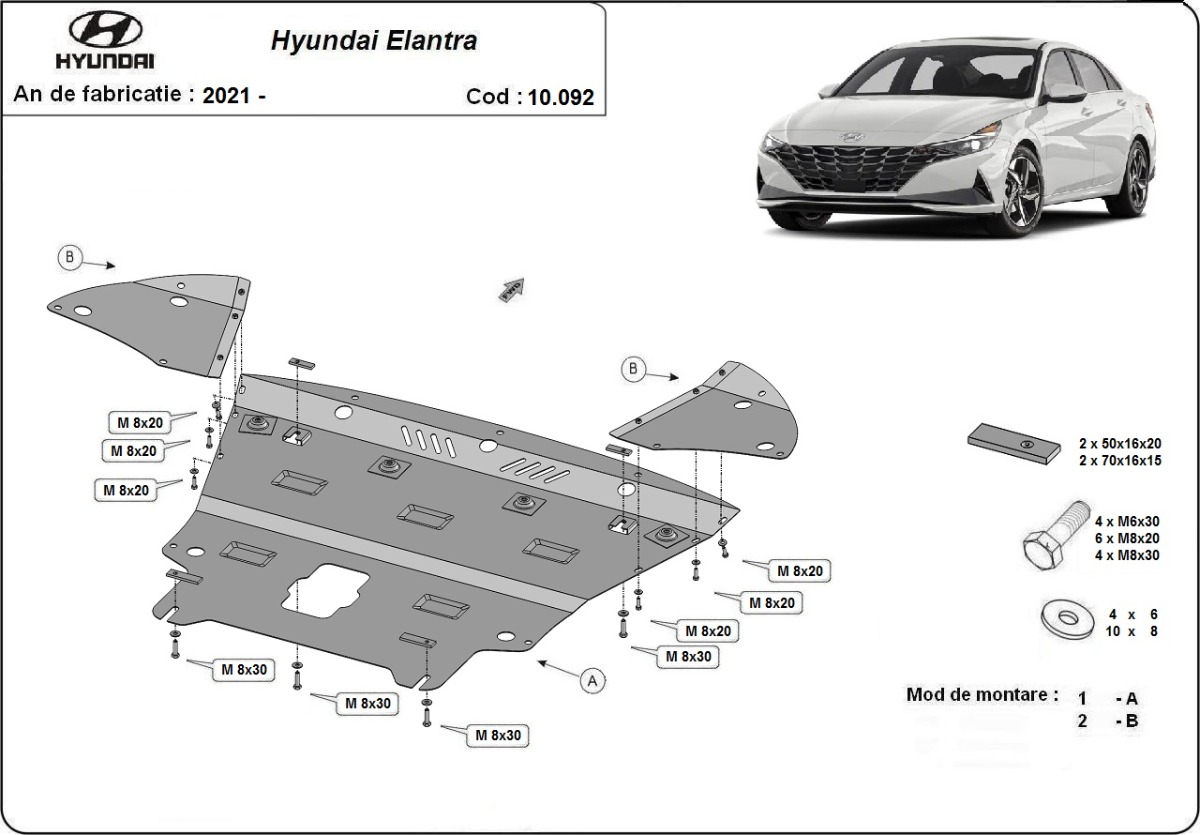
The supplied installation manual should remain the primary reference for component identification, fastening sequence and final positioning. The drawing should not be used as a replacement for the complete installation instructions.
Factory splash shield versus steel protection
A factory plastic splash shield and a steel skid plate are designed for different purposes. A plastic panel can help manage airflow and reduce exposure to water, dust and light dirt, but it is not necessarily intended to carry concentrated contact from a pothole edge, frozen snow ridge or hard road obstacle.
The steel plate adds a rigid barrier beneath the specified front zone. Its effectiveness depends on the complete design: steel grade, formed shape, mounting system, direction of contact and clearance between the plate and vehicle components. Thickness alone does not establish the real-world strength of an underbody protection system.
The original plastic panels should only be removed, retained or repositioned as specified in the installation manual. The installer must confirm that required airflow, drainage and service access remain unobstructed after fitting.
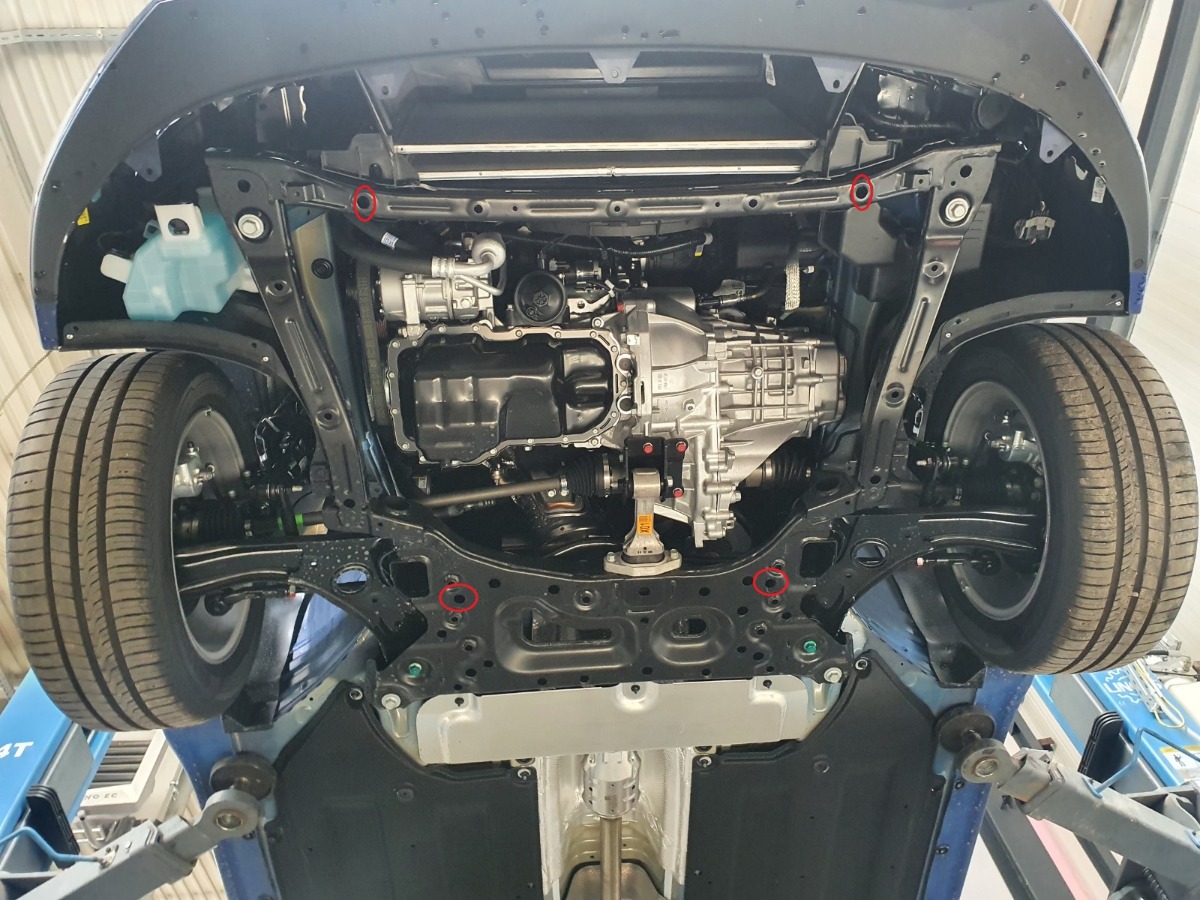
The pre-installation image shows the lower front structure and the area occupied by the protection plate. It also demonstrates why the mounting points and surrounding panels must be compared with the individual vehicle before fitting.
When is additional protection useful?
The Hyundai Elantra is a road car, but front underbody contact can still occur during normal use. Typical risks include:
- Deep potholes with sharp edges
- Raised or damaged speed bumps
- Loose debris on motorways and rural roads
- Compacted snow and frozen road ridges
- Steep parking entrances and loading ramps
- Short sections of gravel or construction access roads
A skid plate cannot prevent every form of damage. It does, however, place a replaceable metal barrier between the road surface and the specified front underbody zone.
Drivers dealing with winter roads, potholes and road salt can find additional maintenance information in our underbody protection for winter and bad roads guide.
Why 2 mm steel?
The available Hyundai Elantra plate is manufactured from 2 mm steel. Steel is commonly used where drivers prioritise a rigid formed barrier and durability during repeated road use.
The plate weighs 13 kg, so the material choice adds more mass than a lighter aluminium design might add. However, material thickness and weight should not be compared without considering the complete plate geometry and mounting system.
The product catalogue does not provide a steel grade, yield-strength figure or controlled impact-test result. It would therefore be incorrect to promise a specific impact capacity or claim that the plate is universally stronger than every aluminium alternative.
For a neutral explanation of material differences, read our steel versus aluminium skid plate guide.
Installation using existing mounting points
The product specification confirms that the plate installs using the specified existing mounting points and does not require drilling. The required mounting hardware and an installation manual are included.
Before installation, the vehicle should be safely raised and the complete kit checked against the manual. The installer should confirm that:
- The vehicle matches the listed application.
- The specified mounting points are present and undamaged.
- The supplied brackets and fasteners match the instructions.
- No hose, cable, panel or neighbouring component is trapped.
- The plate has the required clearance from surrounding parts.
- Ventilation, drainage and service areas remain unobstructed.
Fasteners should initially be positioned without fully tightening them. This allows the plate and side sections to be aligned before the fastening sequence is completed.
Installation can be carried out by an experienced vehicle owner with suitable tools and safe lifting equipment. A professional workshop is the appropriate option when the vehicle cannot be raised safely or the mounting layout cannot be confirmed.
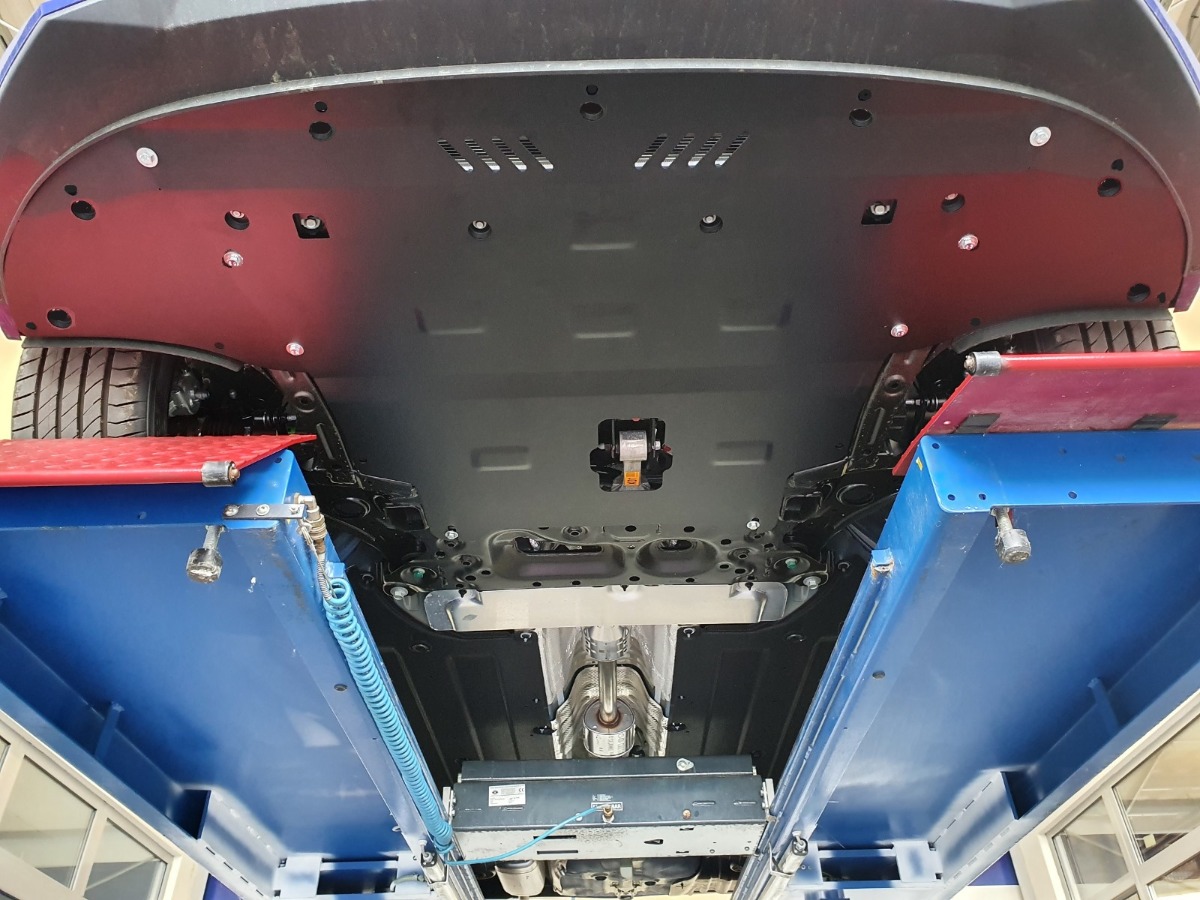
The installed view shows the final coverage across the front underside. The formed central section and side areas follow the front underbody layout while leaving the specified openings visible.
Oil changes and service access
The product specification states that this plate does not have an oil sump opening. Depending on the engine configuration, drain-point position and workshop procedure, the plate may therefore need to be removed for an oil change.
Removal for servicing is not automatically a fitment problem. It is a maintenance consideration that should be understood before purchase.
Whenever the plate is removed, the workshop should inspect:
- Mounting brackets and fasteners
- Thread condition at the mounting points
- Plate alignment and deformation
- Protective coating around scraped areas
- Clearance from surrounding components
The plate should be reinstalled according to the supplied fastening sequence. Additional service considerations are covered in our guide explaining whether a skid plate can affect cooling, noise or vehicle service.
Steel-plate inspection and corrosion prevention
A steel protection plate should be inspected after significant underbody contact and during routine servicing. Scratches and dents are expected possibilities for a component installed close to the road, but damaged coating should not be ignored.
Drivers using salted winter roads should periodically wash the plate, brackets and surrounding area. Mud and road salt can remain around fasteners or between neighbouring surfaces.
If bare steel becomes visible after an impact or scrape, the affected coating should be repaired before corrosion spreads. Fasteners and brackets also require inspection because the complete mounting system is responsible for retaining the plate.
Fitment checks before ordering
The catalogue lists this protection for Hyundai Elantra model years 2021–2026 and all engine variants within the stated application. Exact compatibility must still be checked against the individual vehicle.
Before ordering, verify:
- VIN or chassis number
- Model and production year
- Engine and drivetrain
- Market specification
- Existing underbody panels
- Mounting-point layout
If compatibility is uncertain, use the GuardPass™ VIN compatibility checker and include the product link. This allows the vehicle information to be checked before installation.
Who should choose this Hyundai Elantra skid plate?
This protection is relevant for Hyundai Elantra owners who want a vehicle-specific steel barrier beneath the listed front underbody zone. It is particularly useful where damaged asphalt, potholes, winter roads, raised obstacles or construction access routes are common.
The product is a suitable choice when the required specification is:
- Hyundai Elantra 2021–2026 application
- Engine, front bumper, gearbox and radiator coverage
- 2 mm steel construction
- 13 kg listed product weight
- Existing mounting points without drilling
- Mounting hardware and manual included
It should not be purchased as complete protection for the entire underside. The stated coverage is limited to the specified front zone.
You can view the Hyundai Elantra 2021–2026 2 mm steel skid plate and submit the VIN if fitment confirmation is required.
Hyundai Elantra underbody protection FAQ
Which Hyundai Elantra models are listed?
The skid plate is listed for Hyundai Elantra model years 2021–2026 and is catalogued for all engine variants within the stated application. Fitment should still be checked against the individual vehicle.
Which parts does the plate protect?
It covers the specified front underbody zone catalogued for the engine, front bumper, gearbox and radiator areas. It does not protect the complete vehicle underside.
What material and thickness are used?
The plate is manufactured from 2 mm steel and has a listed weight of 13 kg.
Does installation require drilling?
No. The product is designed to use the specified existing mounting points. Mounting hardware and an installation manual are included.
Does the plate have an oil sump opening?
No. The product specification lists this version without an oil sump opening. Removal may be required for some oil-change or service procedures.
Can the plate affect ground clearance?
Any protection plate occupies some space beneath the vehicle. The exact installed position and resulting clearance depend on the plate geometry and mounting layout. Installation should follow the supplied manual, and the final position should be inspected before driving.
Can it be installed at home?
An experienced vehicle owner can install the plate using suitable tools and safe lifting equipment. A professional workshop is recommended when the mounting points or final clearance cannot be verified safely.
What is included with the product?
The kit includes the protection plate, the required mounting hardware and an installation manual.
What are the return and warranty conditions?
The product includes a 60-day return period and a 24-month warranty. Free delivery is available under the applicable shop delivery conditions.
