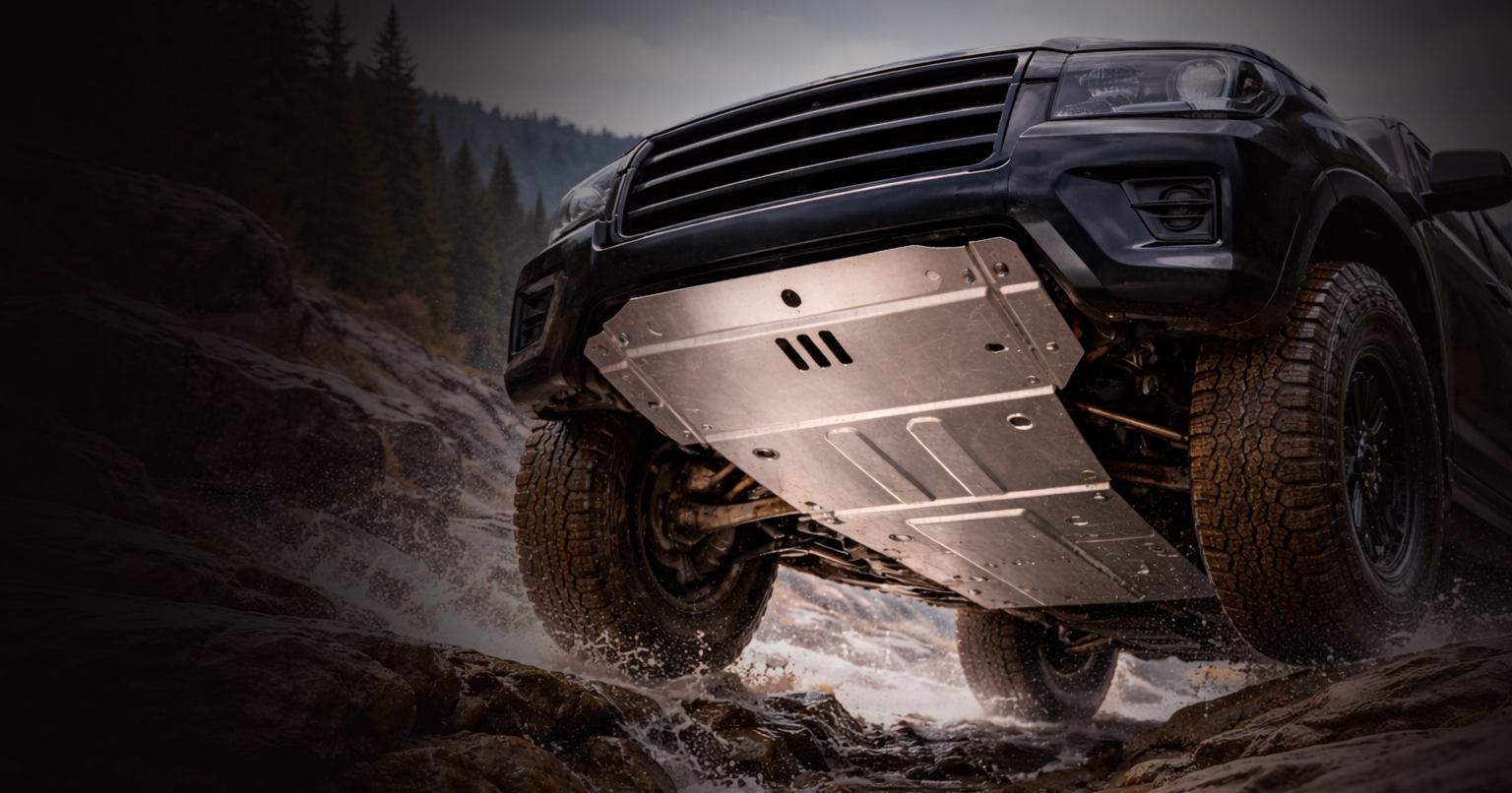
Hyundai i20 Underbody Protection by Generation: Engine, Gearbox, Radiator and Mild-Hybrid Skid Plate Guide
Quick answer: Hyundai i20 underbody protection must be selected for the correct product fitment range and powertrain. Separate 2 mm steel skid plates are listed for 2009–2014, 2015–2020 and 2021–2026 vehicles. A dedicated 2021–2026 plate is also listed for the 48-volt mild-hybrid version. These plates may look similar in purpose, but their dimensions, weight, coverage and mounting layout are not interchangeable.
The Hyundai i20 is primarily a road-focused hatchback, but its lower engine, gearbox and cooling areas can still be exposed to potholes, broken asphalt, raised road edges, winter ice, compacted snow and loose debris. A vehicle-specific steel skid plate creates a physical barrier beneath these vulnerable front components.
This guide covers the products currently listed in the Hyundai i20 underbody protection category. The stated years are product-listing ranges rather than universal compatibility guarantees. Always confirm the VIN, exact production year, engine, transmission, powertrain and underbody mounting points before ordering.
Hyundai i20 Skid Plates by Product Fitment Range
The available products are divided into three principal year ranges, with an additional mild-hybrid-specific plate for selected 2021–2026 vehicles.
| Product fitment range | Protected areas | Material | Listed weight |
|---|---|---|---|
| 2009–2014 | Engine, gearbox and radiator | 2 mm steel | 8 kg |
| 2015–2020 | Engine, gearbox and radiator | 2 mm steel | 13 kg |
| 2021–2026 | Engine, front bumper area, gearbox and radiator | 2 mm steel | 10 kg |
| 2021–2026 mild hybrid | Engine, front bumper area, gearbox and radiator | 2 mm steel | 14 kg |
The differences in listed weight show that these are separate vehicle-specific designs, not one universal plate relabelled for several model years. Do not select a product solely because its protected components appear similar.
What Does a Hyundai i20 Skid Plate Protect?
The products covered in this guide protect the forward underside of the vehicle. Depending on the listed application, coverage includes:
- the lower engine and oil-sump area;
- exposed sections beneath the gearbox;
- the lower radiator and cooling area;
- the lower front or front-bumper area on selected 2021–2026 products.
The wording “front bumper protection” refers to the lower area beneath the front of the vehicle. It does not mean that the visible exterior bumper is covered by a metal plate.
These products are not described as complete underbody systems. They do not automatically protect the exhaust, catalytic converter, fuel tank, rear axle or other components farther behind the front protection zone.
Hyundai i20 2009–2014 Skid Plate
The earliest product range covered in this guide uses a dedicated 2 mm steel plate listed for Hyundai i20 vehicles from 2009 to 2014. It protects the engine, gearbox and radiator areas and has a listed weight of 8 kg.
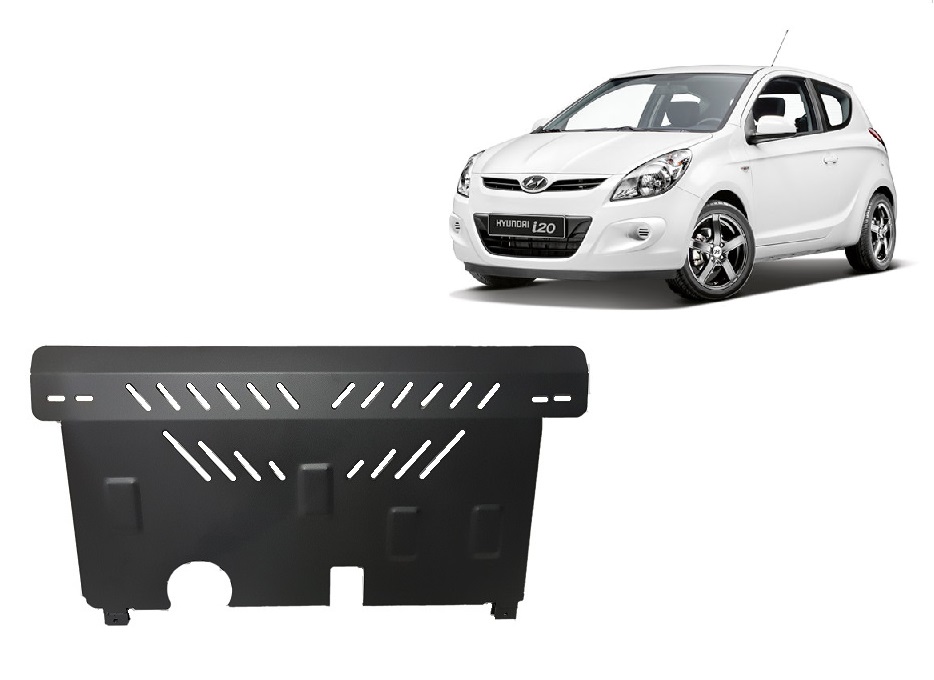
The listed Hyundai i20 2009–2014 engine, gearbox and radiator skid plate is specified for all engine variants within the product listing. Exact compatibility must still be checked because production date, engine, transmission, market specification and previous underbody repairs may affect fitment.
The plate is listed without an oil-sump opening. Oil-change and other service-access requirements should therefore be checked before installation, as the plate may need to be removed or partially lowered during maintenance.
Hyundai i20 2015–2020 Skid Plate
The next product range uses a different 2 mm steel design. It covers the engine, gearbox and radiator areas and has a listed weight of 13 kg—5 kg more than the earlier product.
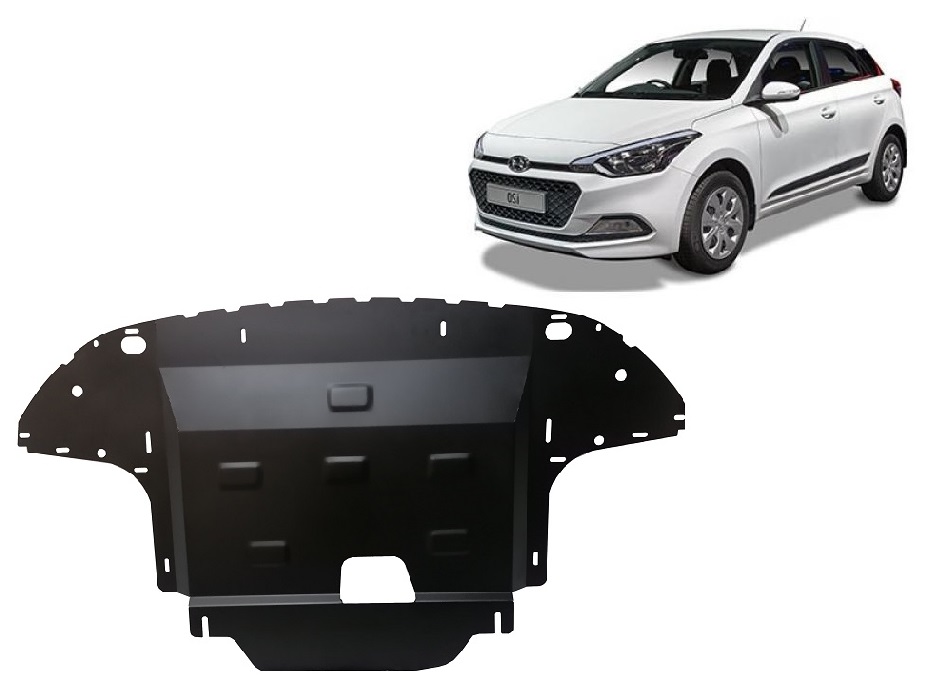
The Hyundai i20 2015–2020 skid plate is listed at 13 kg and specified for all engine variants. The higher weight does not automatically mean that it is stronger than the earlier product. It reflects a different design, shape, coverage area, reinforcement and mounting layout.
This product is also listed without an oil-sump opening. Service access should be reviewed before fitting, especially when the vehicle is maintained by a workshop that normally accesses the oil sump from below.
Hyundai i20 2021–2026 Standard-Powertrain Skid Plate
For selected non-hybrid Hyundai i20 applications within the 2021–2026 product range, the available 2 mm steel plate extends the stated coverage to the engine, lower front-bumper area, gearbox and radiator. Its listed weight is 10 kg.
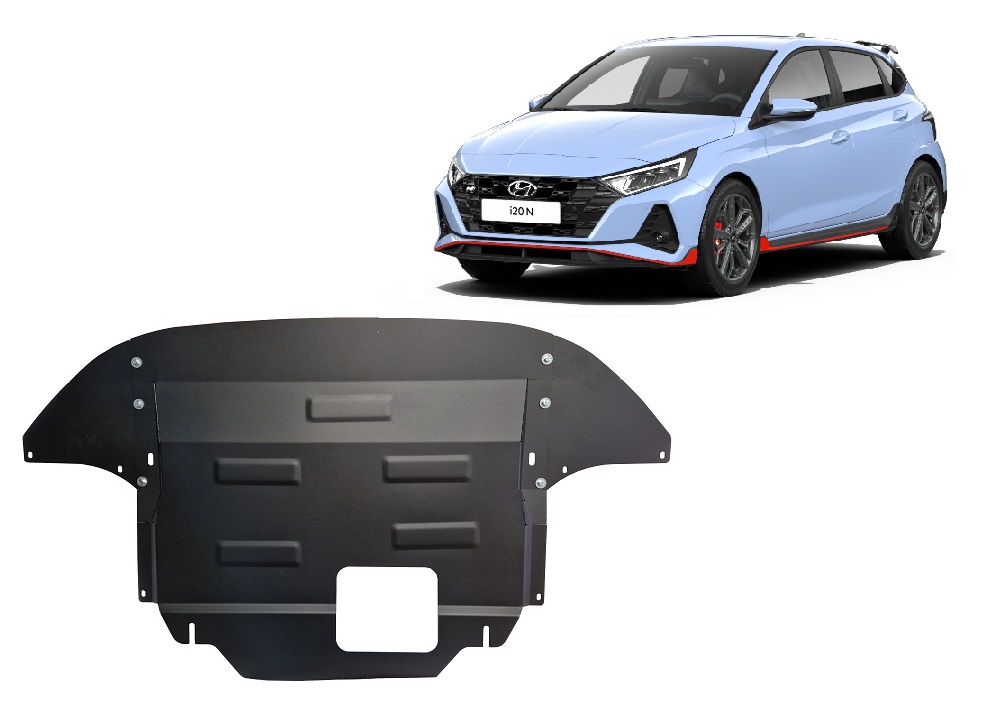
The listed Hyundai i20 2021–2026 standard-powertrain skid plate is specified for all engine variants in its product listing. This wording should not be used to assume compatibility with the separate mild-hybrid layout, because a dedicated mild-hybrid product is also available.
Before ordering, confirm whether the vehicle has the conventional powertrain layout or the 48-volt mild-hybrid system. Registration year alone is not enough to select between the two 2021–2026 products.
Hyundai i20 Mild-Hybrid Skid Plate: 2021–2026
A separate 2 mm steel plate is listed for the Hyundai i20 mild-hybrid configuration. It protects the engine, lower front-bumper area, gearbox and radiator and has a listed weight of 14 kg.
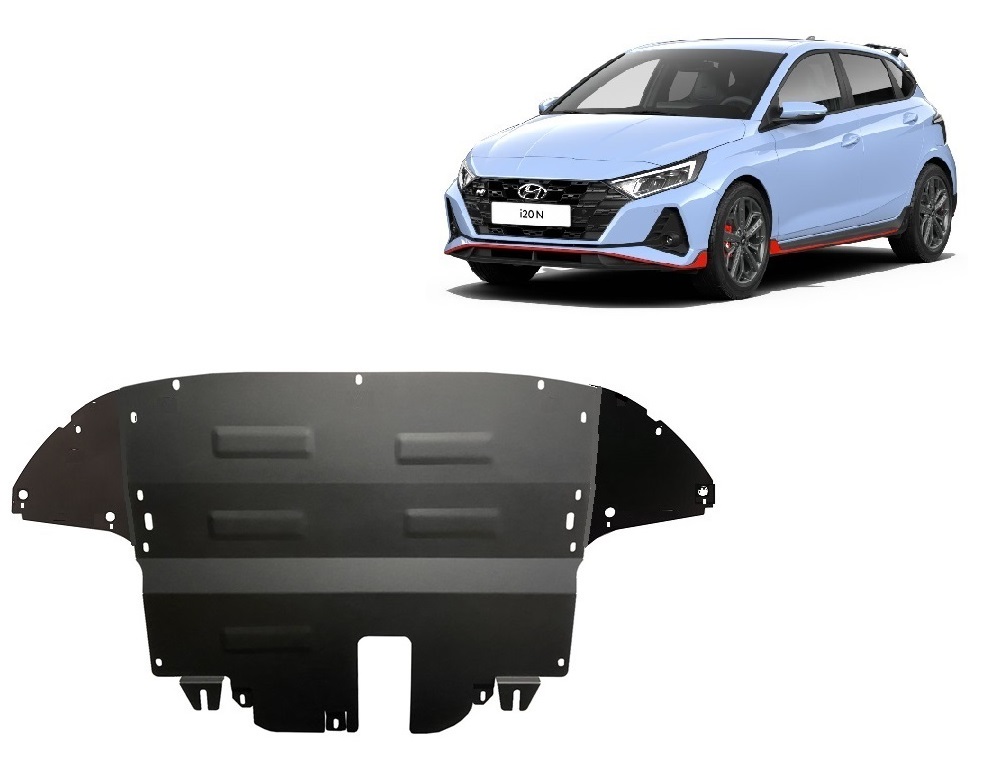
The Hyundai i20 mild-hybrid skid plate is not interchangeable with the standard product merely because both cover similarly named areas. The mild-hybrid plate is 4 kg heavier and is designed for a different listed powertrain configuration.
Hyundai describes the relevant i20 electrified option as a 48-volt mild-hybrid powertrain. This system supports the combustion engine; it is not the same as a full hybrid or plug-in hybrid.
Does this plate protect the 48V battery?
The product listing specifies protection for the engine, front-bumper area, gearbox and radiator. It does not state that the 48V battery or associated electrical components are protected. The product should therefore not be described as a battery skid plate.
Standard vs Mild-Hybrid i20 Protection
The two 2021–2026 products have the same listed material, thickness and named protection zones, but they are separate products with different weights and SKUs.
| Specification | Standard 2021–2026 | Mild hybrid 2021–2026 |
|---|---|---|
| Material | 2 mm steel | 2 mm steel |
| Protected areas | Engine, front bumper area, gearbox and radiator | Engine, front bumper area, gearbox and radiator |
| Listed weight | 10 kg | 14 kg |
| SKU | 5941986203366 | 5941986203373 |
| Selection requirement | Confirm standard powertrain and underbody layout | Confirm 48V mild-hybrid configuration and underbody layout |
The mild-hybrid product should be selected only after the powertrain has been confirmed. The words “Hybrid” or “Mild Hybrid” in vehicle documents, the engine code and VIN data can help identify the correct configuration, but final product compatibility still requires an underbody and mounting-point check.
Why the Listed Weights Differ
All four products use 2 mm steel, but their listed weights range from 8 to 14 kg. Thickness alone therefore does not define the finished plate.
Weight can differ because of:
- the total area covered by the plate;
- the shape and depth of formed sections;
- the number and size of reinforcing bends;
- the mounting brackets required for the application;
- differences in the vehicle’s front underbody layout;
- additional coverage around the lower front and radiator area.
A heavier plate is not automatically the correct or stronger choice for another i20 generation. The only suitable plate is the one designed for the exact vehicle configuration.
When Is Hyundai i20 Underbody Protection Useful?
A metal skid plate is most relevant when the car regularly encounters conditions that can bring exposed lower components close to the road surface.
| Driving condition | Typical underbody risk | Relevance of a skid plate |
|---|---|---|
| Urban potholes and damaged asphalt | Sudden front-underbody contact after a wheel drops into a hole | Useful where road damage is frequent |
| Raised kerbs and steep driveway transitions | Contact beneath the lower front area | Useful when approach clearance is limited |
| Winter roads | Frozen snow, hidden debris, ice and potholes | Useful with regular cleaning and corrosion inspection |
| Gravel and unpaved access roads | Stone strikes and loose debris beneath the front compartment | Useful for regular unpaved-road driving |
| Well-maintained motorway driving | Lower routine impact risk | Assess actual exposure before ordering |
For more detail on seasonal road hazards, read our winter and bad-road underbody protection guide.
Why Only Steel Is Compared in This Guide
The current Hyundai i20 category covered by this guide contains 2 mm steel products. No equivalent aluminium versions are being compared here. It would therefore be misleading to present steel and aluminium as two purchasable alternatives for the same i20 applications.
Steel is commonly selected for its stiffness, impact resistance and suitability for repeated road exposure. The compromise is additional weight and the need to maintain the protective coating. Chips, deep scratches and exposed steel should be inspected, particularly after winter driving or underbody contact.
For general material behaviour—not i20-specific product availability—see our steel vs aluminium skid plate guide.
Fitment: Why Model Year Alone Is Not Enough
The year ranges in the product titles are fitment listings. They should not be treated as proof that every Hyundai i20 registered during those years uses the same underbody layout.
Before ordering, confirm:
- the full 17-character VIN;
- the exact production date and product fitment range;
- the engine and engine code;
- the manual, automatic or dual-clutch transmission;
- whether the vehicle has a 48V mild-hybrid system;
- the existing factory underbody covers;
- the lower radiator and front-bumper layout;
- the position and condition of the mounting points;
- whether previous repairs or accessories have altered the underbody.
Use the GuardPass™ VIN compatibility checker when the exact configuration is uncertain. VIN decoding helps identify the vehicle, but final compatibility should still be confirmed against the product and underbody layout.
Installation and Service Access
The listed Hyundai i20 skid plates are designed to use the existing mounting points specified for their applications without drilling. The plate should align naturally with the vehicle before final tightening. It should not be forced into position or modified to fit a different generation.
Before installation:
- compare the delivered plate with the actual vehicle underbody;
- confirm that the SKU matches the intended i20 version;
- check that all mounting hardware is present;
- inspect the factory mounting points for damage or corrosion;
- confirm clearance around the engine, gearbox, exhaust and cooling components;
- review oil-change and other service-access requirements;
- make sure drainage and airflow paths remain unobstructed.
All four products are listed without an oil-sump opening. Depending on the workshop procedure, the plate may need to be removed or partially lowered during an oil change.
After installation, inspect the fasteners following the initial driving period. Recheck the plate after any significant impact and periodically during winter use. Remove trapped mud, stones and road salt that could conceal damage, retain moisture or cause noise.
A correctly fitted skid plate should not contact the engine, gearbox, exhaust or other components. If a new rattle, vibration or unusual noise appears, stop and inspect the plate and mounting points. Our cooling, noise and service guide explains the main installation issues to check.
Which Hyundai i20 Skid Plate Should You Choose?
- Identify the exact product fitment range: 2009–2014, 2015–2020 or 2021–2026.
- For a 2021–2026 vehicle, confirm whether it has the standard or 48V mild-hybrid powertrain.
- Compare the VIN, engine, transmission and underbody layout with the product listing.
- Confirm that the mounting points and existing factory covers match.
- Review service access before installation.
- Order only the plate listed for the exact configuration.
Do not choose by weight, price or visual similarity alone. The 8 kg, 10 kg, 13 kg and 14 kg products are separate vehicle-specific designs.
Frequently Asked Questions
Does one Hyundai i20 skid plate fit every generation?
No. The catalogue contains separate products for 2009–2014, 2015–2020 and 2021–2026 fitment ranges. Their weights, dimensions, coverage and mounting layouts differ.
Is there a separate skid plate for the Hyundai i20 mild hybrid?
Yes. A dedicated 2 mm steel product is listed for compatible Hyundai i20 mild-hybrid vehicles within the 2021–2026 fitment range. It has a listed weight of 14 kg and SKU 5941986203373.
Is the Hyundai i20 Hybrid a full hybrid?
The Hyundai i20 powertrain relevant to this guide uses 48-volt mild-hybrid technology. It supports the combustion engine and should not be confused with a full hybrid or plug-in hybrid.
Does the mild-hybrid skid plate protect the 48V battery?
The product listing specifies the engine, front-bumper area, gearbox and radiator. It does not claim protection for the 48V battery, so it should not be described as a battery-protection plate.
What does front-bumper protection mean?
It refers to protection beneath the lower front area of compatible 2021–2026 vehicles. It does not mean that the visible exterior bumper is covered.
Are aluminium Hyundai i20 skid plates available in this comparison?
No. The current Hyundai i20 products covered by this guide are made from 2 mm steel. This article does not present an aluminium alternative that is not listed in the category.
Do these plates have an oil-sump opening?
No. The current listings state that the products do not include an oil-sump opening. Check the required service procedure before installation.
Is drilling required?
The listed plates are designed to use the existing mounting points specified for their vehicle applications without drilling. Fitment and mounting-point alignment must still be verified before installation.
Can I order using only the registration year?
No. Check the VIN, production date, engine, transmission, powertrain, body version and underbody layout. This is particularly important for 2021–2026 vehicles because separate standard and mild-hybrid products are listed.
Will the skid plate affect cooling?
A compatible and correctly installed plate should preserve the airflow required by the vehicle. The plate must not block cooling openings, trap excessive debris or contact heat-sensitive components.
Final Recommendation
Select Hyundai i20 underbody protection by exact product fitment range and powertrain—not by model name alone. The 2009–2014 and 2015–2020 products protect the engine, gearbox and radiator, while the 2021–2026 products add listed coverage around the lower front-bumper area.
For a 2021–2026 vehicle, determine whether it uses the standard or 48V mild-hybrid layout before ordering. The two plates share similar stated coverage but have different weights, SKUs and vehicle applications.
Browse the complete Hyundai i20 underbody protection range or use the GuardPass™ VIN compatibility checker to confirm the exact vehicle before purchase.
