Toyota RAV4 Underbody Protection: Which Parts Need a Skid Plate?
The Toyota RAV4 is used in very different conditions: daily city driving, winter roads, gravel tracks, rural routes and occasional off-road travel. Because of this, there is no single underbody protection setup that is right for every RAV4.
The correct choice depends on the vehicle generation, engine, drivetrain and the roads on which it is normally driven. Some owners only need protection for the engine and gearbox area, while separate rear differential protection is relevant only to compatible AWD or AWD-i vehicles equipped with the corresponding rear drivetrain.
This guide explains which parts of a Toyota RAV4 are most exposed, which skid plate should normally be installed first and how to choose compatible Toyota RAV4 skid plates and underbody protection without ordering unnecessary parts.
Short Answer: Which Toyota RAV4 Parts Should You Protect?
For most Toyota RAV4 owners, the first priority is the front section of the vehicle. Depending on the available product and vehicle configuration, one skid plate assembly may protect several areas at the same time:
- engine and oil sump area;
- gearbox or transmission area;
- lower radiator area;
- front bumper area.
On compatible RAV4 AWD and AWD-i versions equipped with a rear differential, a separate differential skid plate may provide additional protection. Hybrid status alone does not confirm that the vehicle has a rear differential. This protection is particularly relevant on gravel roads, deep ruts, forest tracks and uneven surfaces where the centre or rear of the underbody could contact stones or raised ground.
The most important rule is not to choose protection by the model name alone. A Toyota RAV4 skid plate must match the production year, engine, drivetrain and underbody mounting layout.
What Is Exposed Under a Toyota RAV4?
Engine and Lower Powertrain Area
The engine and lower powertrain areas are normally the first sections to consider because they sit near the front of the vehicle and may be exposed to stones, broken road surfaces, frozen snow, road debris and contact with raised ground.
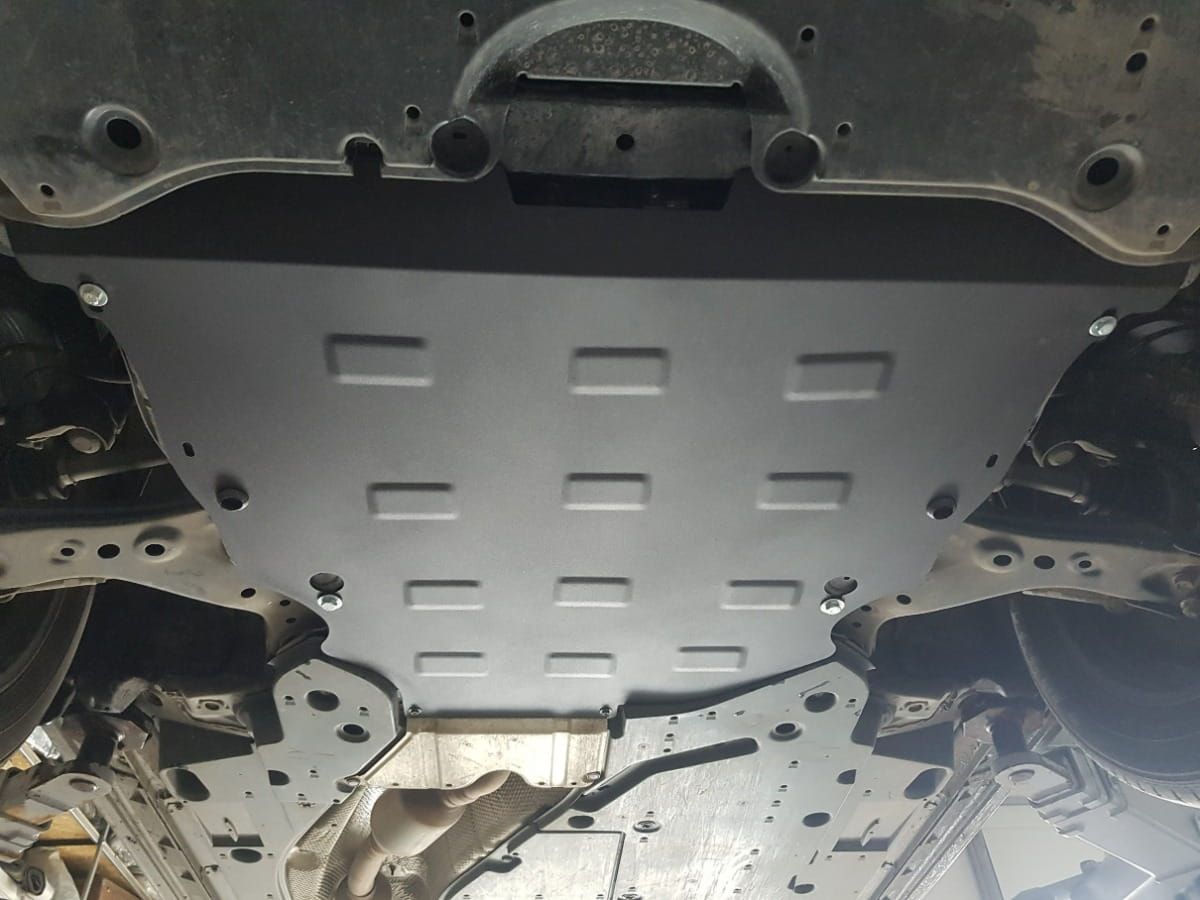
A metal skid plate creates a stronger barrier than a lightweight splash or aerodynamic cover. However, the exact coverage varies between products. Some RAV4 plates protect only the engine area, while larger assemblies may also extend beneath the gearbox, radiator and front bumper area.
Gearbox or Transmission Area
The gearbox is positioned behind or close to the engine, depending on the RAV4 generation and drivetrain. A front protection assembly that covers both the engine and gearbox provides a more continuous protective surface and reduces the number of exposed gaps underneath the vehicle.
This can be useful on roads with deep ruts or uneven transitions, where an obstacle may pass beneath the front edge of the vehicle and contact a component farther back.
Radiator and Front Bumper Area
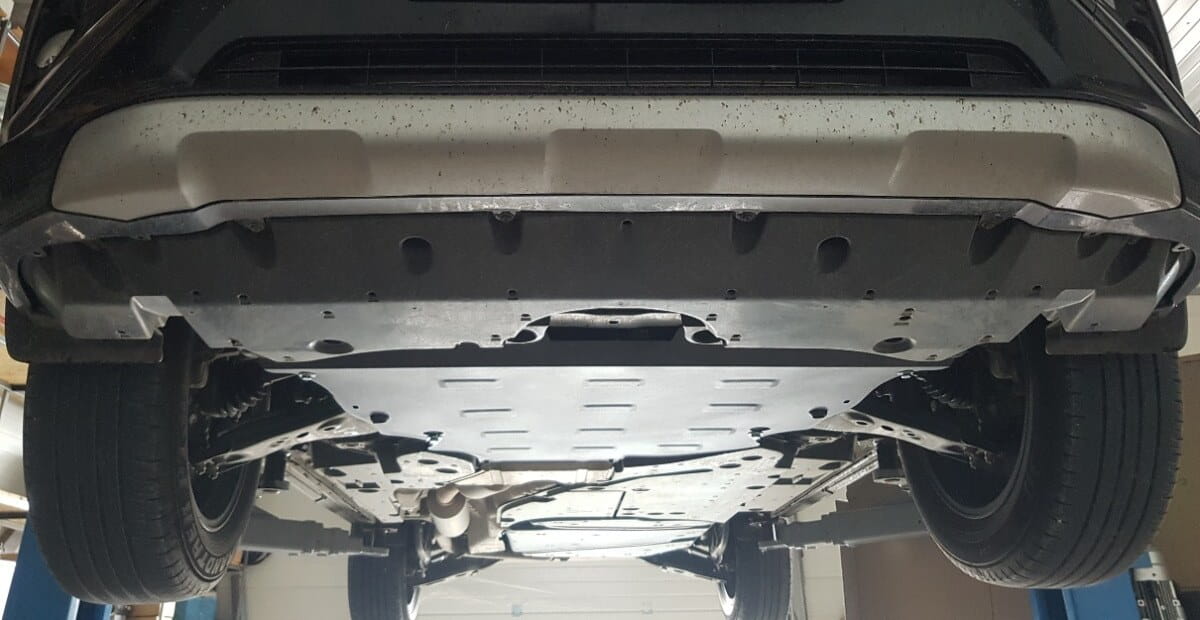
The lower radiator and front bumper area can be exposed to stones, compacted snow, broken road debris and impacts near the front edge of the vehicle. Selected Toyota RAV4 skid plate kits combine this coverage with engine and gearbox protection.
Combined coverage is often more practical than choosing separate plates when the listed product is designed for the correct vehicle configuration. The skid plate must protect the lower front area without blocking airflow required for engine, transmission or hybrid-system cooling.
Rear Differential
A rear differential skid plate is intended only for compatible AWD or AWD-i configurations equipped with a rear differential. It does not replace the front skid plate because it protects a different section of the vehicle.
Differential protection becomes more relevant when a RAV4 is regularly driven on forest tracks, gravel roads, deep snow, rutted surfaces or light off-road routes. It may be unnecessary on a version that does not have the corresponding differential layout, which is why drivetrain compatibility must always be checked.
Toyota RAV4 Skid Plate Priorities
| Protection area | Typical exposure | When it should be prioritised |
|---|---|---|
| Engine and lower powertrain area | Stones, potholes, ice, road debris and raised ground | Usually the first priority for daily, winter and rough-road driving |
| Gearbox or transmission | Deep ruts, uneven surfaces and objects passing behind the front axle | Recommended when available as part of a combined front protection kit |
| Radiator and front bumper area | Front-edge impacts, stones, compacted snow and road debris | Useful for winter roads, gravel and frequent rural driving |
| Rear differential | Ruts, stones and raised ground beneath the centre or rear of the vehicle | Consider only for compatible AWD and AWD-i versions equipped with a rear differential |
Why the RAV4 Generation and Drivetrain Matter
Toyota RAV4 underbody layouts have changed considerably over the model’s production history. Products in the UnderbodyGuards catalogue use fitment ranges including 1994–2000, 2000–2006, 2006–2013, 2013–2018, 2018–2025 and 2018–2026, depending on the specific product. There are also products listed specifically for newer Hybrid configurations.
These ranges should be treated as product fitment information, not as confirmation that every RAV4 within the same period uses an identical plate. Compatibility may still depend on:
- petrol, diesel or Hybrid powertrain;
- front-wheel drive (2WD), AWD or AWD-i drivetrain;
- engine and gearbox configuration;
- production year and model update;
- existing factory covers;
- underbody mounting points.
For example, a rear differential skid plate intended for an AWD or AWD-i version should not be assumed to fit a front-wheel-drive vehicle. Hybrid and non-Hybrid models may have different component positions and underbody layouts, and Hybrid status alone does not confirm the presence of a rear differential.
RAV4 Front Protection Options: Check Each Product’s Fitment
The correct protection depends on the exact RAV4 configuration. The following products illustrate different material and coverage options and should not be treated as universally compatible with every vehicle in the stated year range.
The front-protection options below have different listed fitment ranges and coverage. Always verify the exact model year, body version, drivetrain and mounting points before ordering.
The 2 mm steel Toyota RAV4 2018–2025 engine, gearbox and radiator skid plate provides protection for these three listed front underbody zones. Front bumper protection is not included in this product’s listed coverage.
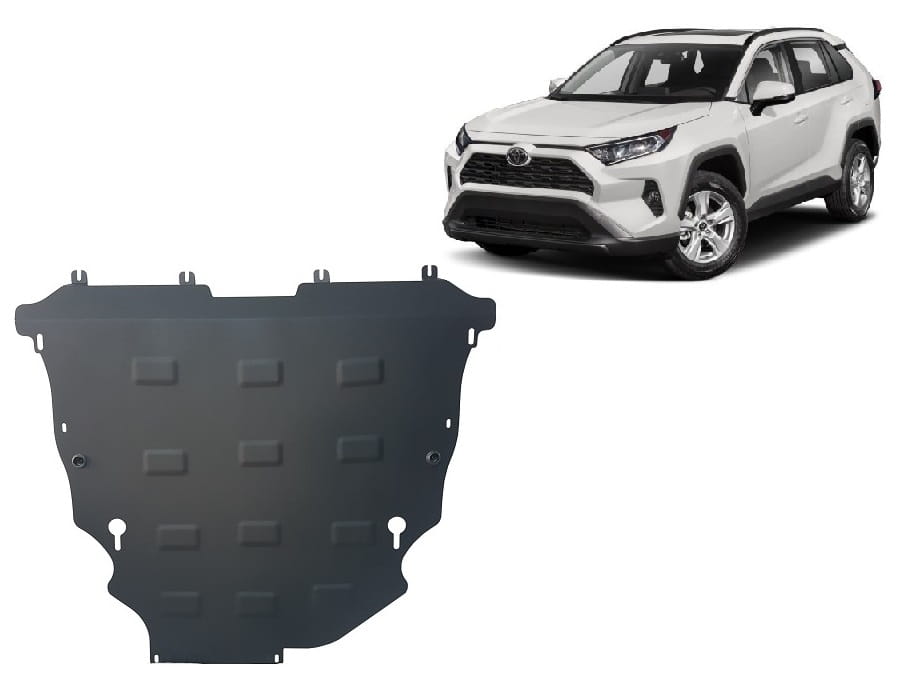
A 3 mm aluminium Toyota RAV4 protection kit is separately listed for 2018–2026 and covers the engine, front bumper, gearbox and radiator areas. Its fitment and coverage should be checked independently of the steel option.
For the 2026 Hybrid configuration, there is also a dedicated 3 mm aluminium engine, gearbox, radiator and front bumper skid plate. The separate listing is important because newer Hybrid versions should not automatically be treated as identical to earlier RAV4 layouts.
Rear Differential Protection for the Toyota RAV4
Owners of compatible AWD or AWD-i models equipped with a rear differential can add separate protection behind the front skid plate. Available examples include a 3 mm steel rear differential skid plate and a lighter 3 mm aluminium rear differential skid plate.
A separate steel differential skid plate for listed RAV4 Hybrid AWD configurations is also available.
Before choosing any differential protection, confirm that the product corresponds to the actual drivetrain and differential position of the vehicle.
Steel or Aluminium for a Toyota RAV4?
Both materials can provide effective protection when the plate has the correct design, reinforcement and mounting system. The best choice depends mainly on driving conditions.
Steel is often preferred where repeated or harder impacts are expected. Actual performance depends on plate thickness, material grade, reinforcement, shape and mounting design. Steel is usually heavier, and its protective coating should be inspected periodically.
Aluminium is lighter and highly resistant to conventional red-rust corrosion, although fasteners and contact points still require proper protection. It is often a good match for a RAV4 used as a daily vehicle on city roads, motorways, salted winter roads and occasional gravel or light off-road routes.
Thickness should not be compared without considering the material. A 4 mm aluminium plate and a 2 mm steel plate have different weight, stiffness and impact characteristics. Read our detailed steel versus aluminium skid plate guide before making the final choice.
Which Setup Fits Your Driving?
City and Motorway Driving
For a RAV4 used mainly on paved roads, front protection for the engine, gearbox and lower radiator area is normally the most relevant starting point. It provides protection against potholes, road debris, curbs and compacted winter snow without requiring every available underbody zone to be covered.
Winter and Gravel Roads
Drivers who regularly encounter salted roads, frozen snow, loose stones and damaged rural surfaces should consider broader front protection. Aluminium may be attractive where corrosion resistance and lower weight are important, while steel is often selected where repeated or harder impacts are expected.
Forest Tracks and Light Off-Road Use
A compatible AWD or AWD-i RAV4 equipped with a rear differential and used on uneven tracks may benefit from both front protection and a separate rear differential plate. The objective is to protect the main impact zones rather than simply install the largest possible number of plates.
If you are unsure whether front-only protection is sufficient, compare the options in our guide to engine skid plates versus wider underbody protection.
Installation and Vehicle Service
The linked Toyota RAV4 skid plates are supplied for specific vehicle applications, and the listed kits include mounting hardware and installation instructions. Nevertheless, the plate and mounting points should be checked against the vehicle before installation.
Also check whether the selected protection includes an oil-service opening. Some products may need to be removed for certain maintenance procedures. Installation should never obstruct moving components, exhaust parts, drainage points or necessary airflow.
A correctly selected and installed plate should work with the intended vehicle layout. More information is available in our guide explaining whether a skid plate can affect cooling, noise or vehicle service.
How to Choose the Correct Toyota RAV4 Skid Plate
- Confirm the exact production year.
- Identify the engine and whether the vehicle is petrol, diesel or Hybrid.
- Confirm whether the vehicle is front-wheel drive (2WD), AWD or AWD-i.
- Decide which zones actually need protection.
- Choose steel or aluminium according to the driving conditions.
- Compare the product’s listed fitment with the vehicle.
- Check service access and installation requirements.
- Verify compatibility by VIN before ordering if anything is uncertain.
You can use the GuardPass™ VIN compatibility checker or send us the VIN, production year, engine and drivetrain information for a manual fitment check.
Toyota RAV4 Skid Plate FAQ
Does every Toyota RAV4 need a skid plate?
No. The need depends on the existing factory protection, road conditions and the risk of underbody contact. A vehicle used only on good paved roads may need less protection than a RAV4 driven on gravel, damaged winter roads or uneven tracks.
Which RAV4 skid plate should be installed first?
For most vehicles, protection for the engine and surrounding front underbody area is the logical first step. A combined kit may also protect the gearbox, radiator and front bumper area.
Does a RAV4 AWD need differential protection?
Not in every case. Differential protection can be useful on compatible AWD or AWD-i versions equipped with a rear differential and driven on rutted, rocky or uneven roads. Hybrid status alone does not confirm compatibility, so check the drivetrain and product fitment before ordering.
Can a Toyota RAV4 Hybrid use a skid plate?
Yes, but the plate must be listed for the relevant Hybrid configuration. Do not assume that a plate for a petrol or diesel version fits a Hybrid model with a different underbody layout.
Is a factory plastic cover the same as a metal skid plate?
Not necessarily. A lightweight plastic panel may primarily control airflow, dirt and water rather than provide substantial impact protection. Inspect the existing cover, its material and its mounting system before deciding whether an upgrade is required.
Will a skid plate reduce ground clearance?
Any change depends on the plate design and mounting position. A vehicle-specific plate should follow the underbody layout as closely as practical, but the finished installation must still be checked for clearance and secure mounting.
Final Recommendation
For most Toyota RAV4 owners, the best starting point is a vehicle-specific front skid plate that protects the engine and, where included, the gearbox, radiator and front bumper area. Compatible AWD and AWD-i models equipped with a rear differential and used on rough roads may also benefit from separate differential protection.
Do not choose solely by model name or plate thickness. Match the protection to the production year, powertrain, drivetrain, mounting layout and actual driving conditions.
Browse the complete range of Toyota RAV4 skid plates and underbody protection, or send us your VIN if you would like help confirming the correct fitment.
