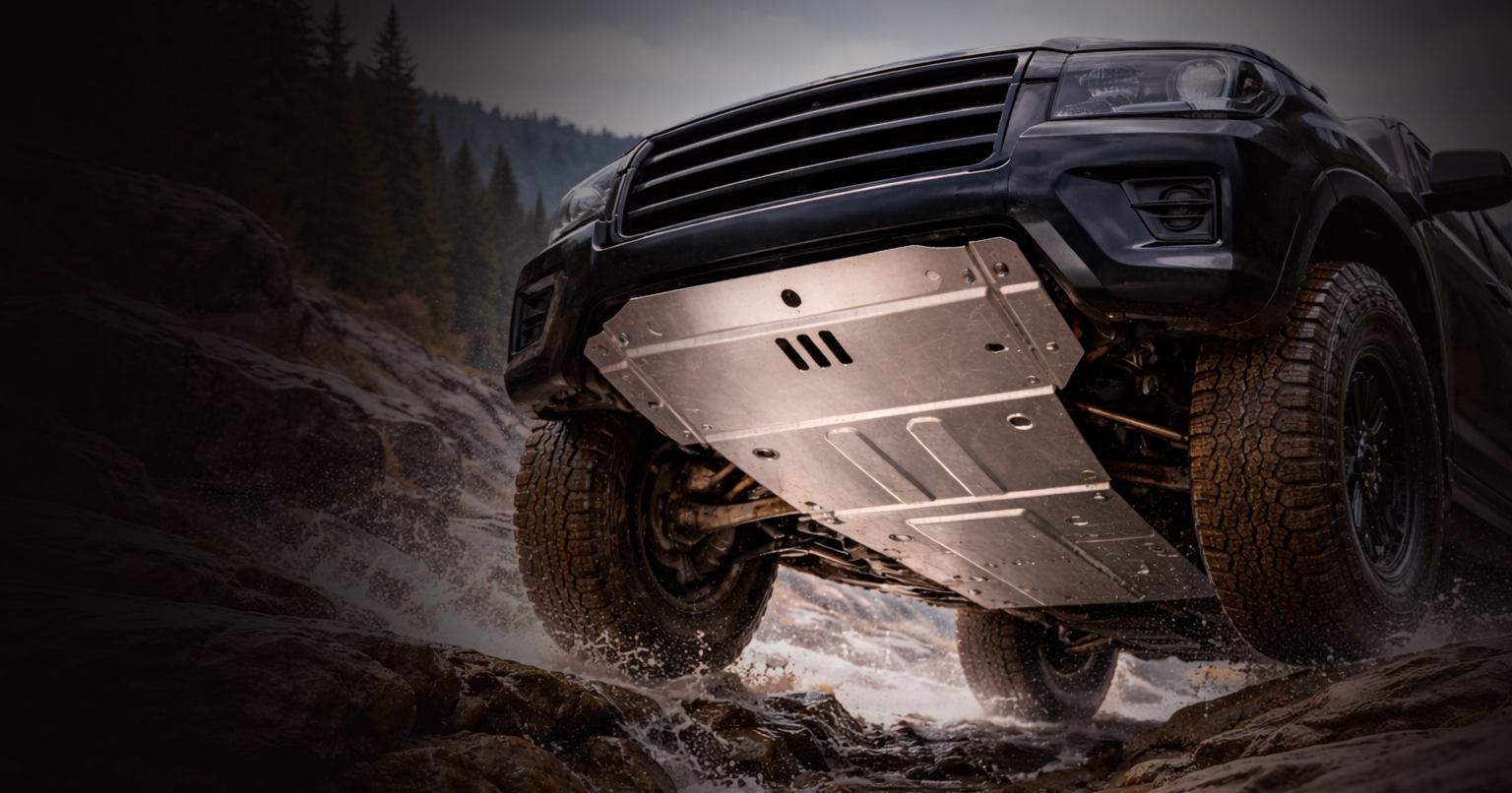
Volkswagen ID.4 Underbody Protection: Steel vs Aluminium Skid Plate Guide
The Volkswagen ID.4 places important electric-drive and cooling-related components low in the vehicle. Factory underbody panels help manage airflow, dirt and noise, but they should not automatically be treated as metal impact protection. Potholes, broken asphalt, road debris, high curbs, compacted snow and ice can still strike exposed areas beneath the front of the vehicle.
Vehicle-specific Volkswagen ID underbody protection is available for the ID.4 in 2 mm steel and 3 mm aluminium. Both versions are listed for Volkswagen ID.4 models from 2021 to 2026 and use the vehicle’s existing mounting points without drilling.
This guide explains what the available plates cover, how steel and aluminium differ and what must be confirmed before ordering.
What underbody protection is available for the Volkswagen ID.4?
Two vehicle-specific protection options are currently listed for the Volkswagen ID.4:
| Specification | 2 mm steel | 3 mm aluminium |
|---|---|---|
| Listed model years | 2021–2026 | 2021–2026 |
| Protected zone | Front underbody zone for specified electric-drive, gearbox and cooling-related components* | Front underbody zone for specified electric-drive, gearbox and cooling-related components* |
| Thickness | 2 mm | 3 mm |
| Weight | 13 kg | 8 kg |
| Installation | Existing mounting points; no drilling | Existing mounting points; no drilling |
| Hardware and manual | Included | Included |
*The product catalogue uses “engine, gearbox and radiator” as its protection-zone terminology. For the electric Volkswagen ID.4, this refers to the specified front underbody zone and must not be interpreted as combustion-engine protection or as a complete traction-battery shield.
What does the Volkswagen ID.4 skid plate protect?
The available ID.4 plates are shaped for the specified front underbody zone. Their purpose is to add a replaceable metal barrier between the road and the components positioned above that area.
The plate can help reduce direct exposure to:
- potholes and damaged road edges;
- loose stones and motorway debris;
- high curbs and steep ramps;
- compacted snow and hard ice ridges;
- gravel and poorly maintained roads;
- minor underbody contact during everyday driving.
A skid plate cannot prevent every type of damage. Its purpose is to provide an additional impact-resistant layer over its stated protection zone. Coverage must always be judged from the product specification and installation layout—not merely from the apparent size of the plate.
Does this plate protect the Volkswagen ID.4 traction battery?
No complete traction-battery protection is claimed for either product. The ID.4’s high-voltage battery occupies a large central area beneath the passenger compartment, while the listed plate is described for the specified front underbody zone associated with electric-drive, gearbox and cooling-related components.
On an electric vehicle, a front underbody plate and a traction-battery shield are not interchangeable. A product should be described as battery protection only when its specification explicitly states that it covers the high-voltage battery enclosure or a defined battery section.
Before buying, identify the exact area you want to protect. If the concern is specifically the battery enclosure, do not assume that a front skid plate provides that coverage.
Volkswagen ID.4 2 mm steel skid plate
The Volkswagen ID.4 2 mm steel skid plate weighs 13 kg and is listed for model years 2021–2026.
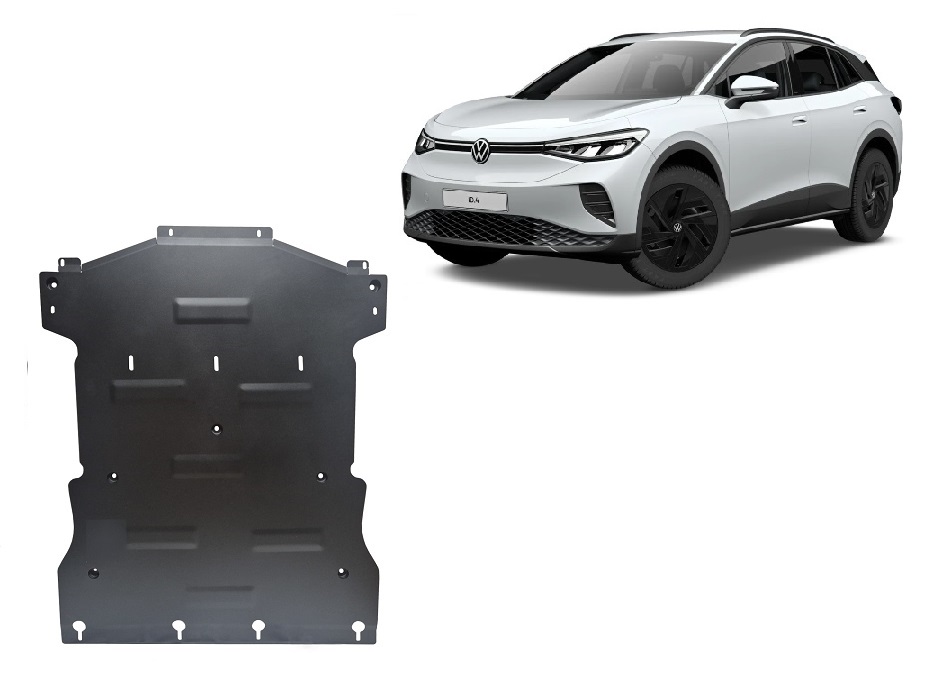
The steel version is generally preferred by drivers who prioritise resistance to repeated road impacts. However, real-world performance also depends on the steel grade, formed shape, mounting system and direction of impact. It may be suitable for vehicles regularly driven on damaged roads, gravel, construction routes or winter roads with compacted snow and ice.
Its main trade-off is weight. At 13 kg, the steel version is 5 kg heavier than the aluminium alternative. The difference is modest relative to the vehicle’s total mass, but it may still matter to an owner who wants to minimise additional weight on an electric vehicle.
Volkswagen ID.4 3 mm aluminium skid plate
The Volkswagen ID.4 3 mm aluminium skid plate weighs 8 kg and is also listed for model years 2021–2026.
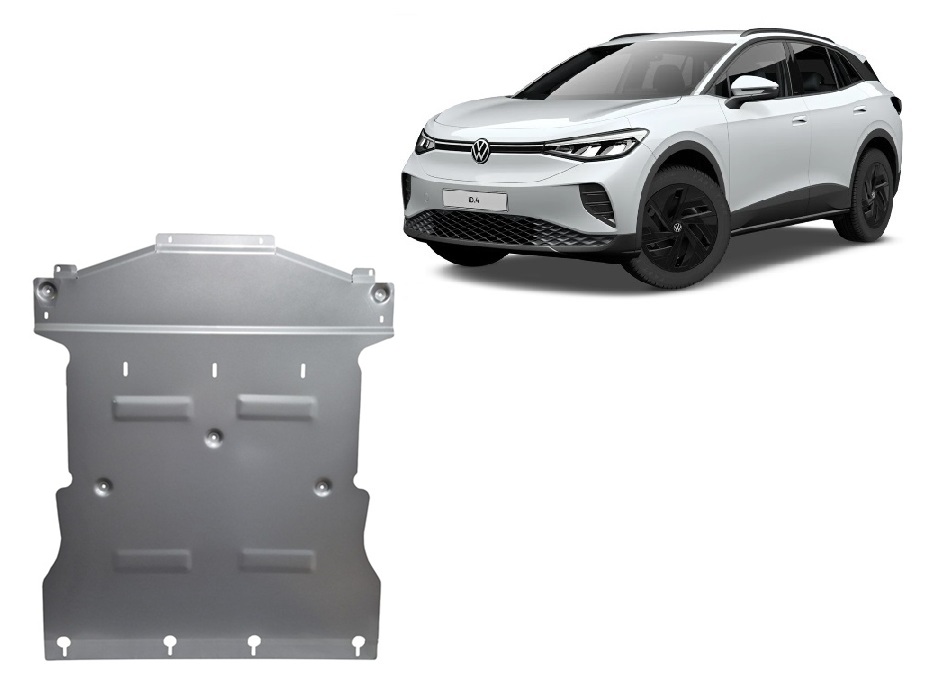
Aluminium offers a lower installed weight and does not develop red iron rust like carbon steel. However, it can still oxidise or experience surface and galvanic corrosion depending on road conditions, salt exposure, fasteners and contact with other metals.
The aluminium version is thicker, but thickness alone does not determine impact performance. Material grade, plate shape, formed sections, mounting points and impact direction all influence real-world behaviour.
Steel or aluminium: which should you choose?
Choose the 2 mm steel plate when:
- resistance to repeated road impacts is the main priority;
- the vehicle frequently uses damaged or gravel roads;
- winter ice, deep potholes or road debris are common;
- the additional 5 kg is not an important concern.
Choose the 3 mm aluminium plate when:
- lower weight is important;
- the vehicle is used mainly on normal roads with occasional rough sections;
- resistance to red iron rust is a priority in wet or salty climates;
- you want a balance between protection and added mass.
Neither material is automatically best for every driver. The correct choice depends on road conditions, expected impacts, climate and personal priorities. For a broader comparison, read Steel vs Aluminium Skid Plates: Which Material Is Right for You?
Why can an ID.4 need additional underbody protection?
An electric crossover does not need to be driven off-road to experience an underbody impact. Everyday hazards can include broken asphalt, hidden debris, steep parking ramps and frozen snow left between traffic lanes.
Additional protection may be worth considering when the ID.4 is regularly used:
- on roads with deep potholes;
- in regions with snow, ice and road salt;
- on gravel or rural roads;
- around construction sites or roadworks;
- on routes with high curbs or steep transitions;
- where debris may be difficult to avoid safely.
For more seasonal guidance, see Underbody Protection for Winter and Bad Roads.
Fitment must be confirmed before ordering
Both products are listed for Volkswagen ID.4 model years 2021–2026. Compatibility should still be confirmed by VIN and vehicle configuration before ordering.
Confirm the following before ordering:
- the full 17-character VIN;
- model and production year;
- drivetrain version;
- market-specific configuration;
- facelift or underbody revision;
- existing factory panels and mounting points.
Use the GuardPass™ VIN compatibility guide if you are unsure which plate matches your vehicle. If the automatic result is incomplete, the configuration can be checked manually before purchase.
Installation and safety checks
The listed ID.4 plates are designed to use the specified existing mounting points without drilling. Mounting hardware and an installation manual are included. The installer must follow the supplied installation manual and verify that required airflow, drainage, lifting points, electrical clearances and service access remain unobstructed. Professional installation is recommended whenever the installer lacks suitable lifting equipment or experience with electric vehicles.
During installation, confirm that:
- all mounting holes align without forcing the plate;
- the supplied brackets and fasteners are used in the specified positions;
- the plate does not contact electrical, cooling or drivetrain components;
- high-voltage cables and connectors remain unobstructed;
- drainage and required airflow are maintained;
- approved lifting points remain accessible;
- the plate does not interfere with steering, suspension or service procedures.
Never drill, weld or screw into the high-voltage battery enclosure. If the plate does not align correctly, stop installation and recheck compatibility. Read Will a Skid Plate Affect Cooling, Noise or Vehicle Service? for additional installation considerations.
Inspection after an underbody impact
After a significant impact, inspect the plate, brackets and mounting points for deformation or loosened fasteners. A damaged plate should not be allowed to press against the components above it.
If the vehicle displays a high-voltage, battery, cooling or drivetrain warning—or if you notice smoke, unusual heat, hissing, a chemical smell or fluid leakage—stop safely and contact roadside assistance. Do not touch exposed electrical components or damaged high-voltage cables. The vehicle should be assessed by a qualified EV technician.
Volkswagen ID.4 skid plate FAQ
Which model years are covered?
Both the 2 mm steel and 3 mm aluminium plates are listed for Volkswagen ID.4 models from 2021 to 2026. Exact fitment should still be confirmed by VIN and vehicle configuration.
Does the plate protect the complete traction battery?
No. Neither product is described as a complete traction-battery shield. Both plates cover the specified front underbody zone associated with electric-drive, gearbox and cooling-related components.
How much do the plates weigh?
The steel version weighs 13 kg. The aluminium version weighs 8 kg.
Does installation require drilling?
No. Both versions are designed to use existing mounting points. The necessary hardware and installation manual are included.
Which material is better for winter?
Both materials can be used in winter. The steel version is generally selected when resistance to repeated road impacts is the main priority. The aluminium version is lighter and does not develop red iron rust like carbon steel, although its surface, fasteners and mounting points still require inspection. Either plate should be cleaned and checked regularly, especially after winter driving or an impact.
Can I order without checking the VIN?
A VIN check is strongly recommended. Production-year, drivetrain and underbody-layout differences can affect fitment even when the model name is the same.
Choose the correct Volkswagen ID.4 underbody protection
View the complete Volkswagen ID underbody protection range, including both Volkswagen ID.4 options:
- Volkswagen ID.4 2021–2026 — 2 mm steel skid plate
- Volkswagen ID.4 2021–2026 — 3 mm aluminium skid plate
Confirm the VIN, production year and vehicle configuration before ordering. Choose the steel version when resistance to repeated road impacts is the main priority, or the aluminium version when lower weight and resistance to red rust matter more.
