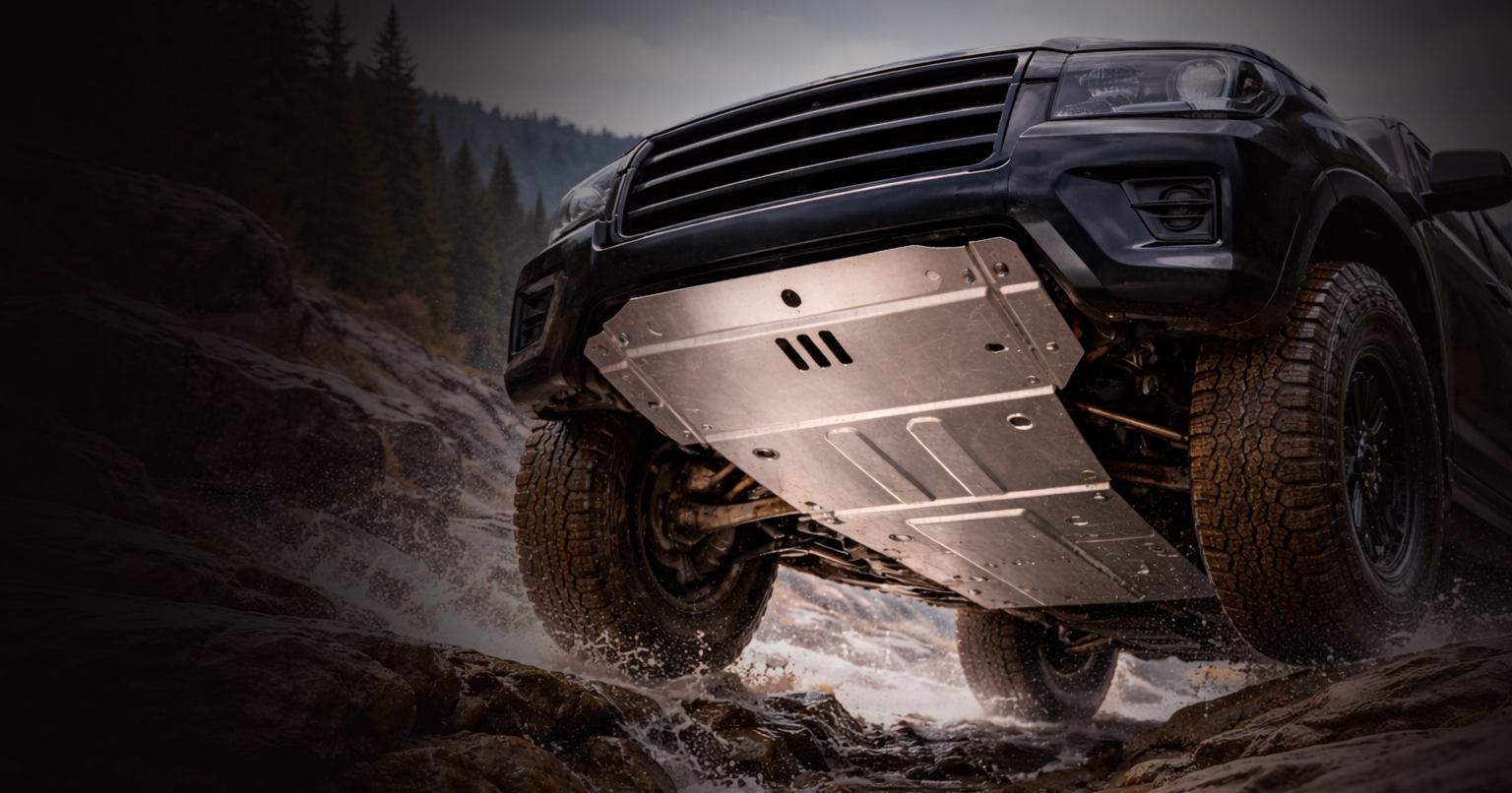
Mitsubishi ASX Underbody Protection for Potholes, Gravel and Winter Roads
Mitsubishi ASX underbody protection can be useful even when the vehicle is never driven off-road. Potholes, broken asphalt, gravel, compacted snow, frozen ruts and raised road edges can all bring vulnerable components underneath the vehicle into direct contact with the road.
The areas that matter most depend on the ASX application. Current protection for 2010–2022 models covers the engine and gearbox, while the 2023–2026 application also includes the radiator area.
What Road Conditions Can Damage the Mitsubishi ASX Underbody?
Underbody impacts are not limited to extreme terrain. They can occur during normal everyday driving when road conditions reduce the available clearance beneath the vehicle.
Typical risks include:
- deep potholes with sharp edges;
- broken or collapsed asphalt;
- loose gravel and embedded stones;
- deep wheel tracks with a raised centre;
- frozen snow and ice;
- hidden obstacles beneath winter slush;
- construction-site access roads;
- uneven rural roads and damaged shoulders.
The exact impact point depends on vehicle speed, suspension movement, road shape, tyre position and vehicle load.
Mitsubishi ASX Protection Priorities by Road Hazard
| Road condition | Main underbody risk | Relevant protection area |
|---|---|---|
| Deep potholes | Direct impact after suspension compression | Engine and gearbox |
| Loose gravel | Repeated stone strikes | Engine, gearbox and lower front area |
| Raised road centre | Contact farther beneath the vehicle | Engine and gearbox |
| Frozen snow and ice | Hidden hard obstacles and compacted ridges | Engine, gearbox and lower front area |
| Road debris | Frontal or direct underside impact | Vehicle-specific protected zones |
Why Potholes Are a Risk for the Mitsubishi ASX
A pothole does not have to strike the centre of the vehicle directly to cause underbody damage.
When a wheel drops into a deep hole, the suspension compresses and the underside can move closer to the road. The far edge of the pothole may then reach the oil pan, gearbox area or another low-mounted component.
The risk increases with:
- higher speed;
- deep or sharp-edged potholes;
- heavy vehicle load;
- limited available ground clearance;
- several connected potholes or raised surfaces.
A direct impact to the oil pan is particularly important because damage can lead to engine-oil loss.
For a broader explanation, read Can Potholes Damage the Oil Sump, Gearbox or Underbody?
Engine and Oil Pan Protection
The engine area is the first major protection zone on both current Mitsubishi ASX applications.
A metal skid plate places a structural barrier between the road and the lower engine area. It cannot prevent every possible impact, but it can reduce direct exposure of the oil pan and surrounding components.
This becomes more relevant when potholes, broken asphalt or raised road sections are a regular part of normal driving rather than an occasional exception.
Why the Gearbox Also Matters
An obstacle that clears the front engine area can still contact the vehicle farther back.
This is why gearbox protection is relevant on roads with deep wheel tracks, raised centres or irregular surfaces. As the front wheels pass over an obstacle, the angle of the vehicle changes and the contact point can move toward the centre of the underside.
Both current Mitsubishi ASX skid plate applications combine gearbox protection with engine protection.
Gravel Roads Create Two Different Risks
Gravel roads expose the vehicle to both repeated small impacts and occasional larger ones.
The first risk is loose material. Stones thrown by the tyres or other vehicles can strike the lower engine area, gearbox, brackets and other exposed components.
The second risk is direct contact with the road itself. Embedded rocks, deep ruts, washouts or raised centre sections can produce a much stronger impact than loose gravel.
For regular gravel-road driving, protecting both the engine and gearbox is more useful than treating the oil pan as the only exposed component.
See our underbody protection guide for gravel roads for a broader comparison of vulnerable areas.
Winter Roads Can Hide Underbody Hazards
Winter creates additional risk because snow and slush can hide the actual shape of the road surface.
A driver may see a soft-looking ridge that contains compacted ice, frozen debris or a hard road edge underneath. Deep frozen wheel tracks can also leave a raised centre section between the tyres.
Typical winter hazards include:
- compacted snow ridges;
- frozen pothole edges;
- ice blocks falling from other vehicles;
- hidden stones or debris;
- deep ruts created by repeated traffic;
- damaged asphalt concealed by snow or water.
Winter road salt and moisture also make periodic cleaning and inspection of steel underbody protection important.
For more detail, see our winter and bad-roads underbody protection guide.
Why Radiator Protection Matters on the 2023–2026 ASX
The current Mitsubishi ASX 2023–2026 skid plate application includes the radiator area in addition to the engine and gearbox.
The lower front section can encounter stones, broken road edges, frozen snow and debris approaching from the front underside.
This means the later ASX application protects a broader front zone than the 2010–2022 version.
Radiator-area coverage should therefore be considered part of the specific 2023–2026 underbody layout rather than an optional extension of the earlier plate.
Mitsubishi ASX 2010–2022 Protection
For Mitsubishi ASX 2010–2022 models, the current vehicle-specific protection is a 2.5 mm steel plate covering the engine and gearbox areas.
The product weighs 15 kg and includes an oil-sump opening.
View Mitsubishi ASX 2010–2022 engine and gearbox skid plate
This configuration provides protection for the two main drivetrain areas exposed to potholes, raised road sections and gravel-road obstacles.
Mitsubishi ASX 2023–2026 Protection
For Mitsubishi ASX 2023–2026 models, the current application uses a separate 2 mm steel plate covering the engine, gearbox and radiator areas.
The product weighs 11 kg and does not include an oil-sump opening.
View Mitsubishi ASX 2023–2026 engine, gearbox and radiator skid plate
The wider stated protection zone is particularly relevant where the vehicle encounters frontal debris, gravel and hard winter-road obstacles.
Does City Driving Justify a Skid Plate?
City driving alone does not automatically mean additional underbody protection is necessary.
The relevant question is the condition of the roads being used. A vehicle driven entirely on smooth urban roads has a different risk profile from one regularly travelling through damaged streets, deep potholes, roadworks or poorly maintained industrial areas.
Underbody protection is therefore better assessed by actual road exposure than by whether the vehicle is described as being used on-road or off-road.
Driving Style Still Matters
A skid plate does not remove the need to reduce speed before damaged road sections.
Impact severity increases with vehicle speed, and heavy braking immediately before a pothole can compress the front suspension and reduce available clearance.
Where safe, drivers should:
- reduce speed before reaching the damaged section;
- maintain adequate distance to see road defects ahead;
- avoid overloading the vehicle;
- maintain correct tyre pressure;
- avoid unnecessary contact with raised road centres.
Inspect the Protection After a Hard Impact
A skid plate that has absorbed a significant impact should be inspected rather than assumed to be undamaged.
Check for:
- strong deformation;
- loose or damaged fasteners;
- bent brackets;
- reduced clearance behind the plate;
- contact with the engine, gearbox or radiator area;
- oil or coolant leakage;
- new rattling or vibration.
If a plate has been pushed against a protected component, the cause should be corrected before continued driving.
Winter Cleaning and Corrosion Checks
Steel underbody protection should be cleaned periodically after winter driving, especially where road salt is heavily used.
Pay attention to:
- mud and salt trapped above the plate;
- blocked drainage openings;
- damaged coating after stone impacts;
- corrosion around exposed edges;
- mounting bolts and brackets.
A skid plate should allow water and debris to escape rather than trap them against the vehicle.
Which ASX Protection Should You Choose?
The correct product is determined first by the vehicle application, not by the road condition alone.
The 2010–2022 and 2023–2026 ASX plates are separate designs and should not be interchanged.
For the exact differences in fitment, mounting, service access and protection coverage, see our Mitsubishi ASX skid plate fitment guide.
If you are deciding which underbody area should receive priority first, see our Mitsubishi ASX protection priorities guide.
When Mitsubishi ASX Underbody Protection Makes Sense
Additional underbody protection becomes more useful when potholes, gravel, broken asphalt, frozen ruts or rough access roads are part of regular vehicle use.
The purpose is not to make the Mitsubishi ASX an off-road vehicle. It is to reduce direct exposure of vulnerable components during the road conditions the vehicle actually encounters.
For 2010–2022 models, the current protection covers the engine and gearbox. For 2023–2026 models, the current application covers the engine, gearbox and radiator area.
For the complete overview of both Mitsubishi ASX applications, see our Mitsubishi ASX underbody protection guide.
