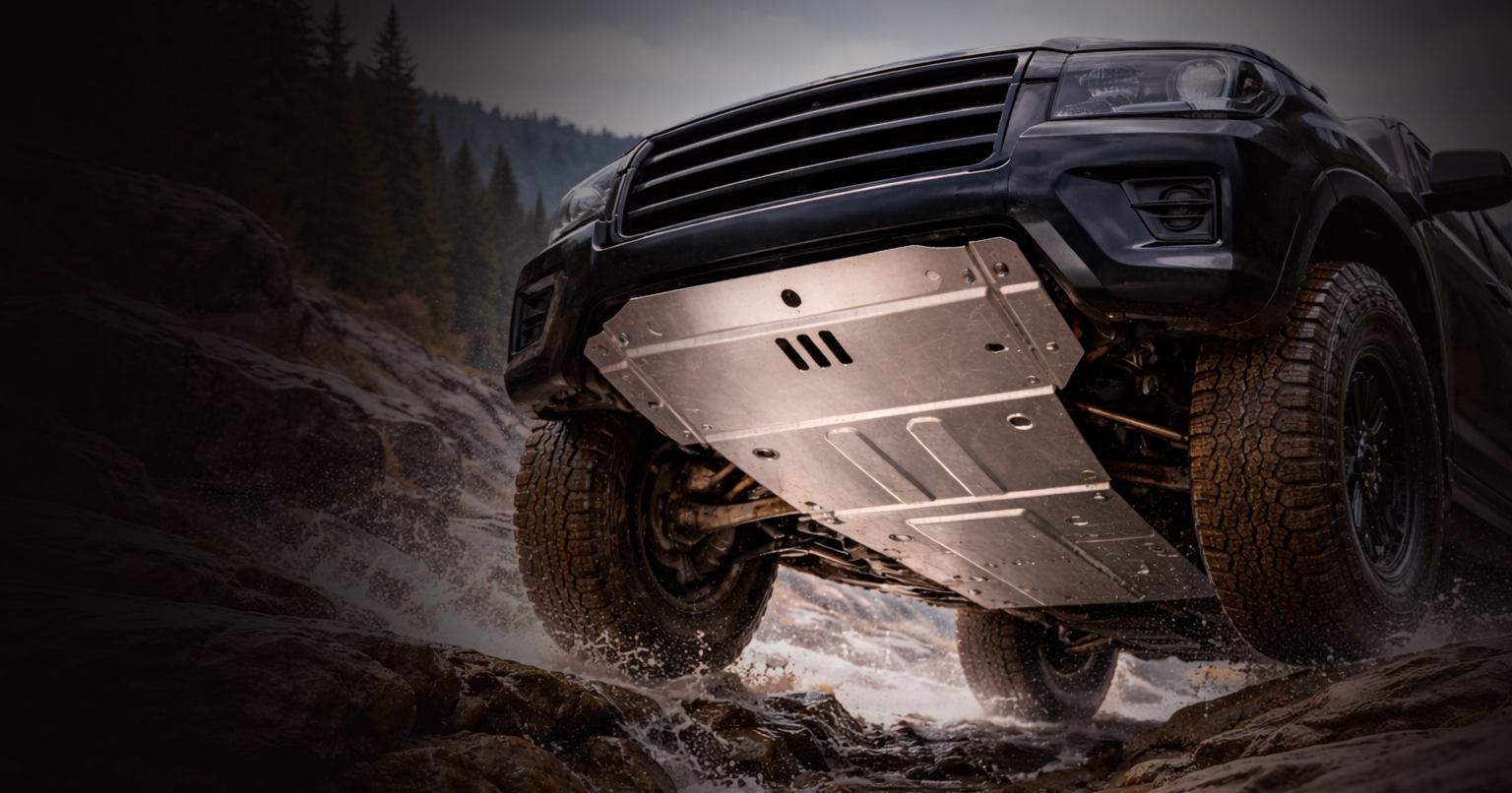
Mitsubishi ASX Underbody Protection: Engine, Gearbox and Radiator Skid Plate Guide
The Mitsubishi ASX has been sold across different production periods and vehicle configurations, so a skid plate should be selected by model year and exact underbody layout rather than by the ASX name alone.
The current Mitsubishi ASX underbody protection range includes two distinct steel applications. The 2010–2022 version protects the engine and gearbox areas, while the 2023–2026 version extends protection to the radiator area as well.
Browse the current Mitsubishi ASX underbody protection range.
Which Mitsubishi ASX Skid Plates Are Available?
| Model years | Protected zone | Material | Thickness | Weight | Oil-sump opening |
|---|---|---|---|---|---|
| 2010–2022 | Engine and gearbox | Steel | 2.5 mm | 15 kg | Yes |
| 2023–2026 | Engine, gearbox and radiator | Steel | 2 mm | 11 kg | No |
The two plates should not be treated as interchangeable. They cover different production periods and protection zones, and they differ in thickness, weight and oil-service access.
Mitsubishi ASX 2010–2022 Engine and Gearbox Skid Plate
The Mitsubishi ASX 2010–2022 protection plate is made from 2.5 mm steel and is listed for the engine and gearbox areas. Product weight is 15 kg, and the design includes an oil-sump service opening.
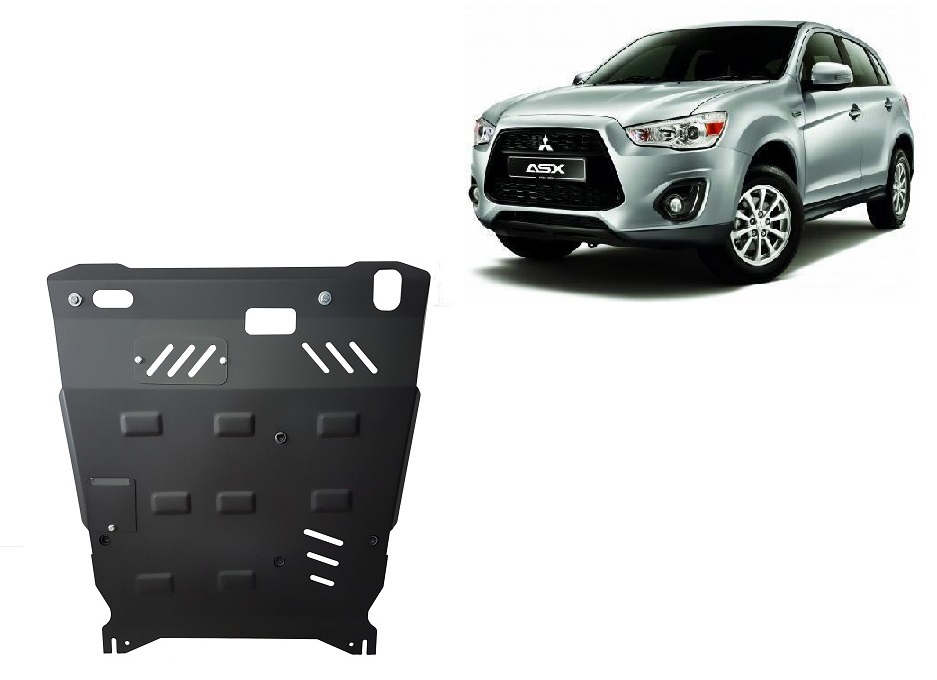
The engine and gearbox occupy different sections of the underside. Protecting both areas provides broader front-to-centre coverage than an engine-only plate, particularly where the vehicle regularly encounters potholes, raised road surfaces or deep wheel tracks.
The oil-sump opening can simplify routine oil service, but access should still be checked against the exact engine and installation layout before maintenance work.
Mitsubishi ASX 2023–2026 Engine, Gearbox and Radiator Skid Plate
The 2023–2026 Mitsubishi ASX uses a different protection plate. It is made from 2 mm steel and is listed for the engine, gearbox and radiator areas. Product weight is 11 kg.
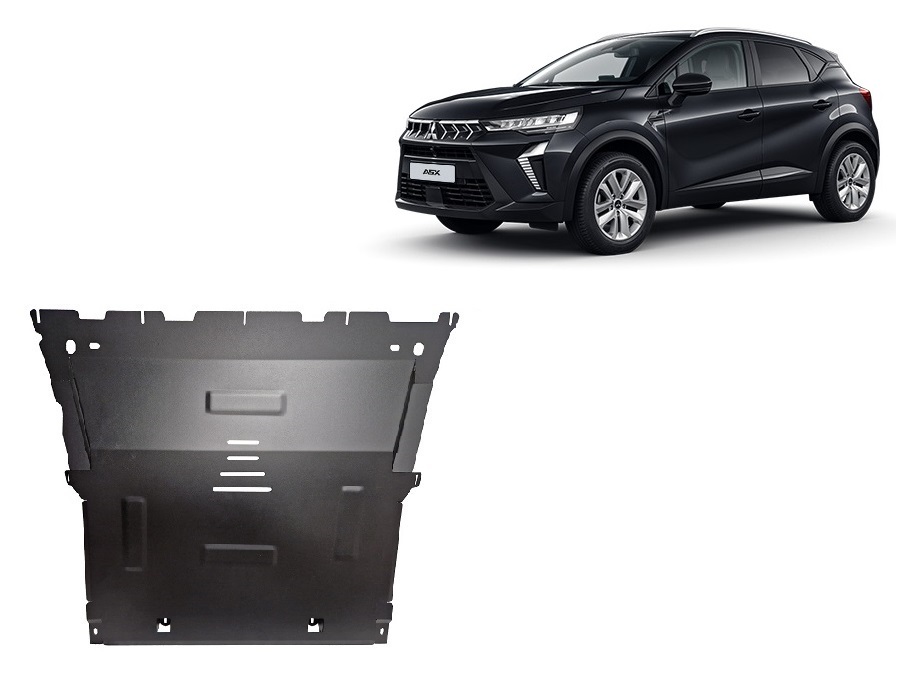
The important difference is the additional radiator coverage. The lower cooling area can be exposed to stones, broken road edges, compacted snow and raised debris approaching the front of the vehicle.
This version does not have an oil-sump service opening. Service access should therefore be checked before installation because removal of the plate may be required for some maintenance procedures.
2010–2022 vs 2023–2026: What Changes?
The later Mitsubishi ASX plate is not simply a thinner version of the earlier product. The protected zone and plate design are different.
| Feature | ASX 2010–2022 | ASX 2023–2026 |
|---|---|---|
| Engine protection | Yes | Yes |
| Gearbox protection | Yes | Yes |
| Radiator protection | Not listed | Yes |
| Steel thickness | 2.5 mm | 2 mm |
| Weight | 15 kg | 11 kg |
| Oil-sump opening | Yes | No |
Thickness alone should therefore not be used to decide which plate is stronger or more suitable. Plate geometry, reinforcement, mounting arrangement, protected area and impact direction also affect real-world performance.
Which Mitsubishi ASX Components Need Protection?
The main front underbody risks are concentrated around the engine, gearbox and, on the later application, the lower radiator area.
- Engine and oil pan: vulnerable to direct impacts from pothole edges, stones, broken asphalt and raised ground.
- Gearbox: located farther behind the engine and exposed to obstacles that pass beneath the front of the vehicle but contact the underside farther back.
- Radiator area: included in the 2023–2026 protection zone and potentially exposed to frontal contact with road debris, stones and uneven surfaces.
One front plate should not automatically be described as complete underbody protection. Components such as the fuel tank, exhaust or rear drivetrain may sit outside the protected zone.
If you are deciding which Mitsubishi ASX underbody areas should be protected first, see our Mitsubishi ASX protection priorities guide, which explains the practical order of engine, gearbox and radiator protection by model year.
See our engine skid plate vs full underbody protection guide for a broader explanation of protection zones.
When Is Mitsubishi ASX Underbody Protection Useful?
The Mitsubishi ASX does not need to be used off-road for a metal skid plate to be useful. Underbody contact can occur during ordinary road driving.
Protection becomes more relevant when the vehicle regularly encounters:
- deep potholes and broken asphalt;
- gravel or loose stones;
- poorly maintained rural roads;
- raised centre sections between wheel tracks;
- construction-site access roads;
- compacted snow and frozen winter ruts;
- road debris that cannot be avoided safely.
If gravel roads are part of your regular driving, see our guide to underbody protection for gravel roads to understand which components should be protected first.
For a Mitsubishi ASX-specific guide covering potholes, gravel, broken asphalt, snow and frozen winter ruts, see our Mitsubishi ASX underbody protection guide for potholes, gravel and winter roads.
Why Steel Is Used for Mitsubishi ASX Protection
Both current Mitsubishi ASX applications are steel skid plates. Steel is commonly used where resistance to repeated impacts and demanding road conditions is a priority.
Real-world performance depends on more than material thickness. Important factors include:
- steel grade;
- plate shape and bends;
- reinforcement;
- mounting-point design;
- fastening hardware;
- protected surface area;
- impact direction.
The 2.5 mm and 2 mm figures should therefore not be compared independently from the complete plate design.
For a broader material comparison, read our steel vs aluminium skid plate guide.
Check Mitsubishi ASX Fitment Before Ordering
The catalogue model-year range does not replace a vehicle-specific compatibility check. Mitsubishi ASX vehicles can differ by production year, engine, drivetrain, market specification and existing underbody equipment.
Before ordering, confirm:
- the full 17-character VIN;
- production year;
- engine version;
- transmission;
- drivetrain configuration;
- market specification;
- existing factory underbody panels;
- mounting-point layout.
If the exact configuration is uncertain, use our VIN compatibility check before ordering.
For a detailed comparison of fitment between the 2010–2022 and 2023–2026 applications, including mounting differences, service access and why the two skid plates are not interchangeable, see our Mitsubishi ASX skid plate fitment guide.
Installation and Service Access
The skid plate must align with the specified vehicle mounting points without being forced into position. Mounting hardware should be installed in the locations stated in the supplied instructions.
During installation, verify that:
- all mounting points align correctly;
- the plate does not contact the engine, gearbox, radiator, exhaust or moving components;
- required airflow and drainage remain unobstructed;
- steering and suspension movement are unaffected;
- approved lifting points remain accessible where required;
- routine service access has been considered.
The 2010–2022 plate includes an oil-sump opening, while the 2023–2026 version does not. This is an important practical difference when planning routine servicing.
For more detail, see our guide to skid plate cooling, noise and vehicle service.
Inspection and Maintenance
After a significant underbody impact, inspect the plate, brackets and fasteners for deformation or movement. A bent plate should not remain in direct contact with the engine, gearbox, radiator or surrounding components.
Check for oil, coolant or transmission-fluid leakage after a strong impact. Unusual noises, warning messages or visible fluid loss should be investigated before continued driving.
Steel protection should also be cleaned periodically after winter driving, mud or road-salt exposure. Damaged coating should be repaired where necessary to reduce corrosion risk.
Mitsubishi ASX Skid Plate FAQ
Which Mitsubishi ASX years have skid plate options?
The current catalogue contains separate protection applications for Mitsubishi ASX 2010–2022 and Mitsubishi ASX 2023–2026.
What does the Mitsubishi ASX 2010–2022 skid plate protect?
It is listed for the engine and gearbox areas.
What does the Mitsubishi ASX 2023–2026 skid plate protect?
It is listed for the engine, gearbox and radiator areas.
What thickness is the Mitsubishi ASX skid plate?
The 2010–2022 version is made from 2.5 mm steel. The 2023–2026 version is made from 2 mm steel.
Does the Mitsubishi ASX skid plate have an oil-change opening?
The 2010–2022 version includes an oil-sump opening. The 2023–2026 version does not.
Do the plates fit every Mitsubishi ASX engine?
The catalogue lists the products for all engine variants within their respective applications, but compatibility should still be confirmed against the VIN, production year, drivetrain and actual underbody layout before ordering.
Does installation require drilling?
The protection plates are designed for their specified vehicle applications and mounting arrangements. Follow the supplied installation instructions and confirm the vehicle mounting points before fitting.
Choose the Correct Mitsubishi ASX Skid Plate
The correct Mitsubishi ASX skid plate depends first on the vehicle generation. The 2010–2022 application provides 2.5 mm steel engine and gearbox protection, while the 2023–2026 application provides 2 mm steel protection for the engine, gearbox and radiator areas.
Do not choose between them by thickness alone. Confirm the model year, VIN, drivetrain and underbody layout, then select the plate designed for that exact vehicle application.
Browse all available Mitsubishi ASX skid plates and underbody protection.
