Suzuki S-Cross Underbody Protection: What Should You Protect First?
The Suzuki S-Cross is primarily a road-going crossover, but that does not mean its underside is protected from every impact. Potholes, broken asphalt, gravel roads, frozen winter ruts, high road edges and loose debris can all reach components underneath the vehicle.
The correct Suzuki S-Cross underbody protection depends on the model year, drivetrain and which components are actually exposed. For many vehicles, the engine and gearbox are the first priorities. Some configurations can also benefit from radiator, differential or rear-differential protection.
This guide explains what to protect first on Suzuki S-Cross models from 2013 to 2026 and how to choose protection according to the vehicle rather than simply fitting the largest available kit.
Which Suzuki S-Cross Underbody Parts Can Be Protected?
Available protection varies by production year and drivetrain, but Suzuki S-Cross applications in our catalogue include protection for:
- engine and oil-pan area;
- gearbox or transmission area;
- lower radiator area;
- differential;
- rear differential on applicable configurations.
These areas do not all have the same priority. The correct order depends on ground clearance, drivetrain layout, road conditions and how the vehicle is used.
1. Engine Protection Should Usually Come First
The lower engine area is normally the first place to inspect because an impact around the oil pan can result in fluid loss and may make it unsafe to continue driving.
A vehicle-specific engine skid plate creates a metal barrier beneath the lower engine area. Depending on the particular Suzuki S-Cross product, the same plate may also extend protection beneath the gearbox.
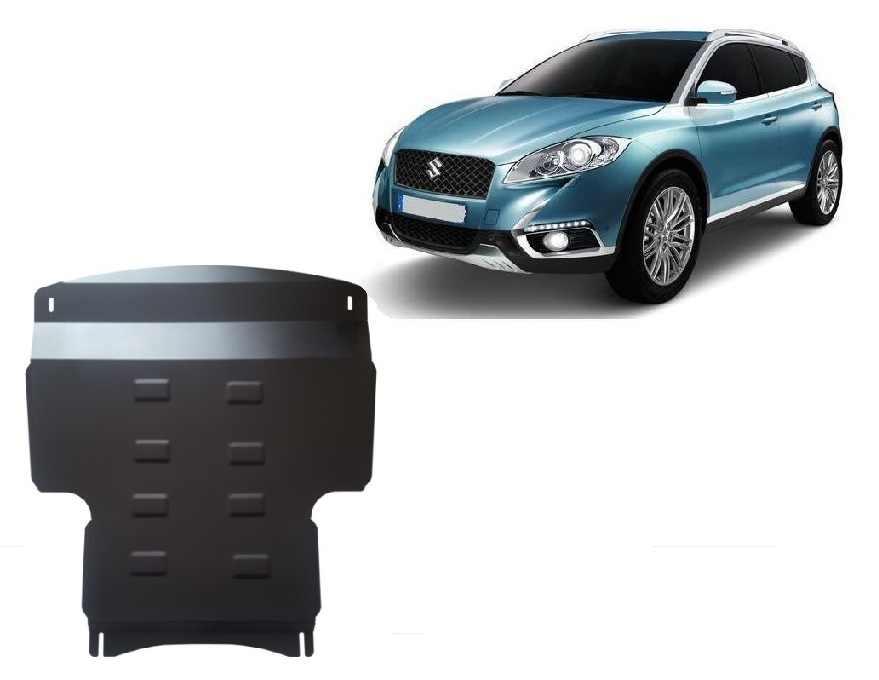
For 2013–2021 vehicles, one available option is the Suzuki S-Cross 2013–2021 engine and gearbox skid plate, made from 2 mm steel and listed for all engine variants.
If you are deciding whether protection only under the engine is sufficient or whether wider coverage makes sense, see our engine skid plate vs full underbody protection guide.
2. Gearbox Protection Is the Next Logical Zone
The gearbox sits farther back than the front edge of the vehicle. This means an obstacle can pass beneath the bumper and engine area but still contact the centre of the underbody.
Gearbox protection becomes more relevant when the vehicle is frequently driven on:
- damaged rural roads;
- gravel roads;
- deeply rutted surfaces;
- construction access roads;
- winter roads with compacted snow or ice ridges.
Several Suzuki S-Cross products combine engine and gearbox protection rather than treating them as completely separate areas.
For newer vehicles, the Suzuki S-Cross 2023–2026 engine and gearbox skid plate provides 2 mm steel protection for these two zones on the listed application.
For a deeper explanation of transmission exposure, read our gearbox skid plate guide.
3. When Does Radiator Protection Matter?
The radiator itself may sit above the lowest point of the vehicle, but the lower cooling area and surrounding components can still be exposed through the front underside.
Radiator protection becomes more relevant when:
- the lower front area has limited factory shielding;
- the vehicle regularly encounters loose stones;
- roads have broken edges or raised surfaces;
- the vehicle is used on gravel or rough rural roads.
For selected 2013–2023 vehicles, the Suzuki S-Cross 2013–2023 aluminium engine, gearbox and radiator skid plate combines protection for all three front-underbody zones. This version is listed as 3 mm aluminium.
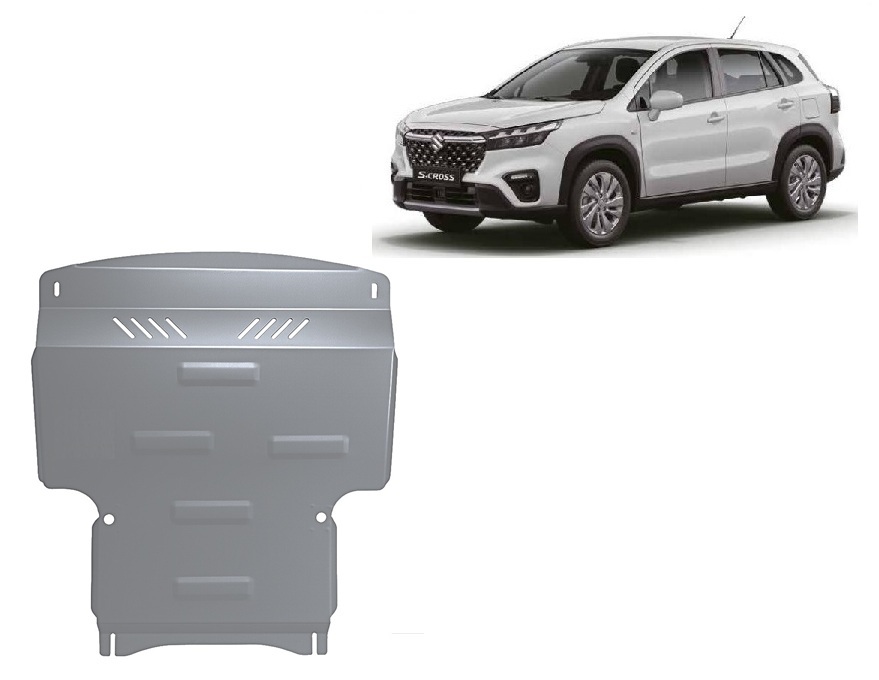
The exact coverage must always be checked against the individual product description and vehicle configuration before ordering.
4. Differential Protection Depends on the Drivetrain
Differential protection should not be treated as necessary for every Suzuki S-Cross. It is relevant only where the vehicle configuration includes the corresponding exposed drivetrain component.
This is especially important on 4WD vehicles, because a drivetrain-specific plate must match the exact layout and mounting points.
One available option is the Suzuki S-Cross 4WD 2013–2026 differential skid plate, made from 3 mm steel and designed for the listed 4×4 application.
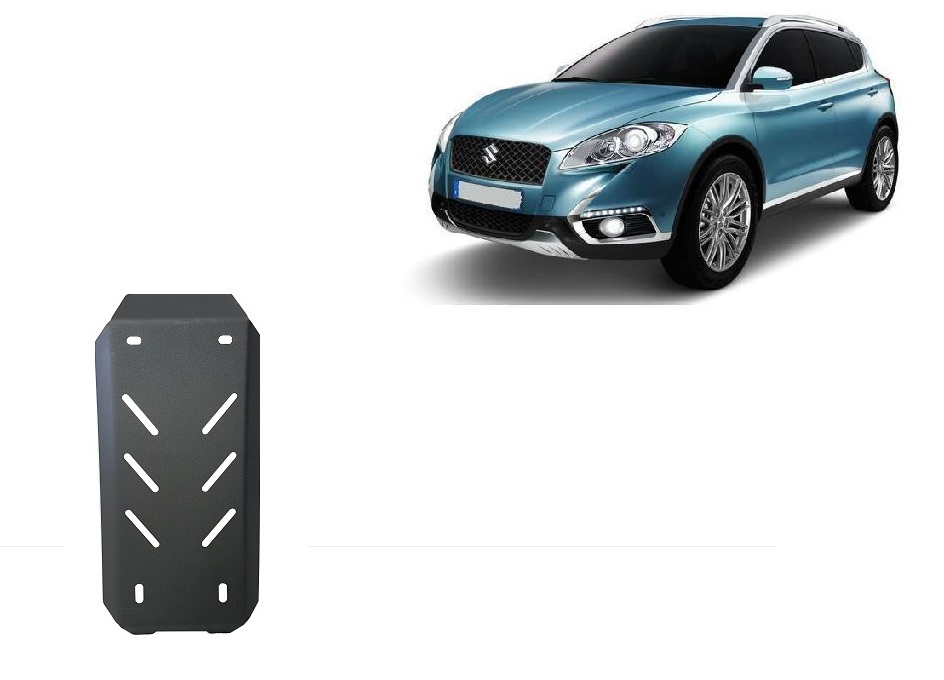
For a broader explanation of when front or rear differential protection is worth adding, see our differential skid plate guide, covering drivetrain-specific fitment, deep ruts, gravel roads, winter conditions and impact exposure.
Do not order differential protection solely because the vehicle name and year appear to match. Confirm the drivetrain before purchase.
5. Rear Differential Protection for Exposed Rear Drivetrain Areas
On suitable configurations, the rear differential can become another low-mounted component that deserves protection when the vehicle is used on rough or deeply rutted roads.
A rear differential plate is normally a lower priority than engine and gearbox protection for ordinary road driving, but it can become more useful where rear-drivetrain exposure is significant.
For selected 2013–2023 vehicles, see the Suzuki S-Cross 2013–2023 rear differential skid plate, listed as 3 mm aluminium.
Suzuki S-Cross Protection Priority by Vehicle Use
| Vehicle use | Recommended starting point |
|---|---|
| Normal city and motorway driving | Inspect engine and gearbox exposure first |
| Poor asphalt and potholes | Engine and gearbox protection |
| Regular gravel-road driving | Engine and gearbox, then inspect radiator area |
| Winter roads with frozen ruts | Engine and gearbox; broader coverage according to exposure |
| 4WD vehicle on rough roads | Engine and gearbox plus inspection of differential areas |
Steel or Aluminium for the Suzuki S-Cross?
Both steel and aluminium skid plates are available for selected Suzuki S-Cross applications. The better choice depends on the exact product and the way the vehicle is used.
Steel is commonly selected when impact resistance and durability are the main priorities. Aluminium reduces added weight and does not develop conventional red iron rust.
Material alone does not determine protection quality. Plate geometry, reinforcement, mounting design, thickness and the area actually covered are also important.
Read our full steel vs aluminium skid plate comparison before choosing purely by material.
2013–2021, 2013–2023 and 2023–2026: Why the Year Range Matters
Suzuki S-Cross protection should not be selected simply by searching for the model name. Different production ranges can use different underbody layouts and therefore different skid plates.
Our current catalogue contains S-Cross products covering several distinct year ranges, including 2013–2021, 2013–2023 and 2023–2026 applications.
That is why the model year must be checked together with the engine, drivetrain and the protected area before ordering.
Do You Need Full Underbody Protection?
Not necessarily. The correct solution is not automatically the largest available set.
For a road-driven Suzuki S-Cross with limited exposure, engine and gearbox protection may be the logical starting point. A vehicle used regularly on gravel, poor winter roads or rough access routes may justify additional radiator or drivetrain protection.
The decision should be based on which components are actually exposed rather than trying to cover every zone simply because a product exists.
For general road-risk assessment, see our pothole and underbody damage guide and our guide to underbody protection for gravel roads.
Check Compatibility Before Ordering
Before ordering Suzuki S-Cross underbody protection, confirm:
- exact model year;
- engine;
- transmission;
- 2WD or 4WD drivetrain;
- protected component area;
- underbody layout;
- product-specific fitment information.
You can see the current range in our Suzuki S-Cross underbody protection catalogue.
If compatibility is uncertain, use our VIN compatibility check before ordering.
Conclusion
For most Suzuki S-Cross drivers, the engine and gearbox are the logical first areas to inspect for additional underbody protection. Radiator protection can extend coverage at the front, while differential and rear-differential protection should be selected according to the actual drivetrain and vehicle use.
The best setup is not necessarily the largest kit. It is the vehicle-specific combination that protects the components genuinely exposed on your particular Suzuki S-Cross.
FAQ
What should I protect first on a Suzuki S-Cross?
The engine and gearbox are normally the first areas to inspect because they are important mechanical components located beneath the vehicle. Additional protection depends on the model year, drivetrain and road conditions.
Does the Suzuki S-Cross need radiator protection?
Not every vehicle requires it. Radiator-area protection becomes more relevant when lower front components are exposed to gravel, broken roads, road debris or other impact risks.
Does a 4WD Suzuki S-Cross need differential protection?
Differential protection can be useful on suitable 4WD configurations, particularly where the vehicle is regularly driven on rutted, gravel or rough roads. Compatibility must be checked against the exact drivetrain.
Should I choose steel or aluminium protection?
Both can be suitable. Steel is commonly chosen when durability and impact resistance are priorities, while aluminium can reduce added weight. The correct choice also depends on plate design, mounting and protected area.
Can I choose a skid plate only by the Suzuki S-Cross model name?
No. Check the production year, engine, drivetrain and exact protection zone. Different S-Cross variants can require different mounting layouts and products.
How do I confirm which skid plate fits my Suzuki S-Cross?
Compare the vehicle details with the product specification. If the fitment is uncertain, use the UnderbodyGuards VIN compatibility check before ordering.
