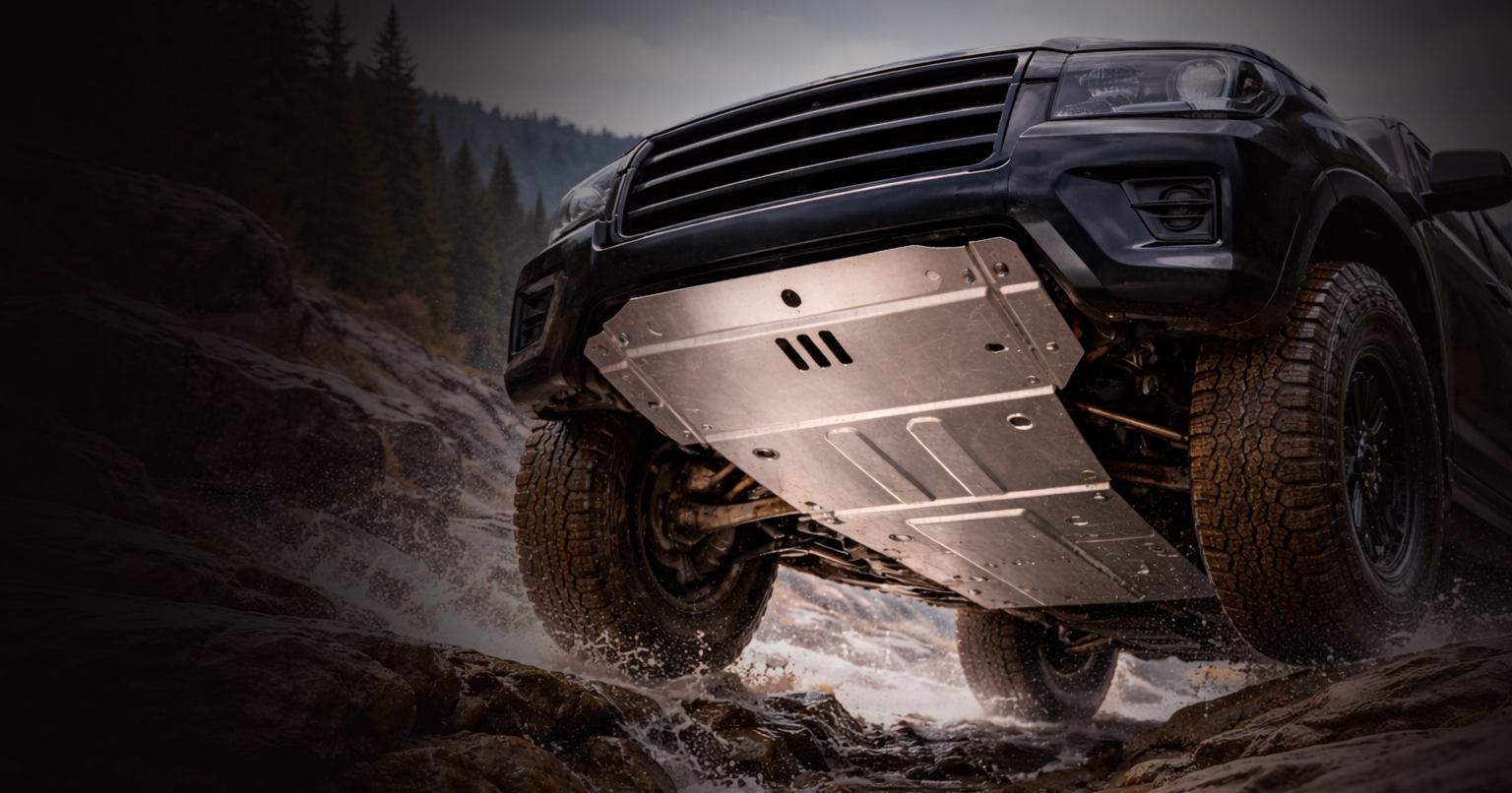
Toyota Camry Underbody Protection: Engine, Gearbox and Radiator Skid Plate Guide
Toyota Camry models used on damaged city streets, winter roads and uneven access routes can be exposed to impacts beneath the front of the vehicle. A vehicle-specific metal skid plate creates a barrier below the protection zone listed for the engine, front bumper, gearbox and radiator areas, helping shield vulnerable lower components from loose debris, pothole edges, compacted snow and other everyday road hazards.
This guide compares the two Toyota Camry skid plates currently listed by UnderbodyGuards for model years 2018–2026: a 2 mm steel version weighing 12 kg and a 4 mm aluminium version weighing 10 kg. Both products are listed for the same protection zone, but material, thickness, weight and corrosion behaviour differ.
The 2018–2026 range is catalogue fitment information, not a guarantee for every vehicle carrying the Camry name. Before ordering, confirm the VIN, model year, engine, drivetrain, market specification and existing underbody layout. You can browse the current Toyota Camry underbody protection range or use the GuardPass™ VIN compatibility checker.
Which Toyota Camry skid plates are available?
The current catalogue contains two vehicle-specific front protection plates for the Toyota Camry 2018–2026. Both are listed for the engine, front bumper, gearbox and radiator protection zone and use the vehicle’s specified existing mounting points.
| Specification | Steel version | Aluminium version |
|---|---|---|
| Catalogue model years | 2018–2026 | 2018–2026 |
| Protected zone | Engine, front bumper, gearbox and radiator | Engine, front bumper, gearbox and radiator |
| Material | Steel | Aluminium |
| Catalogue thickness | 2 mm | 4 mm |
| Catalogue weight | 12 kg | 10 kg |
| Oil-sump service opening | No | No |
| Installation | Existing mounting points; no drilling listed | Existing mounting points; no drilling listed |
| SKU | 5941986208781 | 5941986208798 |
The specifications above reflect the current UnderbodyGuards product listings. Fitment and installation must be checked against the supplied product information and the individual vehicle.
What does the front skid plate protect?
Both versions are catalogued for the same front underbody protection zone: the engine, front bumper, gearbox and radiator areas. This wording identifies the components and lower-front area covered by the product listing; it should not be interpreted as complete protection for every part beneath the vehicle.
The plate does not replace separate protection for components located farther rearward. It is not described as a fuel-tank, exhaust, catalytic-converter or full-floor shield. Actual coverage should be confirmed from the plate geometry, fitting instructions and the vehicle’s underbody layout before installation.
Front underbody protection is most relevant where pothole edges, road debris, frozen snow ridges, gravel and steep transitions can contact exposed lower components. The metal plate helps provide a sacrificial barrier between the road hazard and the specified protection zone. It cannot prevent every type of damage, particularly severe impacts outside the area it covers.
For a broader explanation of coverage, read our engine skid plate vs full underbody protection guide.
2 mm steel Toyota Camry skid plate
The 2 mm steel Toyota Camry skid plate is listed at 12 kg. It is intended for drivers who prefer a steel plate for the specified front protection zone and accept the additional weight associated with this version.
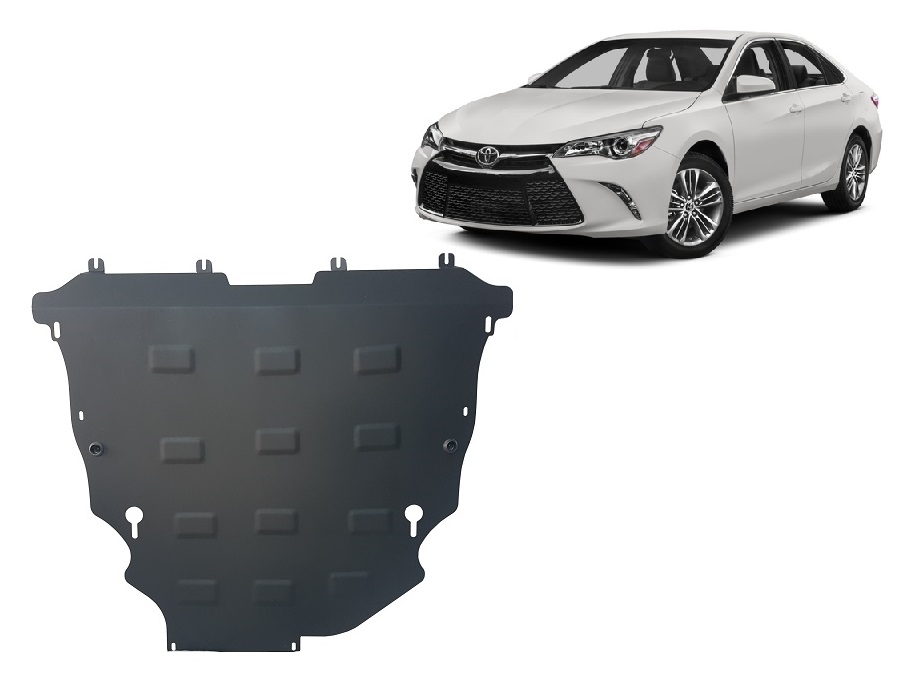
Steel is commonly selected for repeated exposure to rough roads and impact-prone driving conditions, but material name and thickness alone do not determine real-world performance. Steel grade, formed shape, reinforcement, mounting design, impact direction and the strength of the attachment points also matter. Without controlled comparative testing, no specific impact rating or universal strength advantage can be confirmed.
The plate is supplied with the listed mounting hardware and installation instructions. The product page states that it uses existing mounting points and does not require drilling. Because the listing records no oil-sump opening, service access should be reviewed before installation and during routine maintenance.
4 mm aluminium Toyota Camry skid plate
The 4 mm aluminium Toyota Camry skid plate is listed at 10 kg, making it 2 kg lighter than the steel version in the current catalogue.
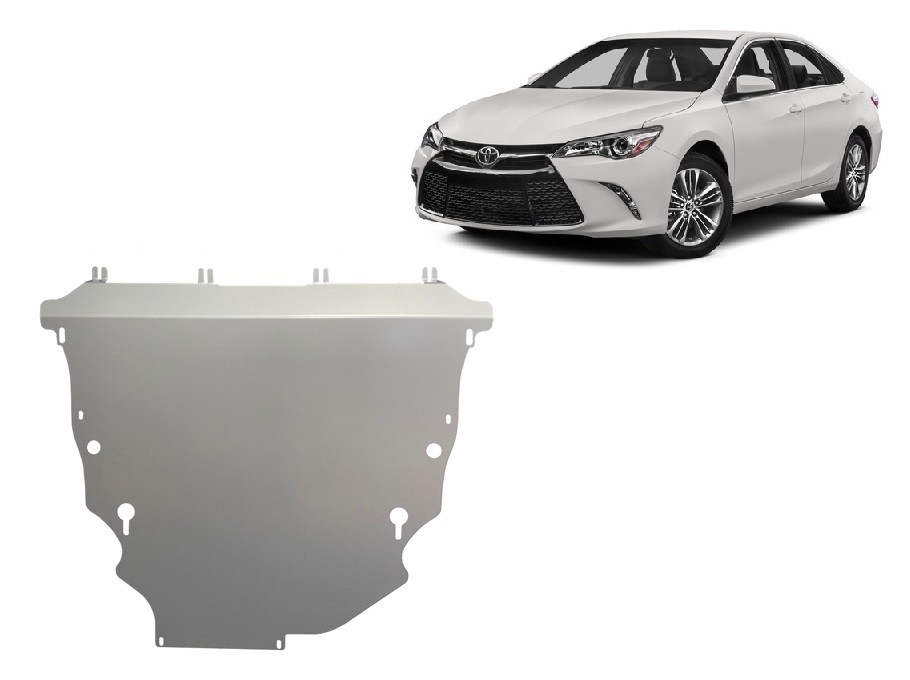
Aluminium does not develop red iron rust like carbon steel, although it can still oxidise and may be affected by galvanic or surface corrosion depending on road salt, moisture, coating condition, fasteners and contact with other metals. Periodic washing and inspection remain important, especially after winter.
The aluminium plate is thicker than the steel version, but the 4 mm and 2 mm figures should not be used as a direct strength comparison. The two materials have different mechanical properties, and performance also depends on alloy, geometry, bends, reinforcements and mounting design. The aluminium version is therefore best described as the lower-weight catalogue option, not as a product with a guaranteed performance advantage.
Steel or aluminium: which version should you choose?
Choose according to the vehicle’s use, desired material and verified fitment rather than thickness alone.
- Consider the steel version if you specifically prefer a steel plate and the listed 12 kg weight is acceptable.
- Consider the aluminium version if reducing plate weight and avoiding conventional red-rust corrosion are higher priorities.
- Verify the exact vehicle first because model year, market specification, engine, drivetrain and existing underbody panels may affect fitment.
- Review service access because both catalogue entries state that there is no oil-sump opening.
Neither option is universally better. The appropriate choice depends on verified fitment, plate design, mounting system, acceptable weight and driving conditions. For additional material context, see Steel vs Aluminium Skid Plates: Which Material Is Right for You?
Fitment for Toyota Camry 2018–2026
The catalogue lists both plates for Toyota Camry model years 2018–2026 and records all engine variants. These catalogue fields do not remove the need for a vehicle-specific check. The same model name can cover differences in production date, engine, hybrid or non-hybrid configuration, drivetrain, regional equipment, body specification, factory undertrays and mounting layout.
Before ordering, provide the VIN together with the product link. Where possible, compare the visible mounting points and existing underbody panels with the supplied fitting information. Do not force the plate into position, drill new holes or alter the vehicle structure unless the manufacturer’s installation instructions explicitly require and permit that work.
Installation and service considerations
Both product pages state that mounting hardware and an installation manual are included and that the plates use existing mounting points without drilling. Installation still requires suitable tools, safe lifting equipment and correct tightening of the supplied fasteners.
The installer must follow the supplied manual and verify that required airflow, drainage, lifting points, moving parts and service access remain unobstructed. After the first journeys, inspect the fasteners and plate for movement, contact marks or unusual noise. Recheck the assembly after a significant impact and during routine service.
An incorrectly fitted plate can vibrate or contact adjacent parts. Our guide on whether a skid plate can affect cooling, noise or vehicle service explains the checks that should be made during installation.
When is Toyota Camry underbody protection useful?
A Toyota Camry skid plate can be useful for vehicles regularly driven over damaged asphalt, deep potholes, raised transitions, gravel, loose construction debris or compacted winter snow. These conditions can expose the lower-front area to contact even when the car is used mainly on ordinary roads.
If gravel roads are part of your regular driving, see our guide to underbody protection for gravel roads to understand which components are most exposed and which areas should be protected first.
Protection is particularly relevant where road hazards are difficult to see, such as potholes filled with water or slush. It can also be useful for cars kept for many years, where repeated minor contact and damaged factory panels may otherwise accumulate over time.
The plate is not a substitute for careful driving, adequate ground clearance or inspection after an impact. For winter-specific maintenance and corrosion advice, read our winter underbody protection guide.
Toyota Camry skid plate FAQ
Which Toyota Camry years are listed for these skid plates?
Both current UnderbodyGuards product listings specify Toyota Camry model years 2018–2026. This is catalogue fitment information and should be confirmed against the VIN and individual vehicle configuration.
Which areas do the plates protect?
The listed protection zone includes the engine, front bumper, gearbox and radiator areas. The products are not described as complete underbody, fuel-tank or full-floor protection.
What are the material and weight differences?
The steel plate is listed as 2 mm thick and 12 kg. The aluminium plate is listed as 4 mm thick and 10 kg. The aluminium version is therefore 2 kg lighter according to the current catalogue.
Does the aluminium plate rust?
Aluminium does not form conventional red iron rust, but it can oxidise and can suffer surface or galvanic corrosion depending on salt, moisture, fasteners and contact with other metals. Cleaning and inspection are still required.
Do these skid plates require drilling?
The current product listings state that both versions install using existing mounting points and require no drilling. Follow the supplied installation manual and verify the mounting layout before fitting.
Is there an oil-change access opening?
Both current listings state that there is no oil-sump opening. Confirm the service procedure before installation because the plate may need to be removed for access.
How do I confirm compatibility?
Send the VIN together with the product link and confirm the model year, engine, drivetrain, market specification and underbody layout. A catalogue year range alone is not a substitute for checking the individual vehicle.
Choose the correct Toyota Camry protection
The current Toyota Camry range provides two material choices for the same listed front protection zone. The 2 mm steel version weighs 12 kg, while the 4 mm aluminium version weighs 10 kg. The correct choice depends on verified fitment, preferred material, acceptable weight and driving conditions.
Browse Toyota Camry skid plates and request a VIN check before ordering if any part of the vehicle configuration is uncertain.
