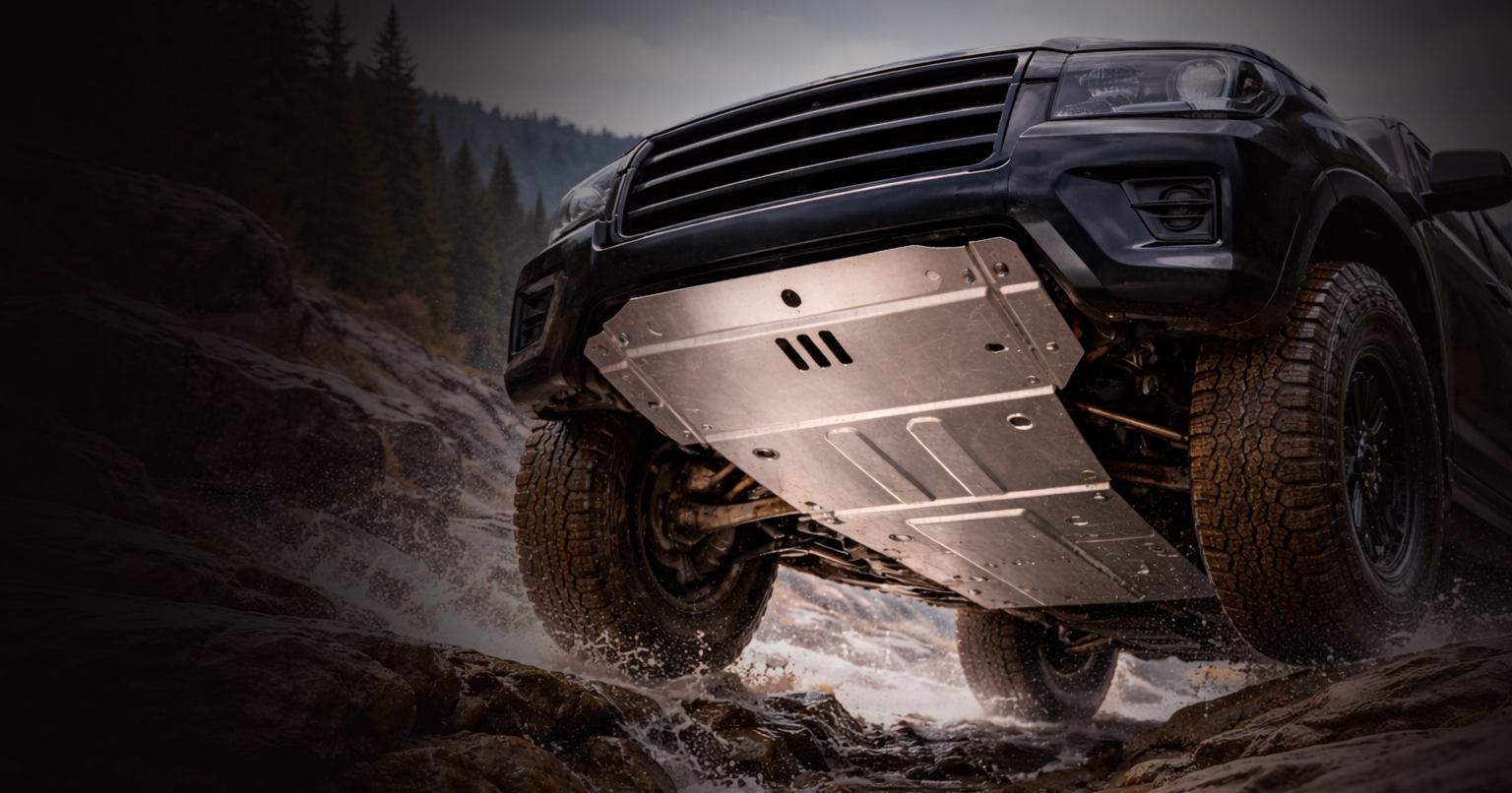
Radiator Skid Plate: When Do You Need Radiator Protection?
The radiator itself is usually positioned above the lowest point of the vehicle, but the lower cooling area, radiator support and nearby front-underbody components can still be exposed to impacts from below.
A radiator skid plate creates a metal barrier beneath the vulnerable lower-front area. Depending on the vehicle, radiator protection may be a dedicated plate or part of a wider skid plate that also protects the engine, gearbox or front bumper area.
This guide explains when radiator protection is useful, how it differs from engine protection and why the exact protected area must always be checked before ordering.
What Does a Radiator Skid Plate Protect?
The term “radiator skid plate” does not necessarily mean that a metal plate covers the entire radiator core. In vehicle-specific underbody protection, it normally refers to protection beneath the lower radiator area and associated front-underbody components.
Depending on the vehicle and plate design, this can include protection beneath:
- the lower radiator area;
- lower radiator supports;
- front lower underbody sections;
- nearby cooling-system components;
- the engine area when the plate provides combined coverage;
- the front bumper lower area on some applications.
The exact coverage is product-specific. Always check the listed protection zones rather than assuming that every front skid plate protects the same components.
When Is Radiator Protection Worth Considering?
Radiator-area protection becomes more relevant when the lower front of the vehicle is exposed to direct contact from below.
Typical risk conditions include:
- deep potholes and broken asphalt;
- raised road edges;
- gravel roads with loose or embedded stones;
- deep wheel ruts with a raised centre;
- construction-site access roads;
- compacted snow and frozen winter ridges;
- rough rural roads;
- light off-road or touring use where the vehicle has limited lower-front protection.
Radiator protection is not automatically necessary for every vehicle. The correct decision depends on ground clearance, factory shielding, the position of the cooling components and the type of roads the vehicle regularly encounters.
Radiator Protection vs Engine Protection
Engine and radiator protection are closely related but they are not always the same protection zone.
| Protection zone | Typical protected area |
|---|---|
| Engine skid plate | Oil pan and lower engine area |
| Radiator skid plate | Lower radiator and lower-front underbody area |
| Combined front protection | Several connected zones such as engine, radiator, gearbox or front bumper |
Some vehicles use one plate for both the engine and radiator. Others use a wider plate covering the engine, gearbox and radiator, while some applications have a separate dedicated radiator plate.
If you are deciding how much protection the vehicle actually needs, see our engine skid plate vs wider underbody protection guide.
Example: Mazda CX-5 Combined Engine, Gearbox and Radiator Protection
The Mazda CX-5 2011–2026 engine, gearbox and radiator skid plate is an example where one 2 mm steel plate provides combined protection across several connected front-underbody zones.
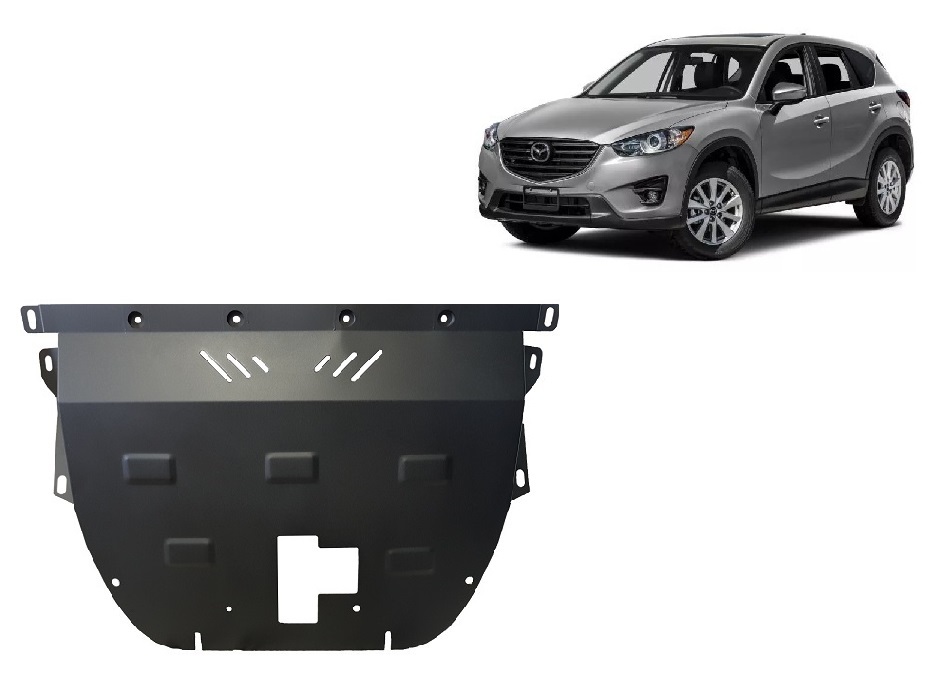
This type of design is useful when several exposed front-underbody areas can be protected with one vehicle-specific plate.
Example: Toyota Land Cruiser 250 Dedicated Radiator Protection
The Toyota Land Cruiser 250 shows a different approach. Dedicated radiator protection is available separately from other engine, gearbox and transfer-case plates.
For 2024–2026 applications, available options include a Toyota Land Cruiser 250 3 mm steel radiator skid plate and a Toyota Land Cruiser 250 4 mm aluminium radiator skid plate.
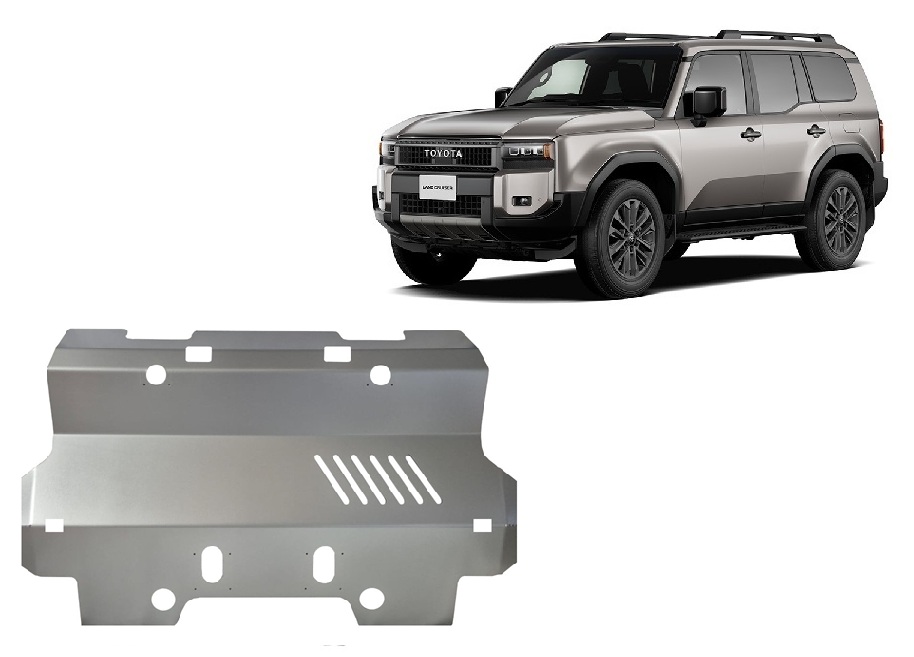
This arrangement allows the radiator zone to be protected independently or combined with additional underbody protection according to vehicle use.
Example: Maxus T60 MAX Engine and Radiator Protection
On the Maxus T60 MAX 2025–2026 engine and radiator skid plate, the engine and radiator areas are combined in one 3 mm steel front protection plate.
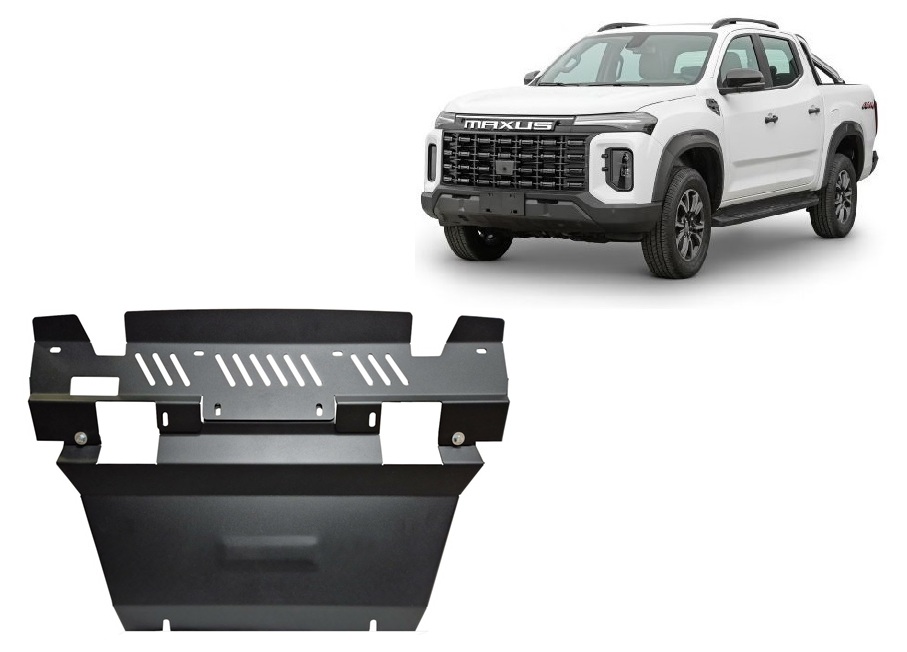
For vehicles used on damaged roads, gravel, worksites or other uneven surfaces, combined engine-and-radiator protection can provide a continuous front protection zone.
Does a Radiator Skid Plate Protect Against Potholes?
A properly fitted metal skid plate can reduce direct contact between the lower front of the vehicle and a pothole edge or raised road surface. It cannot prevent every type of pothole damage because tyres, wheels, suspension and steering components remain exposed.
The effectiveness of underbody protection depends on:
- the area covered by the plate;
- plate geometry and reinforcement;
- material and thickness;
- mounting-point design;
- clearance behind the plate;
- vehicle speed and load;
- the direction and severity of the impact.
For a detailed explanation of road-impact risks, see our pothole and underbody damage guide.
Radiator Protection for Gravel Roads
Loose gravel usually creates lighter repeated impacts, but deeper ruts, embedded stones and raised centre sections can create much stronger contact with the front underside.
Radiator-area protection deserves more attention when the vehicle regularly travels on gravel roads and the lower cooling area has limited factory shielding.
Engine and gearbox exposure should also be considered because a front impact can involve more than one protection zone.
See our underbody protection for gravel roads guide for a complete priority assessment.
Radiator Protection for Winter Driving
Winter creates a different type of underbody risk. Compacted snow, frozen ruts and ice blocks can become hard enough to create direct impacts underneath the vehicle.
Snow can also hide potholes and broken road edges, making the depth of a road defect difficult to judge.
After a strong winter impact, inspect the protection plate and the lower cooling area for deformation, loose fasteners, coolant leakage or unusual contact between the plate and surrounding components.
For more winter-specific risks, read our winter underbody protection guide.
Steel or Aluminium Radiator Skid Plate?
Both steel and aluminium can be suitable for radiator protection when the product is correctly designed for the vehicle.
- Steel is commonly selected when durability and resistance to repeated impacts are major priorities.
- Aluminium can reduce added weight and does not develop conventional red iron rust.
Thickness alone should not be used to compare protection quality. Material grade, plate geometry, reinforcement and mounting design also influence performance.
The Toyota Land Cruiser 250 is a useful example because the same radiator protection zone is available in both 3 mm steel and 4 mm aluminium.
For a broader comparison, read our steel vs aluminium skid plate guide.
Does Radiator Protection Affect Cooling?
A vehicle-specific skid plate should be designed around the intended underbody layout and cooling requirements, but the effect cannot be judged simply from the presence of a metal plate.
Airflow depends on the complete vehicle design, plate geometry, openings, surrounding panels and the mounting position. A universal or incorrectly fitted plate may behave differently from a vehicle-specific application.
After installation, investigate any abnormal temperature warning, unusual fan behaviour, vibration or contact noise rather than assuming it is normal.
For a broader explanation, see our guide to skid plates, cooling, noise and vehicle service.
When Radiator Protection May Not Be Necessary
Not every vehicle requires an additional radiator skid plate.
It may be a lower priority when:
- the lower radiator area sits well above vulnerable underbody components;
- strong factory protection is already present;
- the vehicle is used almost entirely on smooth roads;
- engine or gearbox exposure represents a clearly higher risk;
- no compatible vehicle-specific radiator protection is available.
The goal is not to install every available plate. The goal is to protect the components that are genuinely exposed on the exact vehicle.
Check Compatibility Before Ordering
Before ordering radiator or lower-front protection, confirm:
- vehicle make and model;
- production year;
- engine;
- transmission;
- drivetrain;
- exact stated protection zones;
- vehicle-specific mounting compatibility.
Products that look similar may use different mounting points or provide different coverage.
If compatibility is uncertain, use our VIN compatibility check before ordering.
If the gearbox or transmission is also exposed, see our gearbox skid plate guide. If the vehicle has an exposed centre or rear fuel tank, our fuel tank skid plate guide explains when that protection zone should also be considered.
Conclusion
A radiator skid plate is most useful when the lower cooling and front-underbody area is genuinely exposed to impacts from potholes, gravel, frozen ruts, raised road surfaces or rough access roads.
Depending on the vehicle, radiator protection may be a dedicated plate or part of combined engine, gearbox and front-underbody protection.
The correct choice should be based on actual vehicle layout and road use, not simply on installing every available protection plate. Check which lower-front components are exposed, confirm the exact protection zones and choose a vehicle-specific skid plate that matches the intended use.
FAQ
What does a radiator skid plate protect?
A radiator skid plate normally protects the lower radiator area, lower supports and nearby front-underbody components from impacts coming from beneath the vehicle. Exact coverage depends on the vehicle and product design.
Do I need radiator protection if I only drive on roads?
Not always. Radiator protection becomes more useful when normal road use includes potholes, broken asphalt, gravel, frozen ruts, raised road edges or other conditions that expose the lower front of the vehicle.
Is radiator protection the same as engine protection?
No. Some skid plates protect both areas, but engine and radiator protection can also be separate zones. Always check the stated coverage of the specific product.
Can a radiator skid plate affect cooling?
A correctly designed vehicle-specific skid plate should account for required airflow and clearance. After installation, investigate abnormal temperature warnings, unusual fan behaviour, vibration or contact noise.
Is steel or aluminium better for radiator protection?
Both materials can be suitable. Steel is commonly chosen where demanding impact exposure is expected, while aluminium does not develop conventional red iron rust and may reduce added weight depending on the product design.
How do I know which radiator skid plate fits my vehicle?
Check the vehicle model, production year, engine, transmission, drivetrain and the exact listed protection zones. If fitment is uncertain, confirm compatibility by VIN before ordering.
